
Nail Technology Program
Manicure
Basic & Spa — Station Setup & Supplies
Side A — Equipment & Supplies
Multiuse Implements — Disinfected
- Finger bowl
- Manicure table
- Cuticle pusher (metal)
- Cuticle nipper
- Nail brush
- Orangewood stick
- Table lamp
- Covered waste bin
Single-Use / Disposable
- Nail files — 180 & 240 grit
- Buffer block — 220 grit
- Lint-free wipes
- Cotton balls / rounds
- Disposable towels
- Gloves (latex-free)
- Plastic bag basin liner
- Toe separators
Products on Cart
- Polish remover (acetone & non-acetone)
- Cuticle softener
- Hand soak / antibacterial soap
- Cuticle oil
- Hand lotion / cream
- Base coat
- Top coat
- Client color selection
⚠ Safety: Verify no open cuts, wounds, or contraindications (fungal infection, warts, severe inflammation). Never cut live tissue. Do not share files or buffers between clients. Gloves required if any skin integrity concern.
© 2025 Shear Genius Society, LTD Co. — All Rights Reserved. Unauthorized reproduction prohibited.
↔ flip for back
Nail Technology Program
Manicure
Step-by-Step Service Protocol
Side B — Service Steps
Pre-Service
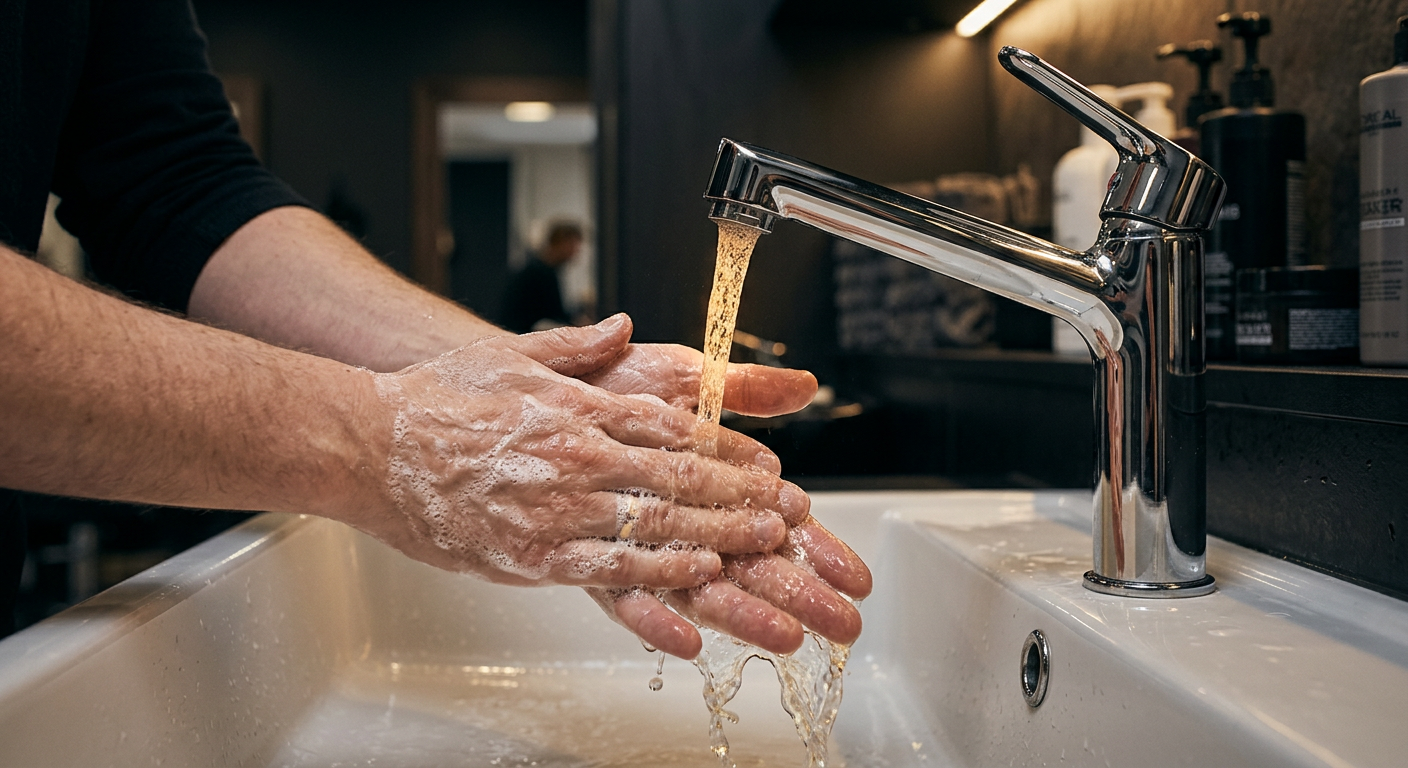
- Wash & sanitize hands; set up fully disinfected station.
- Greet client; complete intake / consultation card.
- Have client wash hands at sink with antibacterial soap.
Service Steps
- Remove existing polish with lint-free wipe & remover.
- File nails to desired shape — stroke in one direction only.
- Buff surface lightly if needed to smooth ridges.
- Soak fingers in warm soapy water 3–5 minutes.
- Dry hands thoroughly; apply cuticle softener.
- Push back cuticles gently with orangewood stick.
- Nip loose / dead cuticle only — never live tissue.
- Remove debris; re-dry hands completely.
- Massage hands and lower arm with lotion.
- Wipe nails clean of all oils with lint-free wipe.
- Apply base coat → 2 color coats → top coat; cap the free edge each time.
- Clean up edges; apply cuticle oil to finish.
Post-Service
- Advise drying time; provide homecare recommendations.
- Discard ALL single-use items immediately into lined bin.
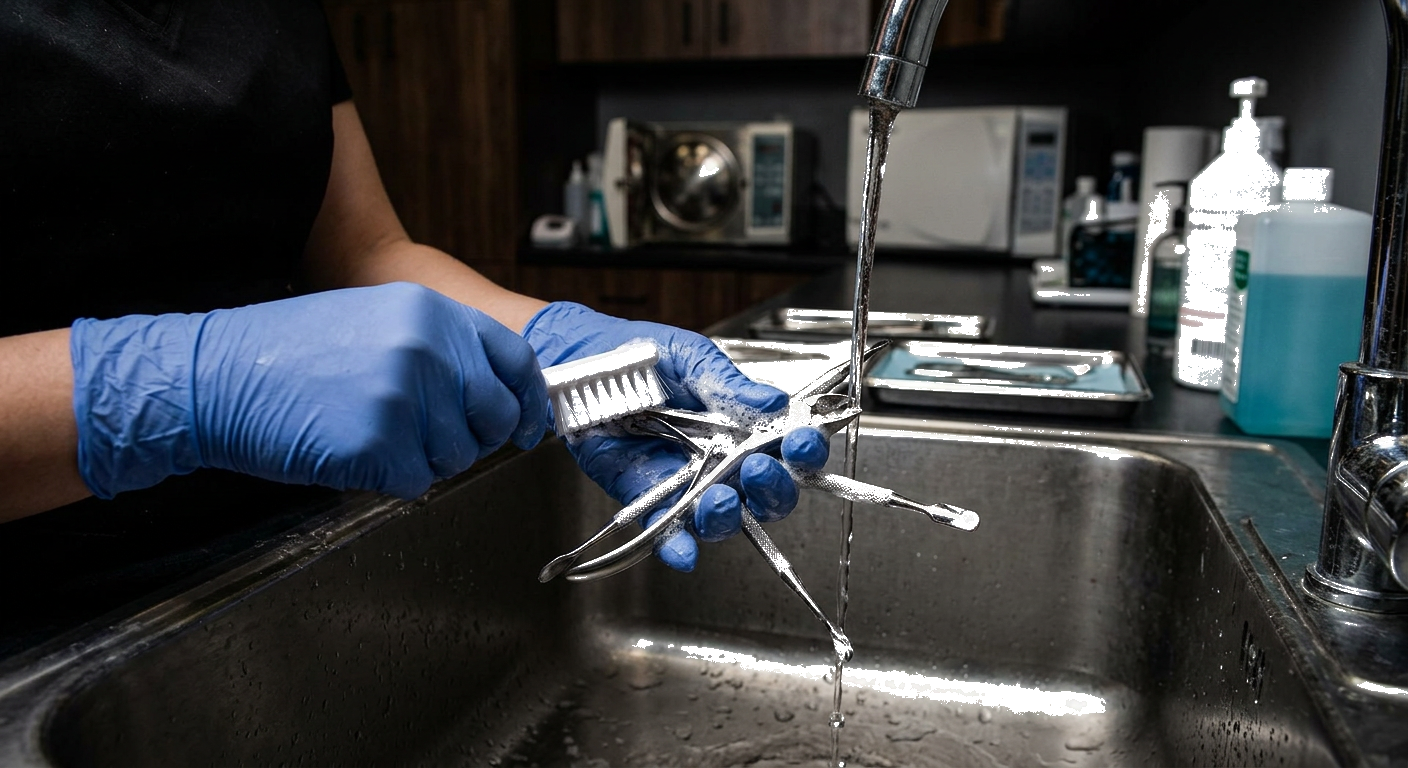
- Clean, wash, and fully disinfect all multiuse implements.
- Sanitize table surface; reset station for next client.
© 2025 Shear Genius Society, LTD Co. — All Rights Reserved. Unauthorized reproduction prohibited.
Nail Technology Program
Pedicure
Basic & Spa — Station Setup & Supplies
Side A — Equipment & Supplies
Multiuse Implements — Disinfected
- Pedicure basin / spa chair
- Foot brush
- Cuticle pusher (metal)
- Cuticle nipper
- Metal nail file / rasp
- Callus paddle / grater
- Toenail clippers
- Orangewood stick
Single-Use / Disposable
- Pedi liner (basin) — mandatory
- Foot files / paddles
- Toe separators
- Disposable slippers
- Lint-free wipes
- Gloves (latex-free)
- Plastic bag liners
- Disposable towels
Products on Cart
- Polish remover
- Foot soak / bath salts
- Cuticle softener
- Exfoliant / scrub
- Callus softener
- Foot lotion / mask
- Cuticle oil
- Base coat & top coat
⚠ Safety: Inspect feet for cuts, sores, fungal infection, or diabetic concerns before service. Do NOT perform on open wounds or active infection. Drain, flush, and disinfect basin per state board standards after EVERY client — no exceptions.
© 2025 Shear Genius Society, LTD Co. — All Rights Reserved. Unauthorized reproduction prohibited.
↔ flip for back
Nail Technology Program
Pedicure
Step-by-Step Service Protocol
Side B — Service Steps
Pre-Service
- Sanitize hands; set up disinfected station with lined basin.
- Complete client consultation; inspect feet for contraindications.
- Fill basin with warm water and foot soak solution.
Service Steps
- Remove existing polish with remover and lint-free wipe.
- Cut toenails straight across; file smooth — never round corners.
- Soak feet 5–10 minutes in prepared basin.
- Apply exfoliating scrub; massage lower leg and foot.
- Work callused areas with foot file or paddle.
- Apply callus softener if needed; allow to penetrate.
- Push back cuticles; nip only loose or dead tissue.
- Rinse feet with clean warm water; dry completely including between toes.
- Apply mask or paraffin if included in service menu.
- Massage foot and calf with lotion.
- Place toe separators; wipe nails free of all oils.
- Apply base coat → 2 color coats → top coat.
Post-Service
- Allow drying time; provide homecare advice.
- Drain basin; disinfect per state board protocol; rinse thoroughly.
- Discard all single-use items; disinfect all multiuse implements.
- Reset station completely for next client.
© 2025 Shear Genius Society, LTD Co. — All Rights Reserved. Unauthorized reproduction prohibited.

Nail Technology Program
Acrylic Nails
Full Set & Fill — Station Setup & Supplies
Side A — Equipment & Supplies
Multiuse Implements — Disinfected
- Acrylic nail brush
- Dappen dish
- Cuticle pusher (metal)
- Cuticle nipper
- Nail drill & bits (cleaned)
- Pinching tool / C-curve clamp
- Orangewood stick
- Fan brush
Single-Use / Disposable
- Nail tips (assorted sizes)
- Nail forms
- Nail files — 100 & 180 grit
- Buffer block — 220 grit
- Lint-free wipes
- Gloves (latex-free)
- Tip cutter / clipper
- Finger cots
Products on Cart
- Acrylic powder — clear, pink, white
- Acrylic liquid (monomer)
- Nail dehydrator
- Nail primer (acid-free or acid)
- Tip adhesive / nail glue
- Cuticle oil
- Top coat / gel gloss
- Isopropyl alcohol 99%
⚠ Safety: Ventilated area REQUIRED — monomer fumes are hazardous. Monomer is flammable — no open flames nearby. Wear gloves and mask. Do NOT apply over damaged nail plate, infections, or open skin. Screen for methacrylate allergies before service.
© 2025 Shear Genius Society, LTD Co. — All Rights Reserved. Unauthorized reproduction prohibited.
↔ flip for back
Nail Technology Program
Acrylic Nails
Full Set & Fill — Service Protocol
Side B — Service Steps
Pre-Service
- Sanitize hands; set up disinfected station; ensure ventilation.
- Consult client on shape, length, and design preferences.
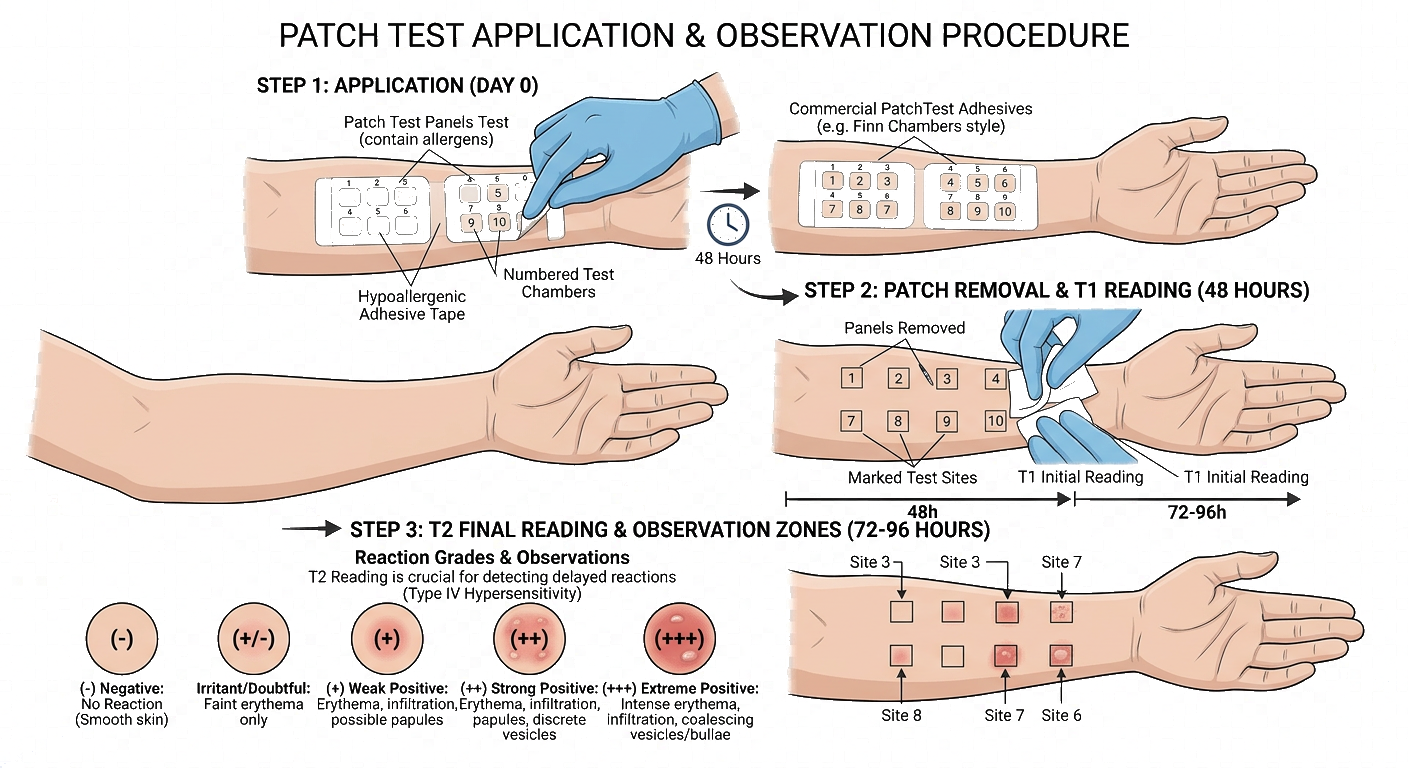
- Check for contraindications; patch test if new client.
Service Steps
- Remove all existing product or polish completely.
- Push back cuticles; lightly buff natural nail to remove shine.
- Cleanse nail plate with dehydrator; allow to fully dry — do not touch.
- Apply primer sparingly to natural nail only — keep off skin and cuticle.
- Select correct tip size; apply with adhesive; blend seam flush with file.
- Cut tips to desired length with tip cutter.
- Apply acrylic product using bead technique — Zone 1 (stress area), Zone 2 (middle), Zone 3 (cuticle).
- Shape product while pliable; pinch for C-curve at 2–3 minutes if desired.
- Allow full cure; file and shape enhancement to final form.
- Buff smooth; remove all dust with fan brush.
- Apply top coat or gel gloss; cure if using gel top.
- Apply cuticle oil; massage hands.
Post-Service & Fill Protocol
- Educate client on fill schedule (every 2–3 weeks) and nail care.
- Fills: back-fill regrowth area; blend seam; rebalance apex and C-curve.
- Discard all disposables; clean and disinfect all tools; ventilate area.
© 2025 Shear Genius Society, LTD Co. — All Rights Reserved. Unauthorized reproduction prohibited.
Nail Technology Program
Gel Nails
Hard Gel / Builder Gel — Station Setup & Supplies
Side A — Equipment & Supplies
Multiuse Implements — Disinfected
- LED / UV lamp (interior cleaned)
- Gel brush set
- Cuticle pusher (metal)
- Cuticle nipper
- E-file & bits (cleaned)
- Orangewood stick
- Pinching tool / clamp
- Fan brush
Single-Use / Disposable
- Nail forms
- Nail tips (assorted)
- Files — 100 & 180 grit
- Buffer blocks
- Lint-free wipes
- Gloves
- Tip cutter / clipper
- Aluminum foil strips
Products on Cart
- Nail dehydrator
- pH bond / primer
- Base gel
- Builder / hard gel
- Color gel (selection)
- No-wipe top gel
- Gel cleanser / IPA 99%
- Cuticle oil
⚠ Safety: Never look directly into UV/LED lamp; warn photosensitive clients. Screen for gel / HEMA allergy. Avoid flooding cuticle — inhibits cure and causes lifting. Fully cure EVERY layer before applying next. Check lamp wattage matches product brand.
© 2025 Shear Genius Society, LTD Co. — All Rights Reserved. Unauthorized reproduction prohibited.
↔ flip for back
Nail Technology Program
Gel Nails
Hard Gel / Builder Gel — Service Protocol
Side B — Service Steps
Pre-Service
- Sanitize hands; prepare disinfected station and lamp.
- Consult client on structure, shape, and color goals.
- Confirm no contraindications or prior gel reactions.
Service Steps
- Remove all existing product; push back and clean cuticles.
- Lightly buff nail plate to remove shine.
- Cleanse with dehydrator; apply pH bond or primer; allow to dry fully.
- Apply thin base gel layer; cap the free edge; cure fully.
- Build structure with builder gel — bead and brush method.
- Pinch at 2–3 minutes for C-curve while product is still pliable.
- Cure each layer fully per manufacturer's recommended time.
- File and shape enhancement to desired length and form.
- Buff smooth; remove all dust with clean brush.
- Apply color gel in thin coats — cure fully between every coat.
- Apply no-wipe top gel; cure. Cleanse inhibition layer if needed.
- Apply cuticle oil; massage into nails and surrounding skin.
Post-Service
- Advise fills every 2–3 weeks; explain soak-off removal process.
- Clean gel brushes with cleanser; cap tightly.
- Discard single-use items; disinfect all multiuse tools; wipe lamp.
© 2025 Shear Genius Society, LTD Co. — All Rights Reserved. Unauthorized reproduction prohibited.
Nail Technology Program
Gel Polish
Soak-Off Gel — Station Setup & Supplies
Side A — Equipment & Supplies
Multiuse Implements — Disinfected
- LED / UV lamp (interior clean)
- Cuticle pusher (metal)
- Cuticle nipper
- Orangewood stick
- E-file (optional)
- Gel brush set
Single-Use / Disposable
- Nail files — 180 & 240 grit
- Buffer block — 220 grit
- Lint-free wipes
- Gloves (latex-free)
- Foil wraps or nail clips
- Cotton balls / rounds
- Toe separators
- Disposable towels
Products on Cart
- Nail dehydrator
- Gel base coat
- Gel polish color selection
- Gel top coat (no-wipe preferred)
- Pure acetone (removal)
- Gel cleanser / IPA 99%
- Cuticle oil
- Hand lotion
⚠ Safety: Keep acetone away from open flames — highly flammable. Ensure full cure between every layer. Educate clients: never peel gel — causes nail plate damage. Check lamp wattage compatibility with brand being used.
© 2025 Shear Genius Society, LTD Co. — All Rights Reserved. Unauthorized reproduction prohibited.
↔ flip for back
Nail Technology Program
Gel Polish
Application & Removal — Service Protocol
Side B — Service Steps
Pre-Service
- Sanitize hands; set up disinfected station and lamp.
- Consult client; confirm color and check lamp compatibility.
Application Steps
- Remove previous product or polish fully.
- Push back cuticles; lightly buff nail to remove shine.
- Cleanse nail plate with dehydrator; allow to dry completely.
- Apply thin base coat; cap free edge; cure per manufacturer spec.
- Apply first color coat thin; cap edge; cure fully.
- Apply second color coat; cap edge; cure fully.
- Apply top coat; cap edge; cure fully.
- Wipe inhibition layer with IPA / gel cleanser if needed.
- Apply cuticle oil; massage into nail and surrounding skin.
Removal Steps
- Lightly file off shine on the top coat surface only.
- Saturate lint-free wipe with pure acetone; place on nail.
- Wrap each finger in foil; wait 10–15 minutes.
- Gently push off softened gel with orangewood stick.
- Do NOT scrape or force removal — re-wrap and wait if needed.
- Buff lightly; apply cuticle oil and hand lotion.
Post-Service
- Discard all single-use items; wipe station clean.
- Wipe lamp interior; disinfect all multiuse implements.
© 2025 Shear Genius Society, LTD Co. — All Rights Reserved. Unauthorized reproduction prohibited.

Nail Technology Program
Dip Powder Nails
SNS / Dip System — Station Setup & Supplies
Side A — Equipment & Supplies
Multiuse Implements — Disinfected
- Cuticle pusher (metal)
- Cuticle nipper
- Soft nail brush
- Orangewood stick
- E-file & bits (cleaned)
- Fan brush
Single-Use / Disposable
- Nail files — 180 & 220 grit
- Buffer block
- Lint-free wipes
- Gloves (latex-free)
- Disposable dip trays (pour-over)
- Tip cutter / clipper
- Nail forms or tips
- Disposable towels
Products on Cart
- Nail dehydrator
- Step 1 — Base / bond coat
- Dip powder colors (selection)
- Step 3 — Activator
- Step 4 — Top coat / sealer
- Cuticle oil
- Hand lotion
- Acetone (for removal)
⚠ Safety: NEVER double-dip brush into shared jar — pour powder over nail into disposable tray only. Activator is exothermic — apply in thin layers. Avoid all skin contact with bonding agents. Keep all lids tightly closed between uses.
© 2025 Shear Genius Society, LTD Co. — All Rights Reserved. Unauthorized reproduction prohibited.
↔ flip for back
Nail Technology Program
Dip Powder Nails
SNS / Dip System — Service Protocol
Side B — Service Steps
Pre-Service
- Sanitize hands; set up disinfected station; ensure ventilation.
- Consult client on shape, length, and color selection.
- Check for contraindications; ensure proper ventilation.
Service Steps
- Remove all old product or polish; push back cuticles.
- File and lightly buff nail plate to remove all shine.
- Apply nail dehydrator; allow to dry fully — do not touch.
- Apply Step 1 (base) to all nails — stay off the skin.
- Pour powder over nail into tray — never dip brush into jar; tap off excess.
- Repeat Steps 4–5 for 2–3 layers for desired coverage and strength.
- Apply Step 3 (activator) — thin coat; allow to harden 1–2 minutes.
- File and shape enhancement to desired form and length.
- Buff smooth; remove all dust thoroughly with clean brush.
- Apply activator (Step 3) again; allow to dry completely.
- Apply Step 4 (top coat / sealer); allow to dry fully or buff to high shine.
- Apply cuticle oil; massage hands.
Post-Service
- Educate client on maintenance and acetone soak-off removal protocol.
- Discard all trays and disposables; wipe station; disinfect all multiuse tools.
© 2025 Shear Genius Society, LTD Co. — All Rights Reserved. Unauthorized reproduction prohibited.
Nail Technology Program
Gel-X Extensions
Full Cover Gel Tips — Station Setup & Supplies
Side A — Equipment & Supplies
Multiuse Implements — Disinfected
- LED lamp (brand-compatible)
- Gel brush set
- Cuticle pusher (metal)
- Orangewood stick
- E-file & bits (cleaned)
- Tip cutter / clipper
Single-Use / Disposable
- Gel-X tip sets (pre-sized)
- Lint-free wipes
- Files — 180 & 240 grit
- Buffer block
- Gloves (latex-free)
- Disposable towels
- Foil wraps (removal)
- Cotton / saturated wipes
Products on Cart
- Nail dehydrator
- pH bond / primer
- Extend gel (adhesive)
- Gel-X tips (all sizes)
- Builder gel overlay (optional)
- Color gel (selection)
- No-wipe top gel
- Acetone (soak-off removal)
⚠ Safety: Pre-size ALL tips before service begins — incorrect fit causes lifting and nail damage. Cure times MUST match lamp wattage and brand specifications. Never force a tip. Avoid skin contact with extend gel — can cause sensitization.
© 2025 Shear Genius Society, LTD Co. — All Rights Reserved. Unauthorized reproduction prohibited.
↔ flip for back
Nail Technology Program
Gel-X Extensions
Application & Removal — Service Protocol
Side B — Service Steps
Pre-Service
- Sanitize hands; prepare station and confirm lamp compatibility.
- Size and lay out all tips in order before beginning service.
- Consult client on shape, length, and color preferences.
Application Steps
- Remove all existing product or polish completely.
- Push back and clean cuticles; lightly buff nail plate.
- Cleanse with dehydrator; apply pH bond or primer; allow to dry fully.
- Apply extend gel to inside of tip well — do NOT flood or overfill.
- Place tip at 45° to nail; slide flush to cuticle area; press firmly.
- Hold flat and cure per brand specification (typically 60 seconds).
- Repeat for all nails; check for gaps or lifting after curing.
- File and shape tips to desired length and form.
- Apply color gel in thin coats — cure fully between each layer.
- Apply no-wipe top gel; cure to finish. Apply cuticle oil.
Removal & Post-Service
- File off top gel; soak in acetone 10–15 min using foil method.
- Gently push off softened gel — do NOT peel or force.
- Buff lightly; nourish nail plate with cuticle oil and hand lotion.
- Discard all single-use items; disinfect all multiuse implements.
© 2025 Shear Genius Society, LTD Co. — All Rights Reserved. Unauthorized reproduction prohibited.

Nail Technology Program
Nail Art
Creative Design Services — Station Setup & Supplies
Side A — Equipment & Supplies
Multiuse Implements — Disinfected
- Detail / liner brushes (fine)
- Gel art brushes (flat & round)
- Dotting tools (assorted sizes)
- Striping brush
- LED lamp
- Fan brush
- Palette / glass mixing plate
- Nail drill (optional)
Single-Use / Disposable
- Lint-free wipes
- Gloves (latex-free)
- Nail foil pieces
- Stamping plates & scraper
- Makeup sponges (ombre)
- Palette paper
- Files & buffers
- Disposable towels
Products on Cart
- Gel paints — full color range
- Nail polish colors
- Cosmetic-grade acrylic paints
- Nail foils & transfers
- Rhinestones / gems (assorted)
- Stamping polish
- Gel top coat (no-wipe)
- Nail glue (gems)
- Glitter / chrome / mirror powder
- Gel cleanser / IPA 99%
⚠ Safety: Chrome and glitter dust require a mask during application. Cure ALL gel art layers between coats. Rhinestone adhesive is NOT for skin or near eyes. Use only cosmetic-grade products. Keep sharp implements away from face.
© 2025 Shear Genius Society, LTD Co. — All Rights Reserved. Unauthorized reproduction prohibited.
↔ flip for back
Nail Technology Program
Nail Art
Design Application — Service Protocol
Side B — Service Steps
Pre-Service
- Sanitize hands; prepare station and lamp.
- Confirm design concept with client — photos or mood board preferred.
- Prepare ALL tools, colors, and embellishments before starting.
Base Prep (Always First)
- Complete standard nail prep per applicable service card.
- Apply base coat appropriate to art medium; cure if gel.
- Apply background color; cure fully before layering any art.
Art Techniques
- Freehand: Detail/liner brush with gel paint; cure between layers.
- Stamping: Apply polish to plate; scrape clean; transfer to nail; seal.
- Ombre: Sponge two colors; blend while wet; cure thoroughly.
- Foil: Apply foil adhesive gel; cure; press foil; peel slowly.
- Chrome: Apply to cured no-wipe gel; rub powder; seal with top coat.
- Gems: Place on uncured top coat or nail glue; cure or press to set.
Finish & Post-Service
- Seal all art with no-wipe top coat; cure fully. Add second top coat over gems.
- Apply cuticle oil; advise client on art care and longevity.
- Clean gel brushes in IPA; cap tightly. Discard all single-use items.
© 2025 Shear Genius Society, LTD Co. — All Rights Reserved. Unauthorized reproduction prohibited.

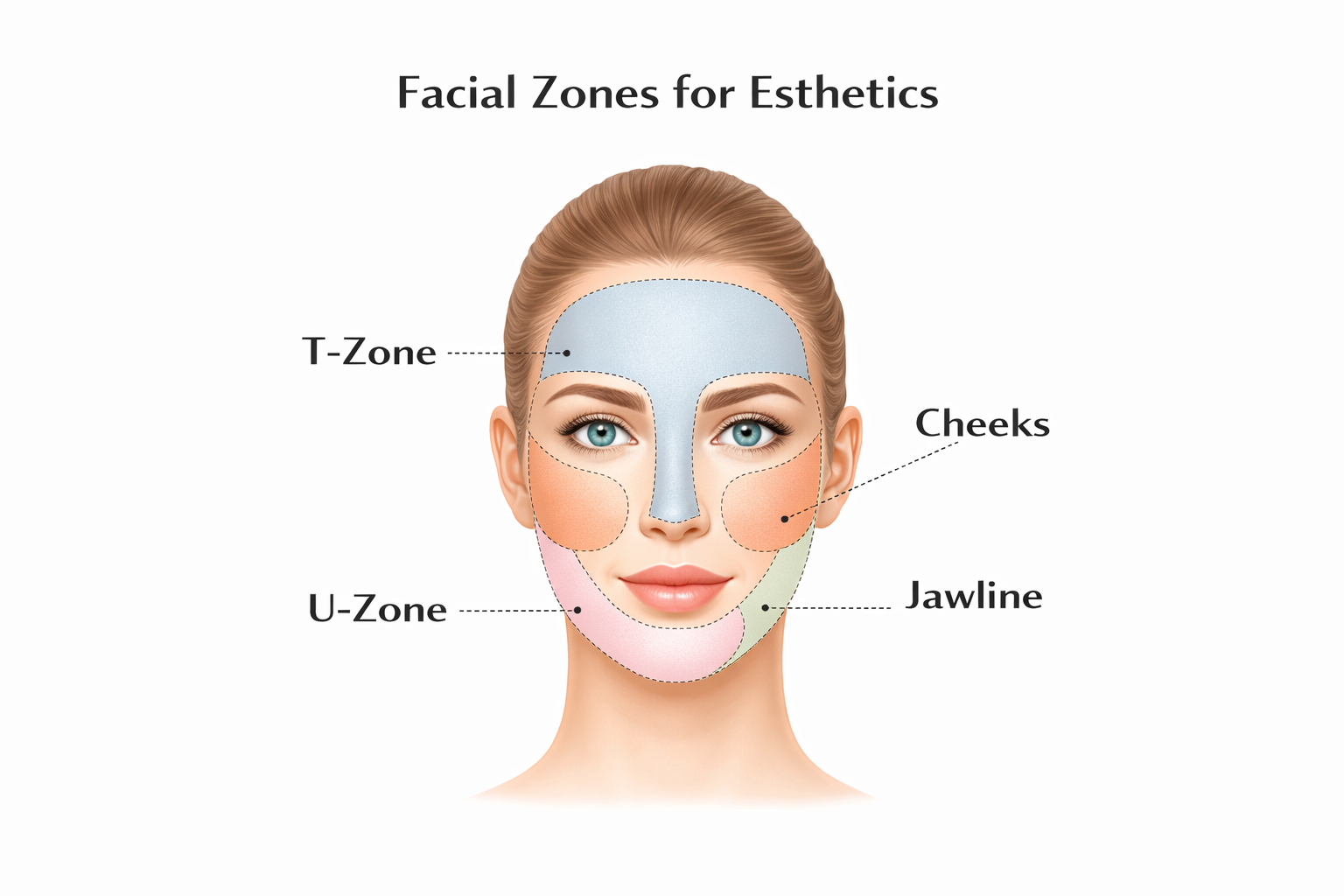
Esthetics Program
Facial
Classic European — Station Setup & Supplies
Side A — Equipment & Supplies
Multiuse Equipment — Disinfected
- Esthetic chair / treatment bed
- Magnifying lamp
- Steamer (distilled water)
- Galvanic / High-Frequency machine
- Comedone extractor
- Metal spatulas
- Product bowls & warmers
- Covered waste bin
Single-Use / Disposable
- Headband / client cap
- Under-eye / eye pads
- Gauze / esthetic wipes
- Cotton rounds
- Gloves (latex-free)
- Disposable spatulas
- Sheet mask (if used)
- Draping sheets / client towels
Products on Cart
- Cleanser (matched to skin type)
- Toner / facial mist
- Enzyme or exfoliant
- Massage cream / oil
- Treatment mask (clay or hydrating)
- Targeted serum
- Moisturizer
- SPF 30+ (mandatory finish)
⚠ Safety: Complete full skin analysis before selecting any product. Check for product allergies, rosacea, active acne, eczema. Do NOT steam over inflamed, broken, or Retin-A–thinned skin. Patch test all new products before applying to full face.
© 2025 Shear Genius Society, LTD Co. — All Rights Reserved. Unauthorized reproduction prohibited.
↔ flip for back
Esthetics Program
Facial
Classic European — Service Protocol
Side B — Service Steps
Pre-Service
- Sanitize hands; prep and fully disinfect station.
- Consult client; analyze skin type and concerns.
- Secure hair with headband; drape client properly.
Service Steps
- Remove makeup; first cleanse with appropriate cleanser.
- Second cleanse; remove with warm damp sponge or gauze.
- Apply toner; analyze skin under magnifying lamp.
- Apply enzyme or gentle exfoliant; remove per directions.
- Steam face 5–10 minutes (skip for sensitive or rosacea skin).
- Perform extractions if indicated — gloved hands, gentle pressure only.
- Apply high-frequency or galvanic treatment if included in service.
- Perform facial massage — effleurage, petrissage, tapotement techniques.
- Apply treatment mask per skin type; cover eyes with pads.
- Leave mask 10–15 minutes; remove with warm damp sponges.
- Apply toner, serum, moisturizer, then SPF in sequence.
Post-Service
- Provide homecare recommendations and follow-up schedule.
- Discard all single-use items; disinfect all multiuse equipment.
- Sanitize and fully reset treatment room for next client.
© 2025 Shear Genius Society, LTD Co. — All Rights Reserved. Unauthorized reproduction prohibited.
Esthetics Program
Back Facial
Clarifying Back Treatment — Station Setup
Side A — Equipment & Supplies
Multiuse Equipment — Disinfected
- Esthetic table (face-down position)
- Steamer (extended hose if available)
- Magnifying lamp
- Comedone extractor
- Metal spatulas
- Product bowls & warmers
Single-Use / Disposable
- Draping sheets / client towels
- Gauze strips
- Cotton rounds
- Gloves (latex-free)
- Disposable spatulas
- Disposable mask brush
Products on Cart
- Cleansing gel (back / body)
- Exfoliating scrub
- Steam or enzyme treatment
- Clarifying clay mask
- Extractions prep solution
- Targeted treatment serum
- Moisturizer / body lotion
- SPF if area will be exposed
⚠ Safety: Do NOT perform on severe cystic acne without licensed supervisor clearance. Drape client modestly at all times — expose only the back. Check for back injuries or spinal conditions before positioning face-down. Keep steamer 12–18 inches from skin.
© 2025 Shear Genius Society, LTD Co. — All Rights Reserved. Unauthorized reproduction prohibited.
↔ flip for back
Esthetics Program
Back Facial
Clarifying Back Treatment — Service Protocol
Side B — Service Steps
Pre-Service
- Sanitize hands; disinfect station; prepare draping.
- Consult client on back concerns; screen for all contraindications.
- Have client change into gown; drape modestly face-down on table.
Service Steps
- Cleanse entire back with appropriate cleanser using gauze or sponge.
- Apply exfoliant or enzyme; work in circular motions across back.
- Remove exfoliant with warm damp gauze or warm towels.
- Steam back 5–8 minutes to open follicles (12–18 in. distance).
- Perform extractions with gloved hands and comedone extractor.
- Apply high-frequency treatment if included in service.
- Perform back massage using effleurage long strokes.
- Apply clarifying or calming mask with brush or spatula.
- Leave mask 10–15 minutes; remove with warm damp gauze.
- Apply toner, targeted serum, and moisturizer in sequence.
Post-Service
- Re-drape client modestly before instructing to rise.
- Provide homecare protocol for back clarity maintenance.
- Discard all single-use items; disinfect all equipment; reset room.
© 2025 Shear Genius Society, LTD Co. — All Rights Reserved. Unauthorized reproduction prohibited.

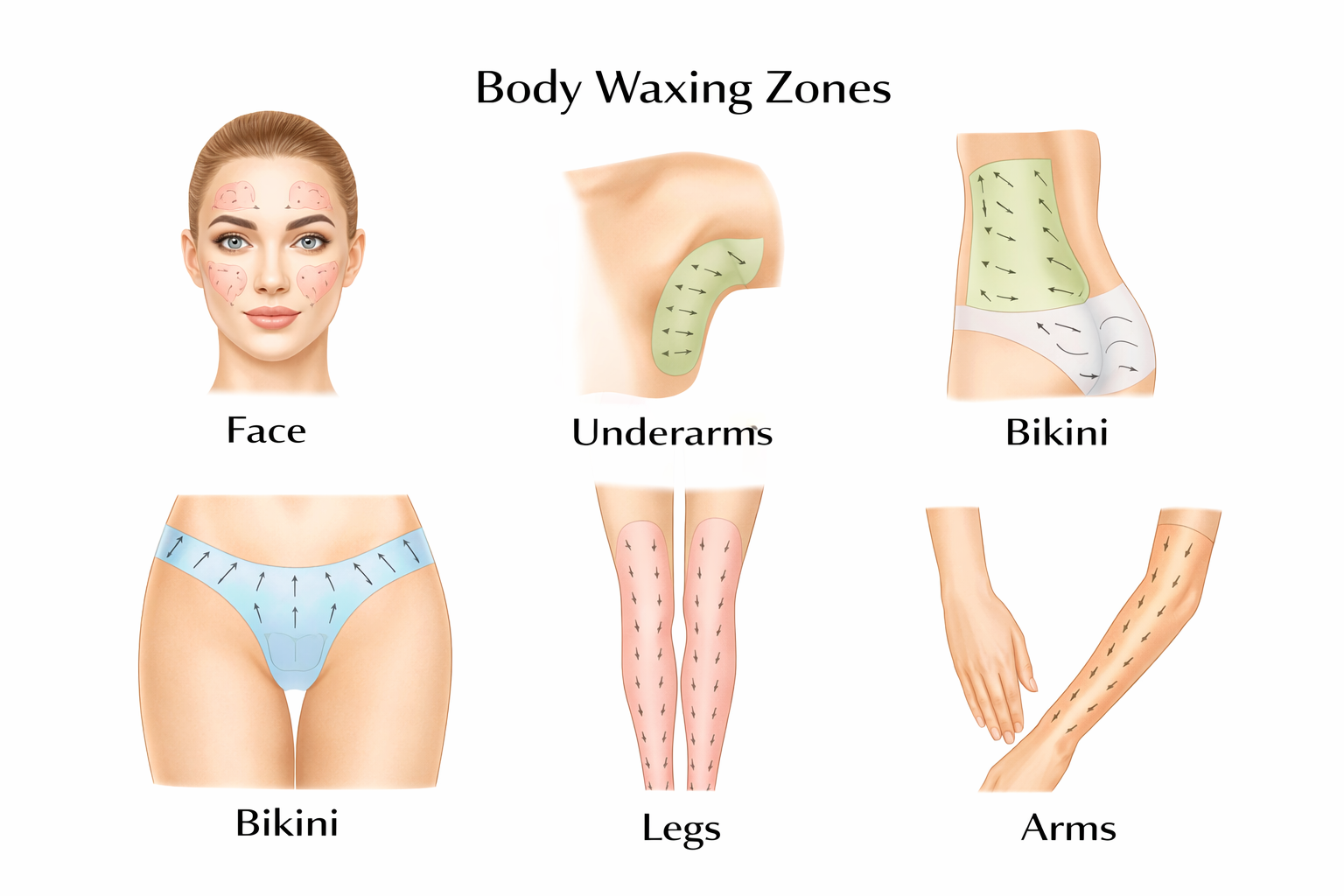
Esthetics Program
Waxing
All Areas — Station Setup, Supplies & Wax Type Guide
Side A — Equipment, Supplies & Wax Selection
Multiuse Equipment — Disinfected
- Wax warmer — hard wax & soft wax
- Wax thermometer
- Treatment table
- Wax pot / cartridge heater
Single-Use Only — All Disposable
- Wooden spatulas — ALL sizes
- Wax strips — muslin & pellon
- Pre-wax cleanser wipes
- After-wax wipes / oil
- Gloves (latex-free)
- Draping / modesty towels
- Headband (facial waxing)
- Applicator sticks (small)
Wax Type Guide by Service Area
- Brow, Lip, Chin: Hard wax — precision work, less trauma on delicate skin
- Underarm: Hard wax — coarse hair, highly sensitive area
- Arm (full or half): Soft wax — large flat surface, finer hair
- Leg (full or half): Soft wax for large areas; hard wax for sensitive clients
- Chest / Back: Soft wax on large flat areas; hard wax near delicate or sensitive zones
- Bikini / Brazilian: Hard wax — sensitive area, coarse hair, requires precision
⚠ Safety: Test wax temperature on your wrist before EVERY service. NEVER double-dip — one spatula per application. Do NOT wax over sunburn, active acne, or thinned skin. Accutane use = absolute contraindication. Check all medications including blood thinners.
© 2025 Shear Genius Society, LTD Co. — All Rights Reserved. Unauthorized reproduction prohibited.
↔ flip for back
Esthetics Program
Waxing
Universal Protocol — All Areas
Side B — Service Steps
Pre-Service — Every Area
- Sanitize hands; disinfect station; pre-heat wax to correct temperature.
- Consult client — medications, skin conditions, full contraindication screen.
- Drape client modestly; expose only the area being treated.
- Cleanse area with pre-wax cleanser; dry completely.
- Apply pre-wax powder to create barrier (soft wax services only).
Application Steps
- Test wax temperature on your wrist immediately before client application.
- Soft wax: Apply thin layer in direction of hair growth; place strip; press firmly; remove QUICKLY against growth while holding skin taut.
- Hard wax: Apply in hair growth direction (slightly thicker coat); allow to harden 15–30 seconds; flick edge; remove quickly against growth.
- Apply firm gentle pressure immediately after each strip removal to calm skin.
- Use a FRESH spatula for every single application — no exceptions.
- Tweeze any remaining stray hairs after waxing is complete.
Post-Service
- Remove all wax residue with after-wax oil or wax cleanser.
- Apply soothing lotion, aloe vera, or calming serum to treated area.
- Advise: no sun, no heat, no gym for 24 hours; avoid touching area.
- Discard ALL spatulas; cover wax pot; disinfect station completely.
© 2025 Shear Genius Society, LTD Co. — All Rights Reserved. Unauthorized reproduction prohibited.
Esthetics Program
Tweezing
All Locations — Station Setup & Brow Mapping Guide
Side A — Equipment & Supplies
Multiuse Implements — Disinfected
- Pointed tweezers
- Slant tweezers
- Brow brush / comb
- Magnifying lamp
- Brow mapping ruler / tool
- White / light pencil (mapping)
Single-Use / Disposable
- Cotton rounds
- Gloves (latex-free)
- Esthetic wipes
- Brow stencils (optional)
Products on Cart
- Pre-cleansing wipe / antiseptic
- Antiseptic toner
- Soothing gel / aloe vera
- Brow pencil (mapping)
- Brow gel (finishing)
- Calming serum
Brow Mapping — Three-Point Method
- Point A (Start): Align tool vertically at outer nostril — this marks where brow begins
- Point B (Arch): Align tool from nostril through center of pupil — marks the arch apex
- Point C (End): Align tool from nostril through outer corner of eye — marks brow tail end
- Mark all three points with white pencil; confirm design with client before removing any hair
⚠ Safety: Disinfect tweezers before and after every client — high-risk implement. Do NOT tweeze inflamed, infected, or irritated skin. Pull one hair at a time in growth direction only. Never tweeze moles, unusual growths, or lesions — refer client to physician.
© 2025 Shear Genius Society, LTD Co. — All Rights Reserved. Unauthorized reproduction prohibited.
↔ flip for back
Esthetics Program
Tweezing
All Locations — Service Protocol
Side B — Service Steps
Pre-Service
- Sanitize hands; soak tweezers in EPA-registered disinfectant.
- Consult client on desired shape and amount of removal.
- Cleanse area with antiseptic wipe; dry thoroughly.
Tweezing Steps — Brows
- Complete brow mapping (three-point method — see Side A).
- Hold skin taut with non-dominant hand in all areas.
- Grasp each hair close to root; pull firmly and swiftly in direction of growth.
- Work below the brow first; clean up above arch last.
- Step back frequently to assess symmetry on both sides.
- Apply antiseptic toner after tweezing to close follicles.
- Apply soothing gel or calming serum; no makeup on area for 12 hrs.
Tweezing — All Other Locations
- Upper Lip: Work quickly in small sections; firm taut skin; pull in growth direction
- Chin: Inspect for ingrown hairs; tweeze coarse and fine hairs individually
- Underarm / Bikini: Grasp at base of follicle; pull with growth direction; disinfect after
- All locations: Always hold skin taut; pull one hair at a time; never pull sideways
Post-Service
- Advise: no sun, heat, or cosmetics on area for 12–24 hours.
- Full disinfection soak for tweezers; discard all single-use supplies.
© 2025 Shear Genius Society, LTD Co. — All Rights Reserved. Unauthorized reproduction prohibited.

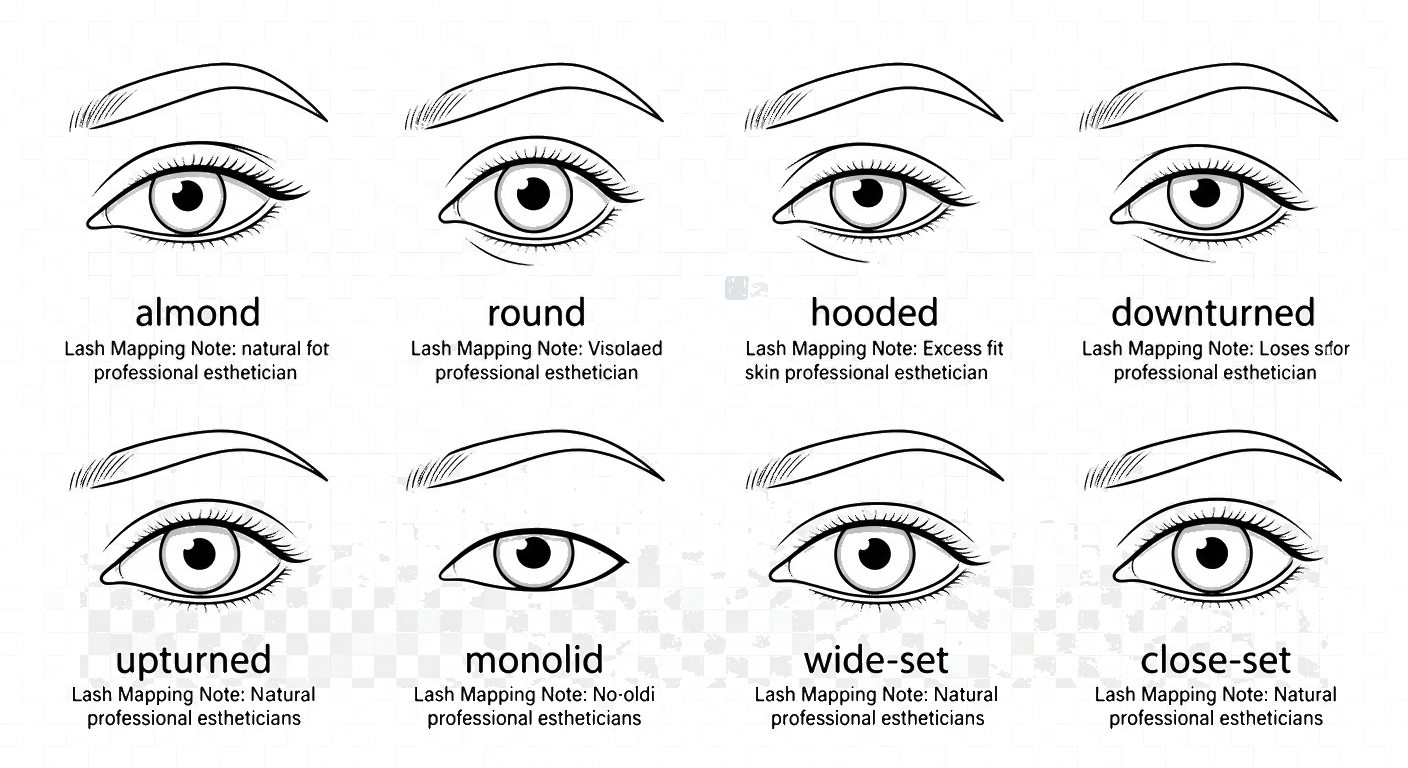
Esthetics Program
Lash Services
Tint · Extensions · Lift · Lift/Tint Combo — Setup
Side A — Equipment & Supplies
Multiuse Equipment — Disinfected
- Lash bed / treatment table
- Magnifying lamp
- Tweezers — straight isolation
- Tweezers — curved application
- Jade stone / lash tile
- Lash strip holder
Single-Use / Disposable
- Under-eye gel pads
- Micro brushes (various sizes)
- Lash wands / spoolies
- Cotton rounds
- Gloves (latex-free)
- Medical-grade tape
- Silicone lift shields — S, M, L
- Mixing cups / palette
Products by Service
- Tint: Lash / brow tint, developer (3% or 6%), oxidizer, petroleum jelly
- Extensions — Strip: Band lash adhesive, oil-free cleanser / primer, strip lashes, lash sealant
- Extensions — Cluster: Cluster lash adhesive, clusters (assorted sizes)
- Extensions — Individuals: Cyanoacrylate adhesive, individual lashes (J, B, C, D curl), lash sealant
- Lift: Step 1 lift solution, Step 2 fix / set solution, nourishing serum
- Lift + Tint Combo: All lift products + tint + developer
⚠ Safety: Patch test required 24–48 hrs before all tint services. NEVER apply tint inside the lash line or near the waterline. Screen for cyanoacrylate adhesive allergy. Protect lower lids with under-eye pads at all times. Lift solution over-processing causes breakage.
© 2025 Shear Genius Society, LTD Co. — All Rights Reserved. Unauthorized reproduction prohibited.
↔ flip for back
Esthetics Program
Lash Services
Step-by-Step Protocols — All Lash Types
Side B — Service Steps
Lash Tint
- Cleanse lashes thoroughly; apply petroleum jelly above and below lash line to protect skin.
- Mix tint with developer per brand ratio; apply to lashes with micro brush.
- Process 10–15 minutes per manufacturer instructions; keep eyes closed.
- Remove carefully with damp cotton — no tint may enter eye. Rinse thoroughly.
Extensions — Strip / Cluster / Individual
- Cleanse lashes with oil-free primer; place under-eye pads flush to lower lash line.
- Strip: Measure; trim to fit; apply band adhesive; wait 30 sec; place on lash line.
- Clusters: Apply adhesive to cluster; place flush at natural lash line.
- Individuals: Isolate one natural lash; dip extension in adhesive; bond to natural lash — NOT skin. Work from outer to inner corner.
- Allow adhesive to cure fully; brush with spoolie; apply lash sealant.
Lash Lift (+ Tint Combo)
- Secure silicone shield to eyelid with adhesive; fan lashes upward onto shield.
- Apply Step 1 (lift) to lashes only — not skin; cover; time per hair type (8–12 min fine / 10–14 min coarse).
- Remove Step 1 with dry cotton; apply Step 2 (set); time 6–10 min.
- Combo only: After Step 2 removal, apply tint; process 5–10 min; remove with damp cotton.
- Apply nourishing serum; remove shield gently; brush lashes with clean spoolie.
- Advise: no water, steam, or mascara for 24–48 hours post-service.
© 2025 Shear Genius Society, LTD Co. — All Rights Reserved. Unauthorized reproduction prohibited.
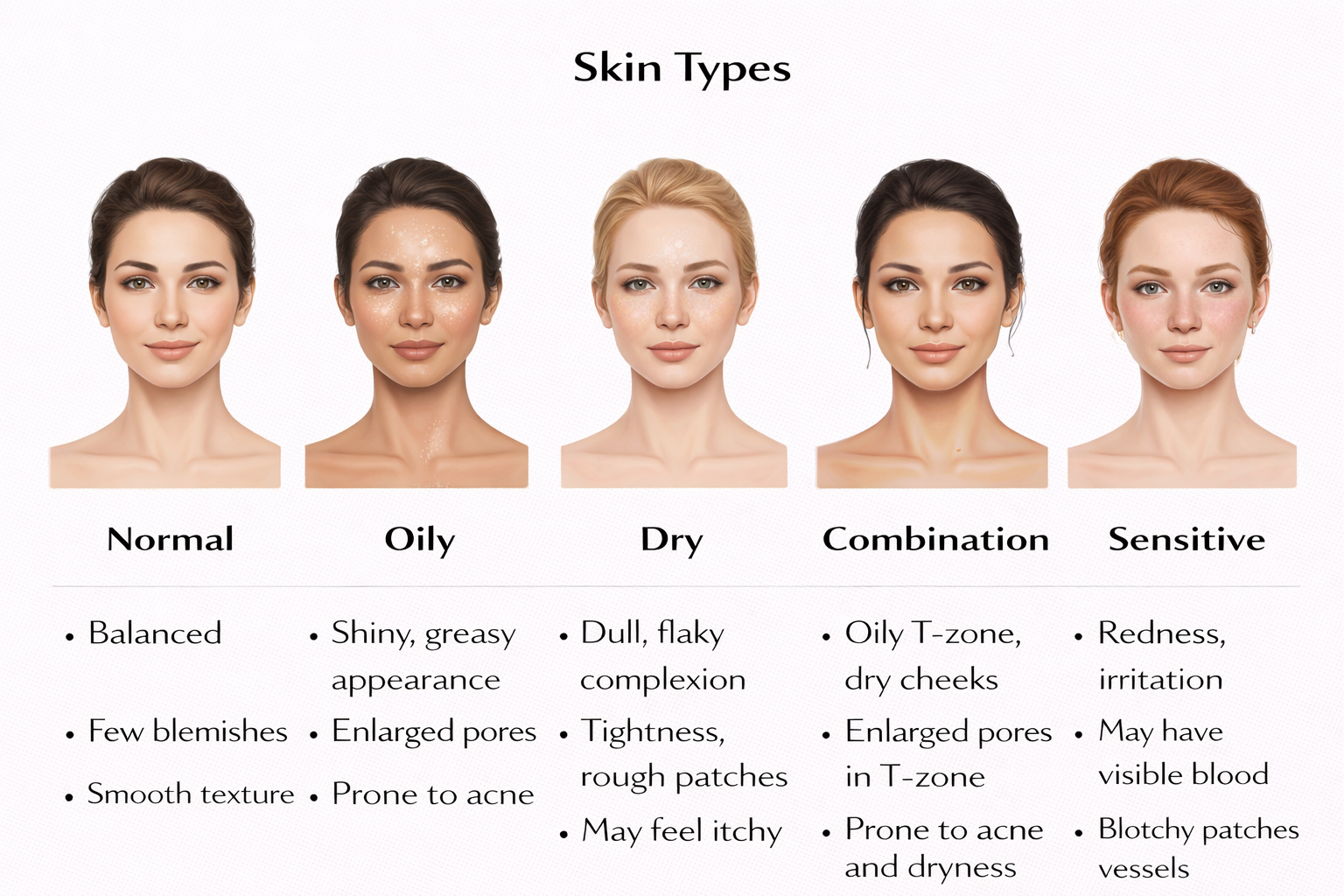
Esthetics Program
Makeup Application
Full Face — Station Setup & Supplies
Side A — Equipment & Supplies
Multiuse Implements — Sanitized
- Makeup chair / client seat
- Ring light / magnifying light
- Full brush set (all types)
- Blending sponges / Beauty Blender
- Pressed powder palette
- IPA sanitizer spray
- Brush cleaning mat
- Fan brush
Single-Use / Disposable
- Disposable mascara wands
- Disposable lip brushes
- Cotton rounds & swabs
- Tissues
- Lash strips (individual use)
- Gloves (optional)
- Headband / hair clip
- Client draping cape
Products on Cart
- Face primer & eye primer
- Foundation (shade range)
- Concealer (range)
- Setting powder (translucent)
- Contour & highlight
- Blush & bronzer
- Eyeshadow palette
- Eye liner & lip liner
- Mascara + strip lashes & glue
- Lipstick / gloss (range)
- Setting spray
- Makeup remover / wipes
⚠ Safety: NEVER double-dip mascara wand — use disposable wands only. Sanitize ALL pressed palettes with 70% IPA before every client. Do not apply over open sores or active breakouts. Screen for cosmetic allergies. Discard all disposables after each client without exception.
© 2025 Shear Genius Society, LTD Co. — All Rights Reserved. Unauthorized reproduction prohibited.
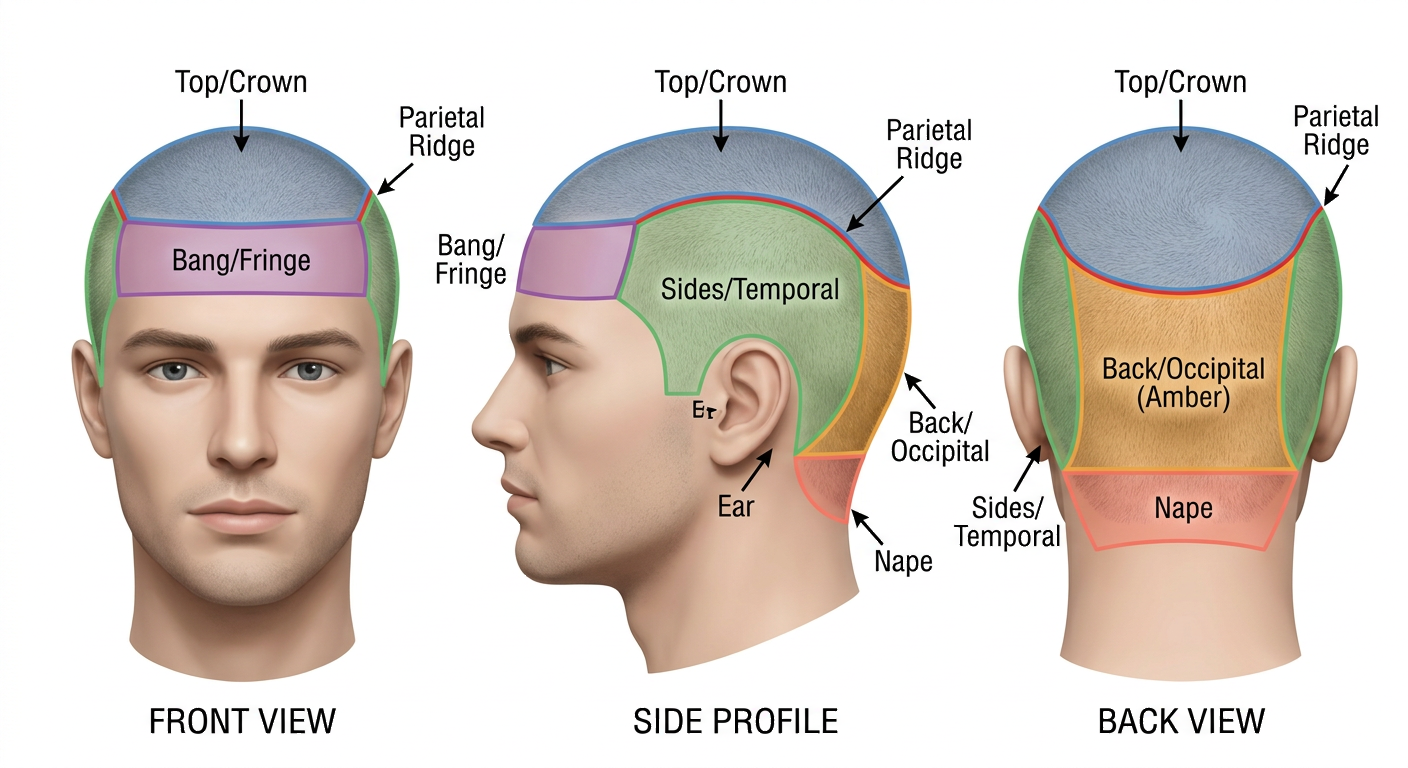
↔ flip for back
Esthetics Program
Makeup Application
Full Face — Service Protocol
Side B — Service Steps
Pre-Service
- Sanitize hands; sanitize ALL palettes and brushes with 70% IPA.
- Consult client — occasion, desired look, skin type, and all allergies.
- Secure hair with headband; drape client with cape.
Full Face Application Order
- Prep: Cleanse if needed; apply skincare; apply face primer and eye primer.
- Foundation: Shade-match at jawline; apply with brush or sponge; blend from center outward and down the neck.
- Concealer: Apply under eyes in triangle shape; spot-correct blemishes; blend with sponge.
- Set: Apply translucent or tinted setting powder; bake under eyes 5 min if desired.
- Contour / Sculpt / Highlight: Apply and blend fully with clean brushes.
- Blush / Bronzer: Smile and apply blush to apple; sweep bronzer along hairline and temples.
- Brows: Define and fill with pencil or powder; brush up with spoolie.
- Eyes: Apply primer → lid color → crease blend → liner → lower lid → blend.
- Lashes: Curl natural lashes; apply strips if requested; mascara with disposable wand only.
- Lips: Line with lip liner; fill; apply lipstick or gloss.
- Set: Mist setting spray 12–18 inches from face.
Post-Service
- Discard all disposable tools immediately into lined waste bin.
- Re-sanitize all palettes and brushes; deep clean sponges.
- Advise client on product names used and proper makeup removal routine.
© 2025 Shear Genius Society, LTD Co. — All Rights Reserved. Unauthorized reproduction prohibited.
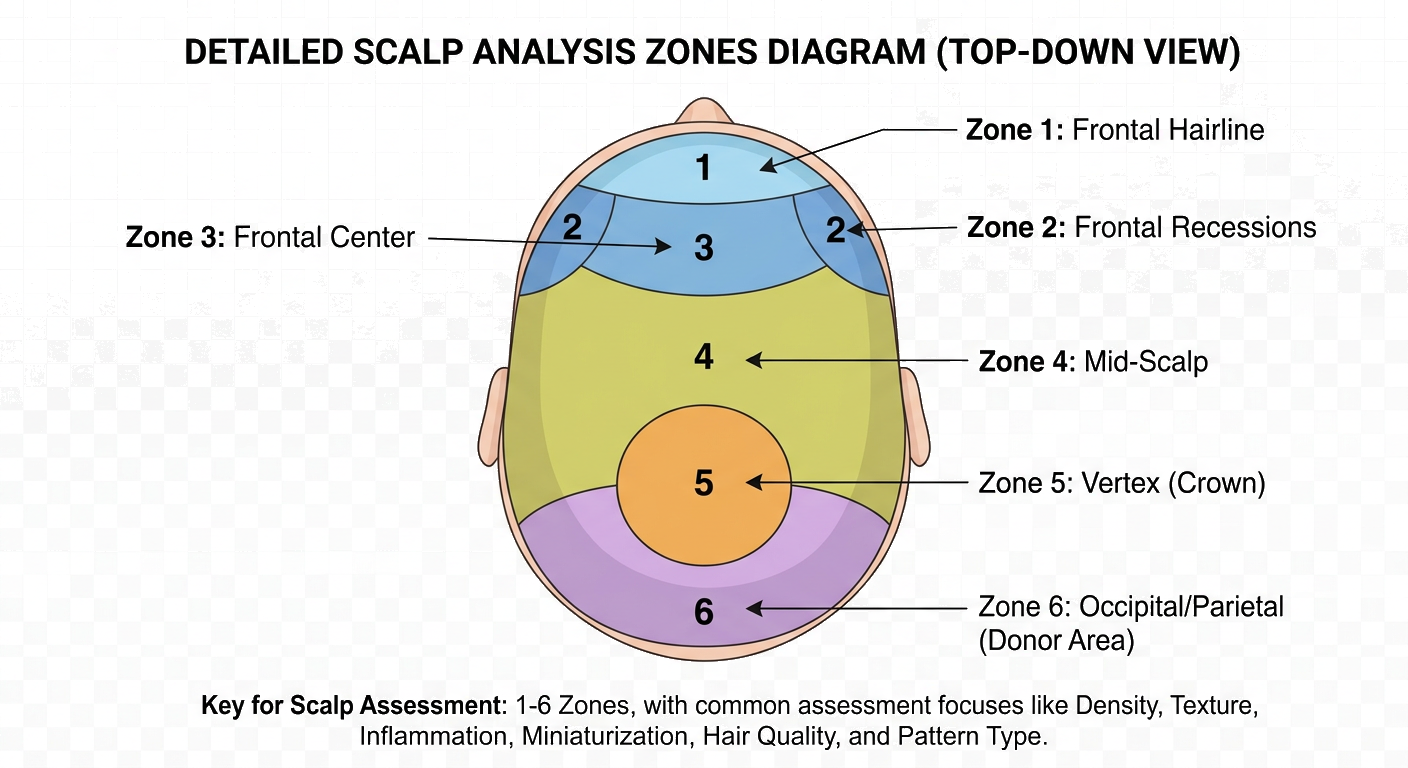
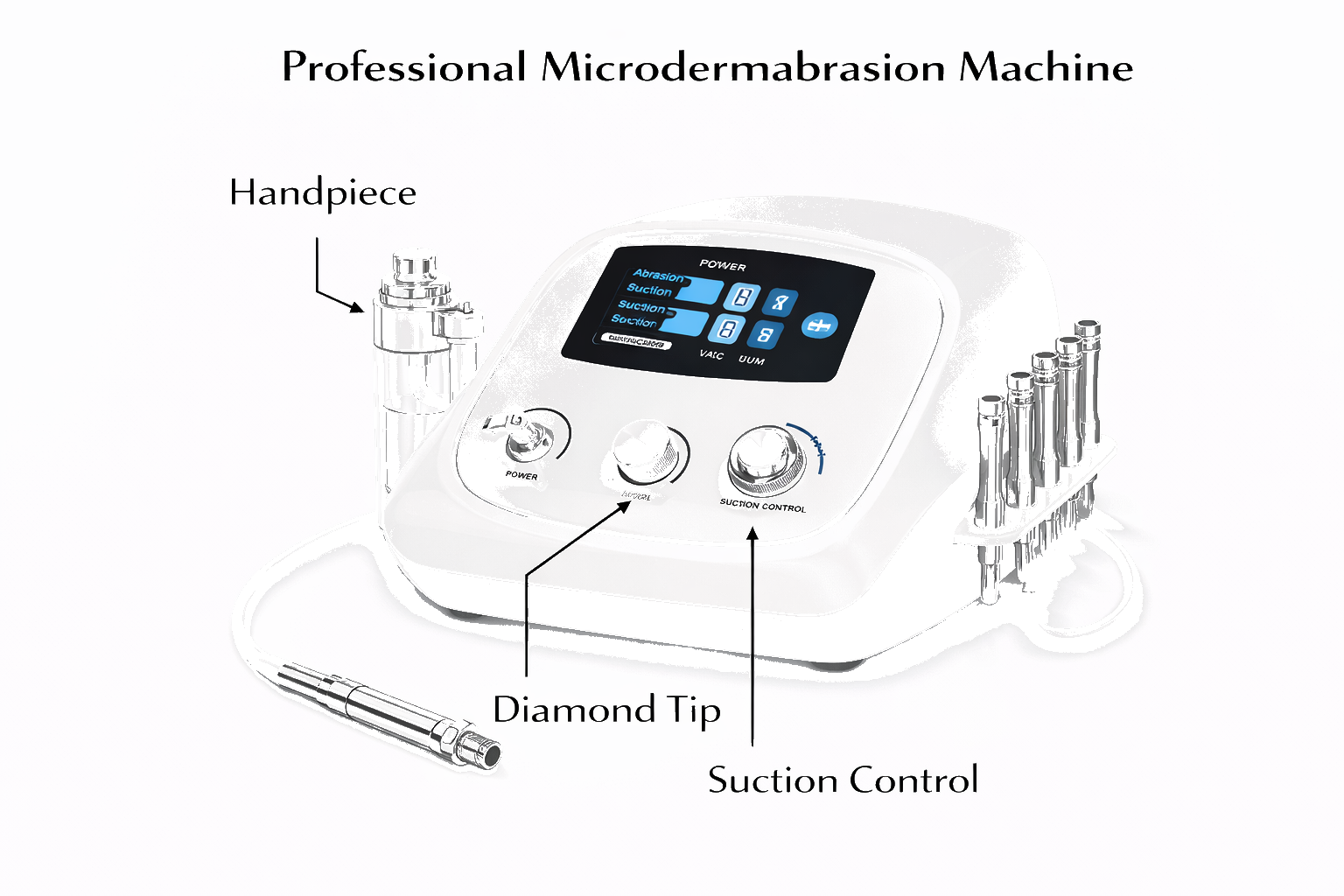
Esthetics Program
Microdermabrasion
Crystal & Diamond-Tip — Station Setup & Supplies
Side A — Equipment & Supplies
Multiuse Equipment — Disinfected
- Microdermabrasion machine
- Diamond-tip handpiece
- Crystal handpiece
- Treatment table
- Magnifying lamp
- Galvanic / HF machine (optional)
Single-Use / Disposable
- Machine filters — replace each client
- Gauze / esthetic wipes
- Cotton rounds
- Gloves (latex-free)
- Headband / client cap
- Draping sheets
- Waste canister liner
- Client eye protection
Products on Cart
- Pre-treatment cleanser (no AHA)
- Alcohol-free toner
- Treatment serum (post-resurfacing)
- Post-treatment calming mask
- Calming moisturizer
- SPF 30+ — mandatory post-service
- Saline / rinse water
⚠ Safety: Contraindicated: active acne lesions, rosacea, broken capillaries, open sores, Accutane within 6 months, blood thinners. Avoid eye socket, nostril rim, and lip vermilion. SPF is MANDATORY after every session. Reduce suction on thin or highly sensitive skin.
© 2025 Shear Genius Society, LTD Co. — All Rights Reserved. Unauthorized reproduction prohibited.
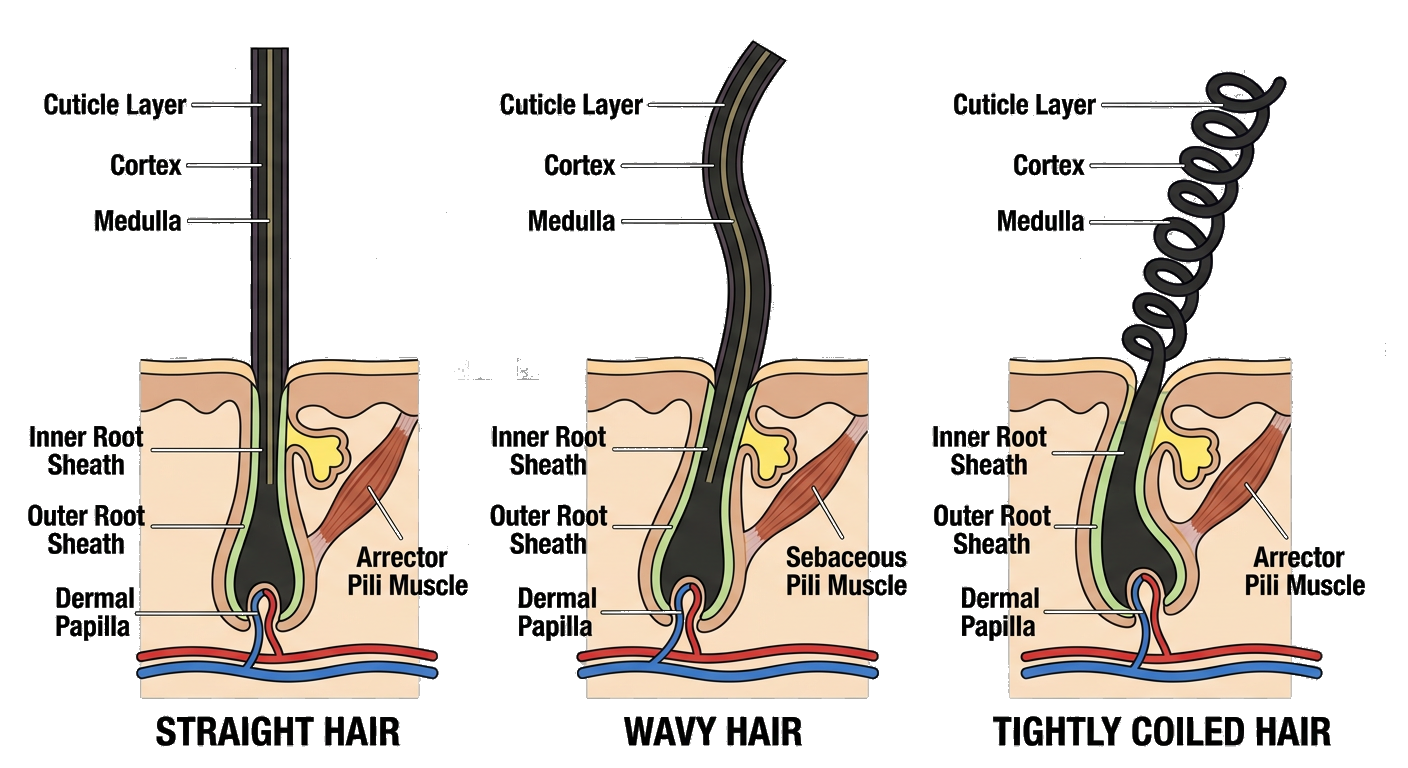
↔ flip for back
Esthetics Program
Microdermabrasion
Crystal & Diamond-Tip — Service Protocol
Side B — Service Steps
Pre-Service
- Sanitize hands; disinfect handpieces; check and replace machine filters.
- Thorough consultation — all medications, skin history, and conditions.
- Conduct skin analysis; confirm no contraindications are present.
- Secure hair; drape client; provide client eye protection.
Service Steps
- Double-cleanse skin; remove all makeup and debris thoroughly.
- Apply alcohol-free toner; allow to dry completely.
- Begin at forehead; work in overlapping strokes using a grid pattern.
- Hold skin taut with non-dominant hand; maintain consistent speed and handpiece angle.
- Adjust suction level based on skin response and area being treated.
- Avoid eye socket, lip vermilion, nostril rim, and any active lesions.
- Complete 1–2 passes per zone (more passes = deeper treatment).
- Remove debris; apply treatment serum immediately while skin is receptive.
- Apply calming mask; leave 10 minutes; remove with warm damp gauze.
- Apply calming moisturizer then SPF 30+ — this step is mandatory, never skip.
Post-Service
- Advise: no direct sun 48–72 hrs; no exfoliants or active ingredients for 5–7 days.
- Recommend daily SPF; gentle cleanser and moisturizer only for one week.
- Replace filters; disinfect handpieces per machine manual; empty waste canister.
© 2025 Shear Genius Society, LTD Co. — All Rights Reserved. Unauthorized reproduction prohibited.
Esthetics Program — Equipment Guide
Diamond Skin Machine
UNOISETION SR-WD50 — Setup, Tips & Usage Guide
Side A — Machine Setup & Diamond Tip Guide
What’s in the Kit
- Main machine (SR-WD50)
- 3 microdermabrasion handles
- 9 diamond tips (D-120, D-180, D-200, D-240)
- PVC hose x 1
- Large & small cotton filters (replace after every use)
- Cleaning brush, spare fuses x2, spare rubber rings x6
- Replace diamond tips every 3 months
Diamond Tip Selection Guide
- Higher D = finer grit. Always start finer to avoid irritation.
- D-200 & D-240: Eyes, sides of nose, wrinkles, oil tablets, blackheads — most delicate areas
- D-240, D-180 & D-120: Full face, larger blemishes — standard facial work
- D-120 & D-180: Body only — knees, elbows, stretch marks — coarser work
- New or sensitive client: Always begin with D-240 (finest); progress to coarser over sessions
- Thicker/oilier skin: D-180 or D-120 for deeper exfoliation once tolerance confirmed
Machine Setup — Step by Step
- Connect power cord to machine; place on flat stable surface.
- Check handle for intact black rubber ring — replace if missing or damaged.
- Insert a fresh cotton filter into the handle port before every use.
- Attach desired diamond tip to handle — press and twist until secure.
- Connect one end of PVC hose to handle; other end to suction port on machine.
- Power on machine; adjust intensity dial starting at MIN — never start at MAX.
Intensity & Suction Guide
- New client / sensitive skin: Start MIN; increase gradually only after skin tolerates
- Normal skin: Low-to-mid range for face; mid for body
- Oily / thicker skin: Mid range; do not exceed comfort level
- Around eyes: Minimum suction only — D-200 or D-240 exclusively
- Maximum session time: 30 minutes — do not exceed
- After session: Return dial to MIN before powering off
⚠ Safety: Do NOT use on eyes, thyroid, parathyroid, testicles, or pregnant abdomen. Keep skin moist during treatment — do not use on dry skin. No essential oils or heavy cosmetics during use. Max 30 min per session.
© 2025 Shear Genius Society, LTD Co. — All Rights Reserved. Unauthorized reproduction prohibited.
↔ flip for back
Esthetics Program — Equipment Guide
Diamond Skin Machine
UNOISETION SR-WD50 — Full Service Protocol
Side B — Pre-Service, Treatment Steps & Post-Care
Contraindications — Do NOT Service
- Pregnant or lactating women
- Heart disease or pacemaker
- Epilepsy, severe diabetes, hyperthyroidism
- Malignant tumors, hemophilia, or hemorrhage conditions
- Active skin disease or infectious skin condition
- Surgery, c-section, or plastic surgery within 3 months
- Miscarriage within 3 months or natural birth within 2 months
- Metallic implants or prosthesis in treatment area
- Unhealed wounds in treatment area
- Sensitive/couperose/rosacea skin — use extreme caution or avoid
- Active acne lesions — do not pass over open pustules
Recommended Service Routine
- Cleanse: Remove all makeup, debris, and oil with gentle cleanser; remove with damp gauze.
- Steam: Steam face 5–8 min to open pores and soften blockages; skip for rosacea/sensitive.
- Microdermabrasion: Begin at forehead; use overlapping strokes in grid pattern. Hold skin taut. Work zone by zone — forehead, cheeks, chin, nose. Avoid eye socket, lip vermilion, nostril rim.
- Use correct tip per zone (see Side A). Complete 1–2 passes per zone.
- Check suction gauge — adjust per client comfort and skin response throughout.
- Hydration: Apply hydrating facial mask immediately after — skin is highly receptive; leave 10–15 min.
- Serum: Apply treatment serum to still-receptive skin; press in gently.
- Protection: Apply SPF 30+ — mandatory every session; skin is freshly exfoliated and vulnerable.
Client Education — Tell Every Client
- Results begin immediately; optimal results after 6–10 sessions
- Initial results last 2–4 weeks; recommend every 4–6 week maintenance
- Redness or sensitivity for 24–48 hrs post-service is normal
- No direct sun exposure for 48–72 hrs after treatment
- No retinols, AHAs, BHAs, or exfoliants for 7 days post-treatment
- Avoid heat (sauna, steam room, hot yoga) for 24 hrs
- Use gentle cleanser and SPF daily until skin normalizes
Session Frequency Guide
- Initial series: 6–10 treatments, every 2–4 weeks
- Maintenance: Once every 4–6 weeks after completing initial series
- Sensitive skin: Every 4–6 weeks throughout; never compress schedule
- Body (knees/elbows/stretch marks): Every 2–3 weeks; use D-120 or D-180 only
© 2025 Shear Genius Society, LTD Co. — All Rights Reserved. Unauthorized reproduction prohibited.
Esthetics Program — Equipment Sanitation
Diamond Skin — Disinfection
UNOISETION SR-WD50 — After Every Client, Every Time
Side A — Single-Use Disposables & Post-Service Breakdown
Single-Use Only — Discard After Every Client
- Cotton filter (handle port): Remove and discard after EVERY use — no exceptions. Insert fresh filter before next client.
- Gauze / esthetic wipes: Used for cleansing, mask removal — discard immediately
- Cotton rounds: All product application and removal — discard immediately
- Headband / client cap: Discard or launder between every client
- Draping sheets / towels: Launder between every client
- Gloves: Remove and discard after each client; wash hands before and after
- Waste canister liner: Replace when full or after any fluid exposure
Post-Service Machine Breakdown — Every Client
- Power off the machine; return intensity dial to MIN before shutting down.
- Disconnect hose from handle and from machine suction port.
- Remove diamond tip from handle — handle with care; tips are fragile.
- Remove and discard cotton filter from handle port — do not reuse under any circumstances.
- Clean diamond tip with water or soapy water; use cleaning brush to clear all debris from grit surface; rinse thoroughly; allow to air dry or dry with clean cloth.
- Wipe PVC hose interior and exterior with IPA wipe; allow to dry before storing.
- Wipe machine exterior including suction port area with EPA-registered disinfectant wipe.
- Store clean, dry diamond tip in labeled holder or covered container.
⚠ Rule: The cotton filter is mandatory before every single use. A missing or reused filter allows debris to enter the machine interior, causing damage and cross-contamination. Replace it — no exceptions, no shortcuts.
© 2025 Shear Genius Society, LTD Co. — All Rights Reserved. Unauthorized reproduction prohibited.
↔ flip for back
Esthetics Program — Equipment Sanitation
Diamond Skin — Disinfection
UNOISETION SR-WD50 — Deep Clean, Maintenance & Storage
Side B — Deep Clean Protocol & Maintenance Schedule
Diamond Tip Deep Disinfection — After Every Client
- Remove tip from handle; rinse under warm running water.
- Use cleaning brush to scrub grit surface; remove all skin debris from the diamond abrasive face.
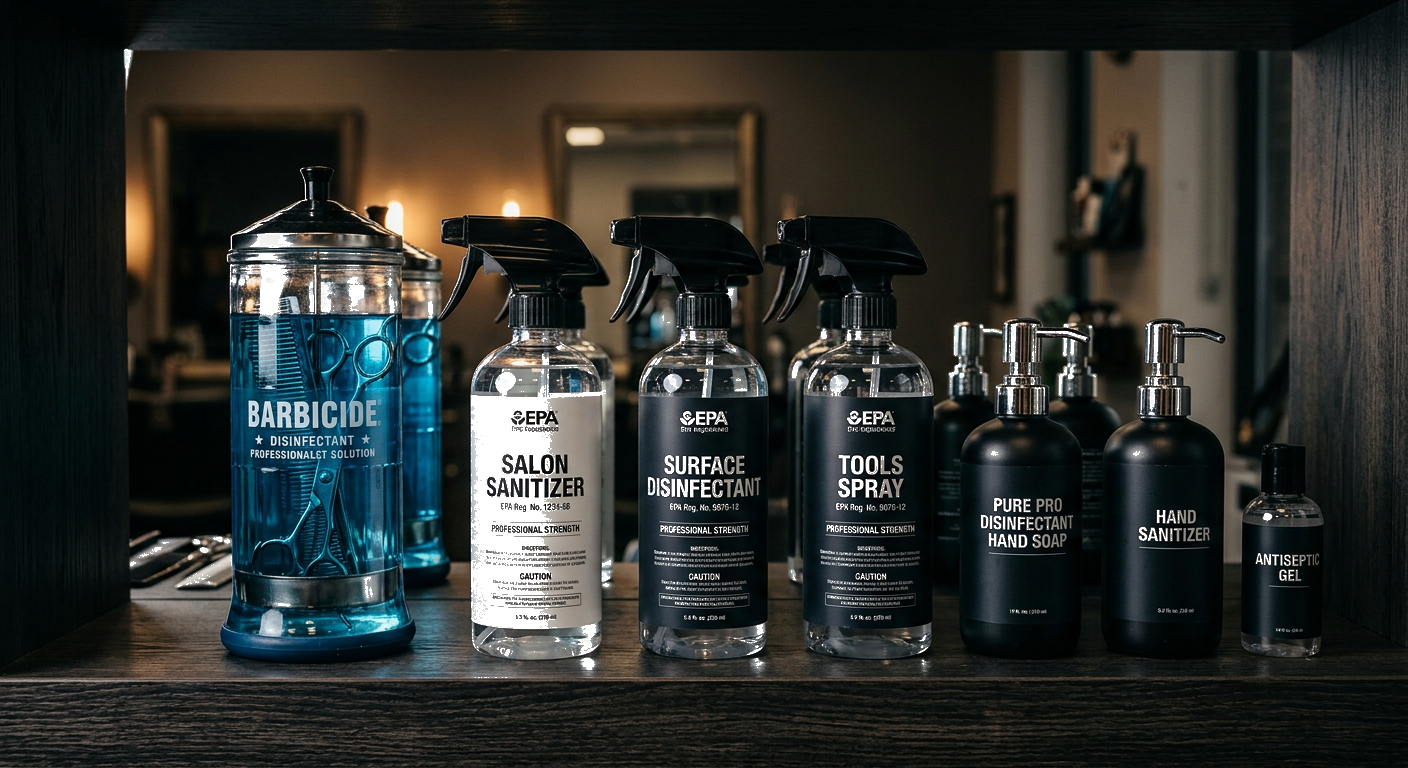
- Soak tip in EPA-registered disinfectant solution for full required contact time (minimum 10 min for Barbicide).
- Remove with clean tongs; rinse thoroughly; pat dry with clean towel.
- Allow to fully air dry before reinstalling or storing.
- Store in covered, labeled container — never loose in a drawer.
- Replace tip entirely every 3 months — or sooner if grit is worn smooth, chipped, or damaged.
Handle & Hose Disinfection
- Wipe handle exterior thoroughly with 70% IPA wipe; pay attention to tip connection port and all crevices.
- Inspect handle rubber ring — replace immediately if missing, cracked, or flattened. A damaged ring breaks suction and prevents proper treatment.
- Flush PVC hose by running clean water through it if visible debris is present.
- Wipe hose exterior with IPA wipe; allow to fully dry before coiling for storage.
- Store handles and hose in clean, covered area — not on open counter.
Machine Body & Maintenance Schedule
- After every client: Wipe machine exterior, control panel, and suction port with EPA disinfectant wipe
- Weekly: Check cotton filter stock; inspect all rubber rings; check fuse condition
- Monthly: Inspect all hose connections for cracks or wear; check suction gauge accuracy
- Every 3 months: Replace all diamond tips regardless of appearance; review filter stock
- Machine storage: Keep away from humidity, direct sunlight, and heat sources; cover when not in use
- Never: Submerge machine, use near water, or use with damaged power cord
Troubleshooting Quick Reference
- Weak suction: Check cotton filter — likely clogged; replace immediately
- No suction: Check rubber ring on handle; check hose connections at both ends
- Tip feels rough/uneven: Inspect diamond face; replace tip if grit is uneven or worn
- Machine won’t power on: Check fuse; replace with spare fuse from kit
- Client discomfort: Reduce intensity immediately; switch to finer tip (higher D number)
© 2025 Shear Genius Society, LTD Co. — All Rights Reserved. Unauthorized reproduction prohibited.
Esthetics Program
Body Wraps
Detox · Hydrating · Slimming — Station Setup
Side A — Equipment & Supplies
Multiuse Equipment — Disinfected
- Body wrap treatment table
- Thermal / electric blanket
- Mylar / foil blanket
- Application mitt or brush
- Body product warmer / bowl
- Thermometer
Single-Use / Disposable
- Disposable underwear
- Draping / modesty sheets
- Plastic film / wrap
- Elastic bandages (slimming)
- Gloves (latex-free)
- Disposable exfoliant mitt
- Warm towels (launderable)
- Disposable foot coverings
Products by Wrap Type
- Detox: Seaweed or clay body mask, detox essential oil blend, mineral bath salts
- Hydrating: Shea / cocoa butter body mask, hyaluronic body serum, nourishing body oil
- Slimming / Contour: Caffeine-infused wrap solution or clay, neoprene bandages, detox oil
- All wrap types: Body exfoliant (prep step) · warm water (removal) · moisturizer / body oil (post)
⚠ Safety: Do NOT wrap clients with claustrophobia, heart conditions, high blood pressure, pregnancy, fever, or circulatory disorders. Provide water during entire treatment. Monitor client every 10 minutes — overheating is a serious risk. Limit wrapped time to 30–45 minutes maximum.
© 2025 Shear Genius Society, LTD Co. — All Rights Reserved. Unauthorized reproduction prohibited.
↔ flip for back
Esthetics Program
Body Wraps
Detox · Hydrating · Slimming — Service Protocol
Side B — Service Steps
Pre-Service
- Sanitize hands; disinfect and prepare table; pre-warm blanket layers.
- Thorough consultation — screen for ALL contraindications listed on Side A.
- Have client shower before service (preferred) or warm towel prep.
- Layer table from bottom up: thermal blanket → mylar blanket → drape sheet.
Service Steps
- Apply full-body exfoliant; massage and remove with warm towels.
- Mix and warm body wrap solution to appropriate temperature — test on wrist.
- Apply solution evenly to entire body using mitt or gloved hands.
- Wrap body in plastic film layer from ankles upward.
- Wrap in mylar layer to retain heat and enhance product penetration.
- Wrap in outer thermal blanket; secure comfortably — not too tight.
- Client rests 30–45 minutes — check in every 10 minutes without exception.
- Unwrap carefully; remove product with warm towels or escort to shower.
- Apply post-wrap moisturizer or body oil to entire body.
Post-Service
- Advise client to hydrate with water; avoid strenuous activity for 2 hours.
- Discard all single-use items; launder blankets; disinfect table and equipment.
© 2025 Shear Genius Society, LTD Co. — All Rights Reserved. Unauthorized reproduction prohibited.
Esthetics Program — Equipment Guide
Diamond Skin — Technique
SR-WD50 · Wand Technique & Zone-by-Zone Protocol
Side A — Tip Selection & Wand Technique
Tip Selection by Zone
- D-240 (finest): Eyes, sides of nose, lip lines, fine wrinkles, blackheads
- D-180 (medium): Full face — cheeks, forehead, chin, general treatment
- D-120 (coarsest): Body only — knees, elbows, striae, thick skin
- First session rule: Always start at D-240; advance only after confirmed tolerance
- Sensitive skin: D-240 throughout; never advance without full reassessment
Intensity Settings
- Level 1–2: First-time, sensitive, thin, or mature skin
- Level 3–4: Normal skin, returning clients, maintenance
- Level 5+: Thick / resilient skin, congested pores, body — assess carefully
- Begin low; increase one increment at a time only
- Client discomfort — reduce immediately; do not push through
- Maximum: 30 min continuous use per session
Wand Technique
- Angle: 45° to skin — never perpendicular
- Skin tension: Non-dominant hand stretches skin taut ahead of wand
- Speed: 1–2 inches per second maximum
- Pressure: Let suction do the work — do not press wand into skin
- Passes: 2–3 per zone maximum per session
- Direction: Outward and upward; always away from eyes
Zone Treatment Order
- Forehead — horizontal strokes, hairline to brow
- Right cheek — cheekbone outward, then under cheekbone
- Left cheek — mirror pattern
- Nose sides — D-240 only; short downward strokes
- Chin and jaw — center outward to jawline
- Upper lip — D-240; short vertical strokes only
- Periorbital — D-240; outer corner only; no direct under-eye
⚠ Safety: NEVER use on dry skin. Check and replace cotton filter between every zone. Do NOT treat active breakouts, open lesions, or inflamed areas.
© 2025 Shear Genius Society, LTD Co. — All Rights Reserved. Unauthorized reproduction prohibited.
↔ flip for back
Esthetics Program — Equipment Guide
Diamond Skin — Technique
SR-WD50 · Clinical FAQ & Post-Care Protocol
Side B — Clinical FAQ & Post-Care
Treatment Series & Results
- Immediate improvement after session 1 — softer, smoother, more radiant
- 6–10 sessions for lasting tone, texture, and smoothness results
- 8–12 weeks continuous: reduced scarring, fewer lines, more even tone
- Results last 2–4 weeks per cycle; regular maintenance recommended
- Best for: dullness, discoloration, rough texture, enlarged pores, early aging
Absolute Contraindications
- Sensitive, couperose, or rosacea skin — do not service
- Active acne / inflamed pimples — avoid affected areas
- Pregnant or lactating — contraindicated
- Heart disease or pacemaker — contraindicated
- Unhealed wounds or post-surgery — contraindicated
- Skin disease or active infection — refer; do not service
- Plastic surgery / implants within 3 months — contraindicated
Normal Post-Service Effects
- Mild redness or sensitivity for 24–48 hrs — normal and expected
- Slight tenderness immediately after — resolves quickly
- Skin feels softer, smoother, more supple within 24 hrs
- Prolonged burning or excessive redness — document and report
Post-Service Client Instructions
- No direct sun exposure for 24–48 hrs after treatment
- No retinols, AHAs, or exfoliating products for 1 week
- No excess heat (sauna, steam, hot shower) for 24 hrs
- Apply SPF 30+ before leaving — mandatory on freshly exfoliated skin
- Gentle moisturizer only; avoid all actives for 48 hrs
⚠ Documentation: Record tip size, intensity level, passes per zone, and any reactions in client record every session. Book return visit before client departs.
© 2025 Shear Genius Society, LTD Co. — All Rights Reserved. Unauthorized reproduction prohibited.
Cosmetology Program
Shampoo & Scalp Treatment
Scalp Analysis, Shampoo Technique & Scalp Care Protocols
Side A — Supplies, Products & Scalp Condition Key
Supplies
- Shampoo cape / waterproof drape
- Towels x2 (neck + hair)
- Shampoo bowl & chair
- Clarifying shampoo
- Moisturizing / treatment shampoo
- Scalp treatment / serum (as indicated)
- Conditioner (rinse-out or leave-in)
- Wide-tooth comb
- Spray bottle (water)
Scalp Condition Guide
- Oily/buildup: Clarifying shampoo — 1x/wk
- Dry/flaky: Moisturizing + scalp treatment
- Dandruff: Medicated / zinc pyrithione shampoo
- Sensitive: Sulfate-free gentle formula
- Color-treated: Color-safe / low-pH shampoo
- Pre-chemical: Do NOT shampoo 24–48 hrs before
© 2025 Shear Genius Society, LTD Co. — All Rights Reserved.
↔ flip for back
Cosmetology Program
Shampoo & Scalp Treatment
Scalp Analysis, Shampoo Technique & Scalp Care Protocols
Side B — Service Steps, Analysis Zones & Safety

Service Steps
- Consult: examine scalp under light — note oiliness, flakes, lesions, inflammation per zone.
- Drape client: waterproof cape at neck, towel over shoulders.
- Pre-rinse with warm water — test temp on wrist first; never hot.
- Apply shampoo to scalp only (not lengths); massage with pads of fingers — NOT nails — using rotary, effleurage, and petrissage movements.
- Rinse thoroughly — no product residue at nape or hairline.
- Repeat if needed (especially for buildup/product-heavy hair).
- Apply conditioner mid-shaft to ends; avoid scalp on fine/oily hair; leave per manufacturer.
- Rinse completely; gently squeeze excess water — do not twist.
- Apply scalp treatment if indicated; do not rinse unless directed.
- Wrap in towel; proceed to next service.

⚠ Safety: Never shampoo if scalp has abrasions, lesions, or active infection. Always check water temperature. Do not scratch scalp with nails — causes micro-tears and potential infection.
© 2025 Shear Genius Society, LTD Co. — All Rights Reserved.
Cosmetology Program
Haircut — Wet & Dry
Blunt, Graduated, Layered & Textured Cut Techniques
Side A — Equipment, Elevation Guide & Cut Types
Equipment
- Shears (cutting)
- Thinning shears (texturizing)
- Wide-tooth comb
- Cutting comb (fine-tooth)
- Sectioning clips (6–8)
- Cape
- Spray bottle
- Detangling spray (dry cut)
- Neck brush
- Hand mirror (for client review)
- Guard for razor cut (optional)
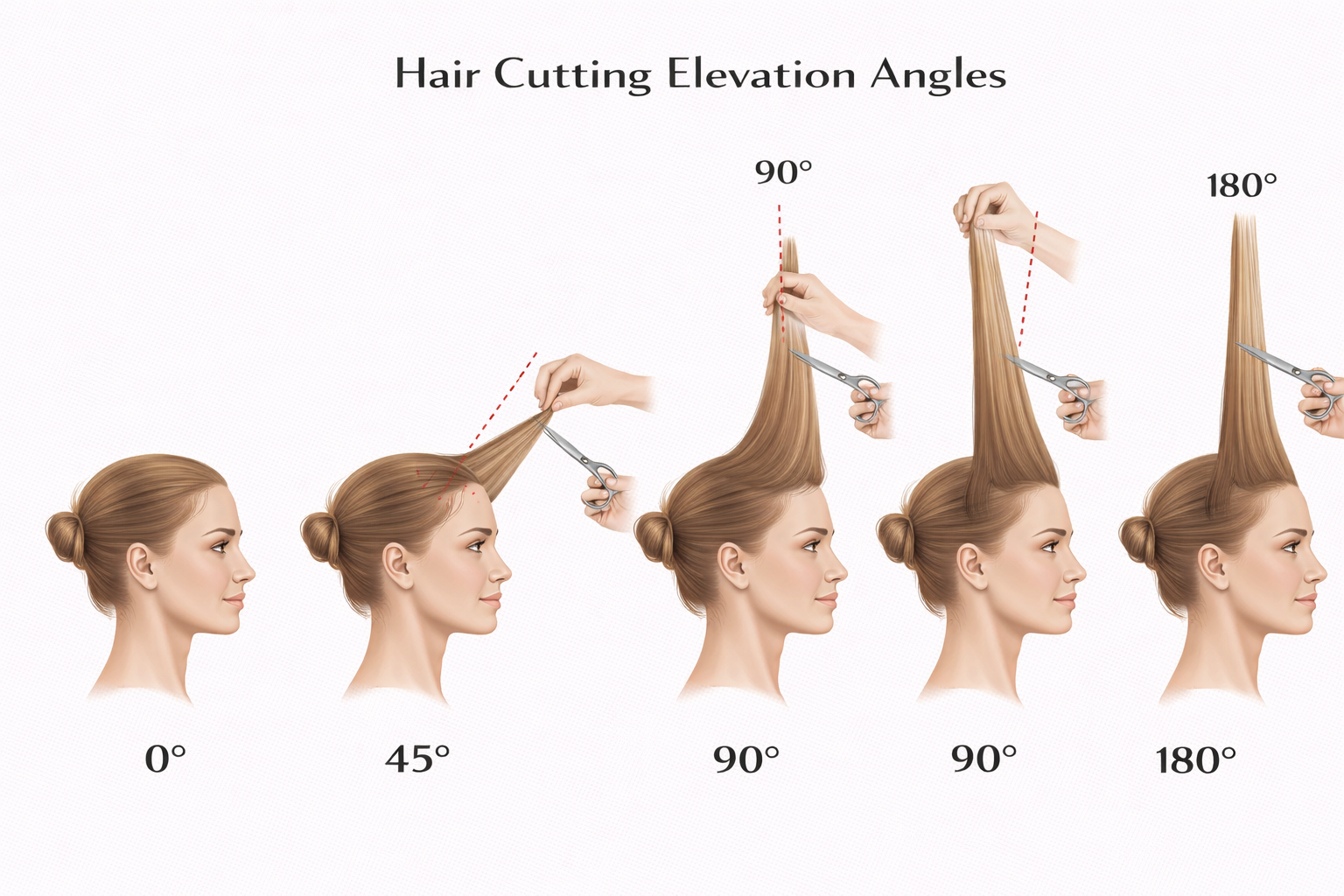
Cutting Angle Key
- 0° (natural fall): One-length / blunt; no elevation
- 45° (low elevation): Weight line; stacked bob; graduation
- 90° (square layer): Even layers throughout; removes weight
- Above 90° (high layer): Removes length and weight; shorter underneath than top — creates volume
- Over-direction: Pulling hair away from natural fall to add length variation
- Guide: First section cut; all other sections match to guide
Cut Type Quick Reference
- Blunt / one-length: All hair same length; clean line
- Graduated: Short underneath stacked into longer on top
- Layered: Weight removed throughout; movement
- Textured / razor: Soft, feathery, disconnected ends
© 2025 Shear Genius Society, LTD Co. — All Rights Reserved.
↔ flip for back
Cosmetology Program
Haircut — Wet & Dry
Blunt, Graduated, Layered & Textured Cut Techniques
Side B — Sectioning Map, Wet Cut Steps & Dry Cut Notes

Use same section map for haircut: bang/front → sides → crown → occipital → nape
Wet Cut Steps
- Consult: confirm length, shape, style goal. Show photo reference if available.
- Shampoo and condition; towel-dry to damp.
- Detangle from ends to roots — never root to end.
- Establish 4–5 sections: part front from back at crown; divide sides from back.
- Establish guide: cut the first section; this is your roadmap — all sections match to it.
- Hold consistent elevation and over-direction section by section.
- Cross-check: re-comb perpendicular to cutting direction to confirm evenness.
- Finish with thinning shears or razor if texture desired.
Dry Cut Notes
- Curly hair: Always cut dry; wet curls elongate and mask true shrinkage — dry shows true curl pattern.
- Cut curl by curl; pull curl down gently; snip ends; do not stretch.
- Fine/straight dry cut: Shows true fall and any unevenness immediately.
- After cut, recheck with client — both wet and dry results may differ.

⚠ Safety: Never cut from guide at wrong elevation without understanding the shape it will create. Cross-check every cut. Always show client finished result with hand mirror and confirm satisfaction before removing cape.
© 2025 Shear Genius Society, LTD Co. — All Rights Reserved.

Cosmetology Program
Blowout & Blowdry Styling
Heat Styling, Brush Technique & Blowout Protocol
Side A — Equipment, Brush Types & Selection Guide
Equipment & Supplies
- Hooded or handheld dryer
- Blow dryer (1875W min)
- Concentrator nozzle attachment
- Diffuser attachment (curly/wavy hair)
- Paddle brush (smooth/straight)
- Round brush (volume/waves) — various sizes
- Denman / vent brush
- Wide-tooth comb, fine-tooth comb
- Sectioning clips (6–8)
- Heat protectant spray (mandatory)
- Styling cream / blow-dry lotion
- Finishing spray / serum
Brush Selection Guide
- Paddle brush: Smooth, straight styles; long hair
- Large round (2.5"+): Volume, soft waves; long layers
- Medium round (1.5–2"): Body, bend; medium hair
- Small round (1"): Tight curl formation; short hair
- Diffuser: All curl types — low heat, high airflow
- Vent brush: Quick dry, rough dry only
© 2025 Shear Genius Society, LTD Co. — All Rights Reserved.
↔ flip for back
Cosmetology Program
Blowout & Blowdry Styling
Heat Styling, Brush Technique & Blowout Protocol
Side B — Steps, Technique & Safety
Pre-Service
- Shampoo and condition; towel-blot — do not rough-dry.
- Apply heat protectant evenly to damp hair — mandatory every blowout.
- Apply blow-dry lotion or styling cream if desired; comb through.
- Section hair into 4 quadrants: nape (start), sides, top.
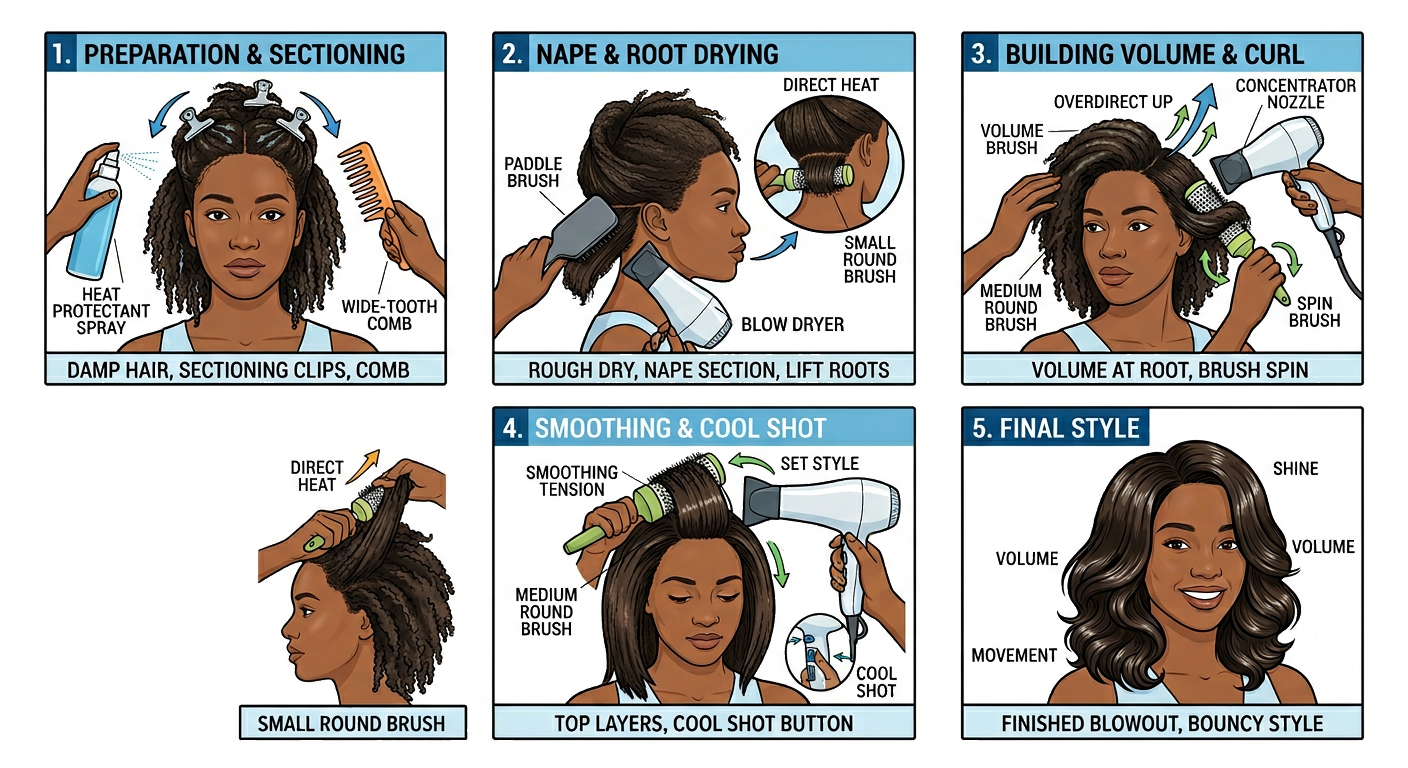
Blowout Steps
- Begin at nape — smallest sections first, most difficult last.
- Hold dryer 6"+ from scalp; aim concentrator nozzle down the hair shaft (cuticle direction).
- Roll round brush under section; follow with dryer moving from roots to ends — no back-and-forth.
- Dry each section to 100% before moving on; moving too fast causes frizz.
- Work section by section upward: nape → sides → crown → top/bang.
- Finish with cool shot button to set cuticle and lock shine.
- Apply serum or finishing spray; style as desired.

⚠ Safety: Heat protectant is non-negotiable — direct high heat without protection causes cortex damage. Maintain 6-inch minimum distance. Never use metal brush with dryer — burns scalp. Check dryer cord for damage before every use.
© 2025 Shear Genius Society, LTD Co. — All Rights Reserved.
Cosmetology Program
Roller Set & Wet Set
Setting Patterns, Roller Selection & Wet Set Technique
Side A — Supplies & Roller Size Guide
Supplies
- Setting lotion / wrap lotion
- Foam rollers — various sizes
- End papers
- Sectioning clips
- Wide-tooth comb, rat-tail comb
- Hooded dryer (required)
- Spray bottle
- Neutralizing shampoo (if post-chemical)
- Finishing spray / light hold spray
- Diffuser (optional for natural hair)
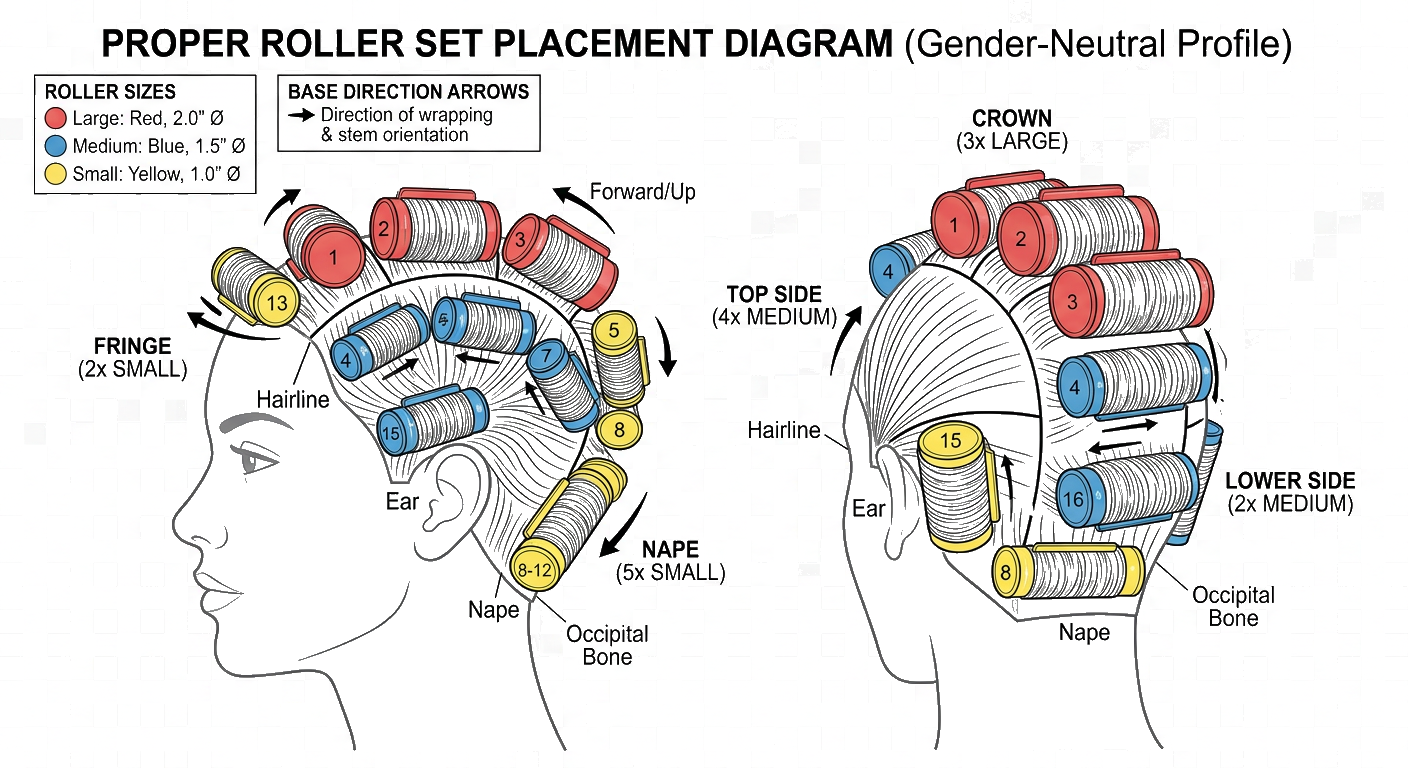
Roller Size Guide
- Large roller (1.5–2"): Soft waves, loose curls, volume
- Medium roller (1–1.5"): Body curls, medium wave pattern
- Small roller (3/4"): Tight curls, short hair, definition
- Perm rod (small/med): Spiral curls, defined pattern
- Flexi rod: Elongated spiral; great for natural hair
© 2025 Shear Genius Society, LTD Co. — All Rights Reserved.
↔ flip for back
Cosmetology Program
Roller Set & Wet Set
Setting Patterns, Roller Selection & Wet Set Technique
Side B — Steps & Technique
Pre-Service
- Shampoo, condition, towel-blot to damp — not wet — for fastest dry time.
- Apply setting lotion throughout; comb evenly.
- Section hair; begin at nape — work upward.
Rolling Steps
- Take clean sections equal to or smaller than the roller diameter — no wider.
- Place end paper over the ends — prevents fish-hooks (bent ends).
- Roll smoothly from ends to scalp; tension should be firm but not tight enough to stretch scalp.
- Secure each roller with clip or pick; do not overlap sections.
- Continue working from nape up through sides, crown, top.
- Place under hooded dryer at medium-high heat until completely dry — usually 20–45 min.
- Allow to cool fully before removing rollers (cooling sets the wave).
- Remove rollers starting at nape; unroll gently — do not pull.
- Finger-comb or wide-tooth comb to style; do not break the wave with a fine comb.

⚠ Safety: Fully dry before removing rollers — removing early causes set to drop immediately. Tension too tight at scalp = traction alopecia risk over time. Always cool before removing.
© 2025 Shear Genius Society, LTD Co. — All Rights Reserved.
Cosmetology Program
Curling Iron Styling
Thermal Styling — Curls & Waves
Side A — Tools & Setup
Irons & Sizes
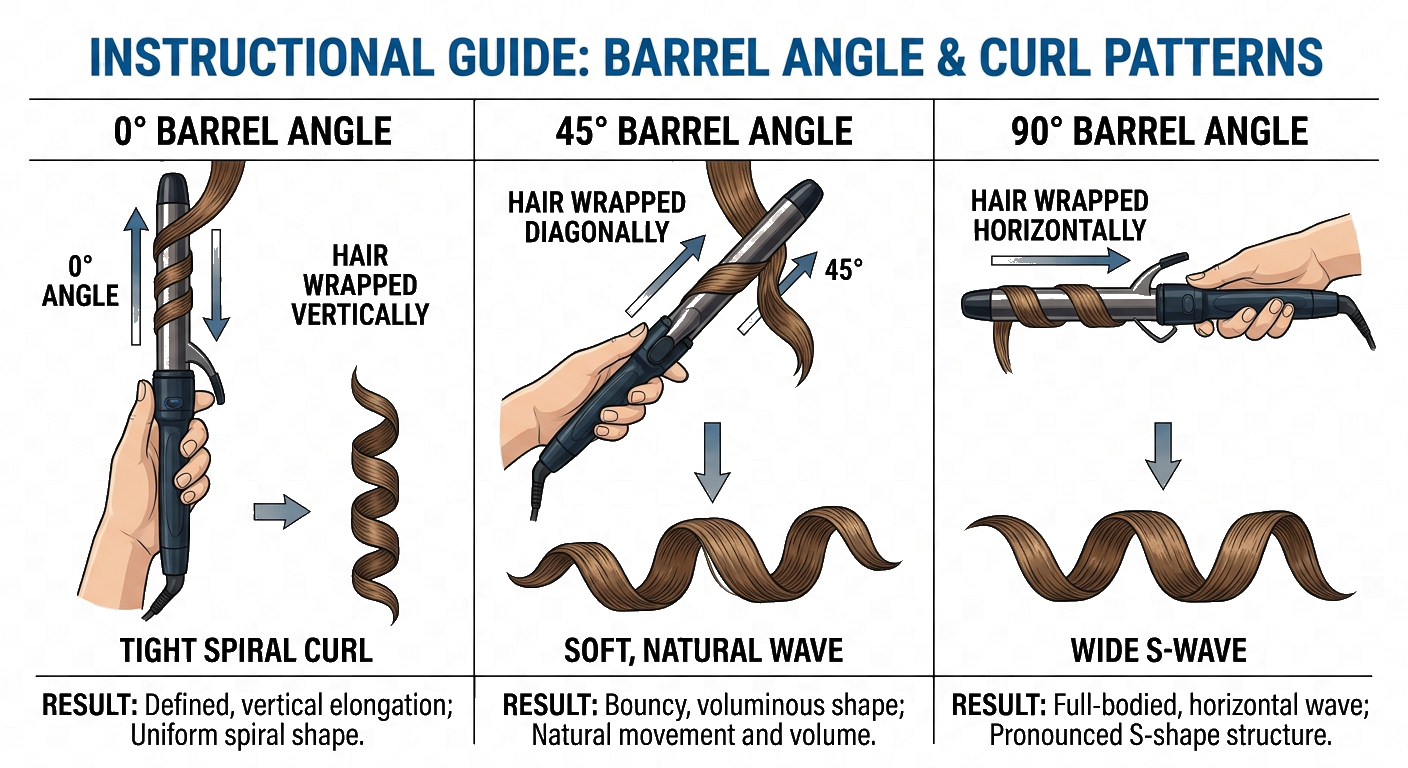
- 1/2"–3/4" barrel: Tight ringlets, spiral curls
- 1" barrel: Classic bouncy curls (most versatile)
- 1.5"–2" barrel: Loose waves, Hollywood glamour
- Wand (no clip): Beachy waves — wrap without clamp
- Marcel iron: Professional rotating handle for precision work
- Spiral/twist iron: Corkscrew curls, uniform formation
Supplies
- Wide-tooth comb & tail comb
- Sectioning clips (6–12)
- Heat protectant spray (non-negotiable)
- Heat-resistant mat
- Light-hold hairspray or flexible hold spray
- Shine serum or finishing cream

⚠ Safety: ALWAYS apply heat protectant before every pass. Never clamp over wet hair — steam burns scalp. Place iron on heat-resistant mat only — never on station. Temp: fine hair 300–350°F; medium 350–375°F; coarse 375–400°F max.
© 2025 Shear Genius Society, LTD Co. — All Rights Reserved.
↔ flip for back
Cosmetology Program
Curling Iron Styling
Thermal Styling — Curls & Waves
Side B — Technique & Procedure
Pre-Service
- Shampoo, condition, and blow-dry hair completely smooth — iron on 100% dry hair only.
- Section into 4 quadrants; work bottom to top, nape to front.
- Pre-heat iron; test on tissue — no scorching = safe to use.
Technique Steps
- Take 1"–1.5" horizontal sections working upward.
- Comb section smooth; mist lightly with heat protectant.
- Open clamp; place section at mid-shaft; roll iron toward or away from face per desired direction.
- Hold 5–10 seconds; release and cup curl in palm to cool — do NOT brush yet.
- Continue up head; work consistently (all toward face or all away).
- Once cool, finger-comb or soft brush to blend; finish with light spray.
Curl Direction Guide
- Toward face: Classic feminine, face-framing
- Away from face: Retro, voluminous, editorial
- Alternating: Natural, loose, bouncy waves
- All same direction: Uniform ringlets or defined spiral
© 2025 Shear Genius Society, LTD Co. — All Rights Reserved.

Cosmetology Program
Hair Color — Full & Retouch
Permanent, Demi & Semi-Permanent Color Protocols
Side A — Supplies & Developer Volume Guide
Supplies — Color Service
- Color cape / chemical-resistant drape
- Client record card (document formula)
- Gloves (nitrile, chemical-resistant)
- Color bowl & brush
- Mixing scale (weigh developer & color)
- Foils or cap (if needed for technique)
- Timer
- Barrier cream (hairline, ears, neck)
- Clarifying / color-prep shampoo
- Developer (10, 20, 30, or 40 vol)
- Color (permanent, demi, semi, temp)
- Neutralizing / color-safe shampoo
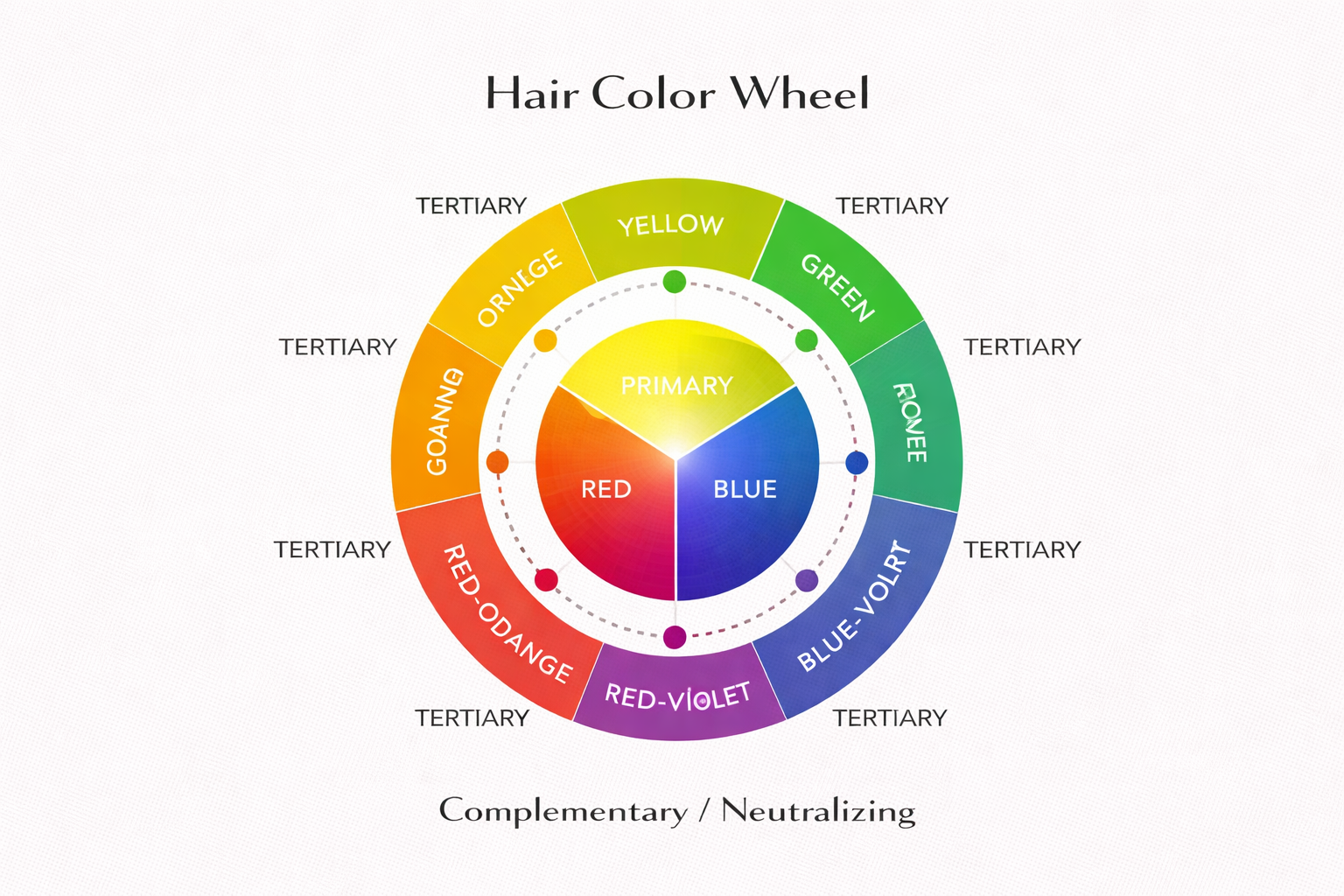
- Toner (if needed post-lift)
- Deep conditioner
Developer Volume Key
- 10 vol: Deposit only — no lift; tone, refresh, darken
- 20 vol: 1–2 levels lift; standard retouch & full color
- 30 vol: 2–3 levels lift; natural dark hair
- 40 vol: Maximum lift — resist & stubborn gray only; max damage risk
© 2025 Shear Genius Society, LTD Co. — All Rights Reserved.
↔ flip for back
Cosmetology Program
Hair Color — Full & Retouch
Permanent, Demi & Semi-Permanent Color Protocols
Side B — Service Steps, Zones & Retouch Rules

Color sections: bang/frame → sides → crown → occipital → nape
Full Color Steps
- Patch test 24–48 hrs prior — no exceptions for new clients.
- Consult: review record card; confirm formula; check contraindications.
- Drape; apply barrier cream to hairline, ears, and nape.
- Mix color: weigh developer and color per manufacturer ratio (usually 1:1 or 1:1.5).
- Apply to dry, unshampooed hair — natural oils protect scalp; begin mid-shaft to ends first (1" from scalp).
- Apply to new growth / roots last (body heat accelerates processing at scalp).
- Set timer per manufacturer; do not exceed max processing time.
- Check color development at 5-min intervals after midpoint.
- Rinse thoroughly — rinse until water runs clear.
- Apply neutralizing shampoo; condition; style.
Retouch Specifics
- Apply only to new growth / re-growth area — 1/4" to 1/2" from scalp.
- Do NOT overlap onto previously colored hair — causes breakage, hot roots, and over-processing.
- If refresh needed on lengths, apply diluted formula in final 5 min only.

⚠ Safety: Patch/allergy test 24–48 hrs before every new color service. Never apply to broken or irritated scalp. 40-vol developer = maximum damage risk — use only when necessary. Document all formulas — required for retouch accuracy.
© 2025 Shear Genius Society, LTD Co. — All Rights Reserved.
Cosmetology Program
Highlights, Balayage & Foils
Foil Technique, Freehand Painting & Lightening Services
Side A — Supplies & Technique Comparison Guide
Supplies
- Foils (pre-cut or roll)
- Balayage board / flat paddle
- Color bowl & brush (for balayage)
- Lightener / bleach powder
- Developer (20 or 30 vol for foil; 20 for balayage)
- Toner + 10 vol developer (post-lift)
- Tail comb (foils) / wide brush (balayage)
- Sectioning clips
- Color cape
- Gloves
- Timer
- Olaplex or bond builder (recommended)
- Toning shampoo / purple / blue shampoo (home care)
Technique Comparison
- Foil highlights: Precise, saturated, consistent; more lift possible
- Balayage (freehand): Soft, blended, natural grow-out; painted on surface
- Ombre: Gradient dark-to-light root to end — high contrast
- Sombre: Subtle ombre — softer transition
- Baby lights: Very fine foils throughout — natural sun-kissed
- Money piece: Frame-only front panels — face-brightening
© 2025 Shear Genius Society, LTD Co. — All Rights Reserved.
↔ flip for back
Cosmetology Program
Highlights, Balayage & Foils
Foil Technique, Freehand Painting & Lightening Services
Side B — Foil Steps, Balayage Steps & Placement Diagram

Foil placement: bang/frame first → crown → sides → occipital → nape
Foil Highlight Steps
- Part hair into 4 sections; clip away.
- Begin at bang/frame — client sees results here first.
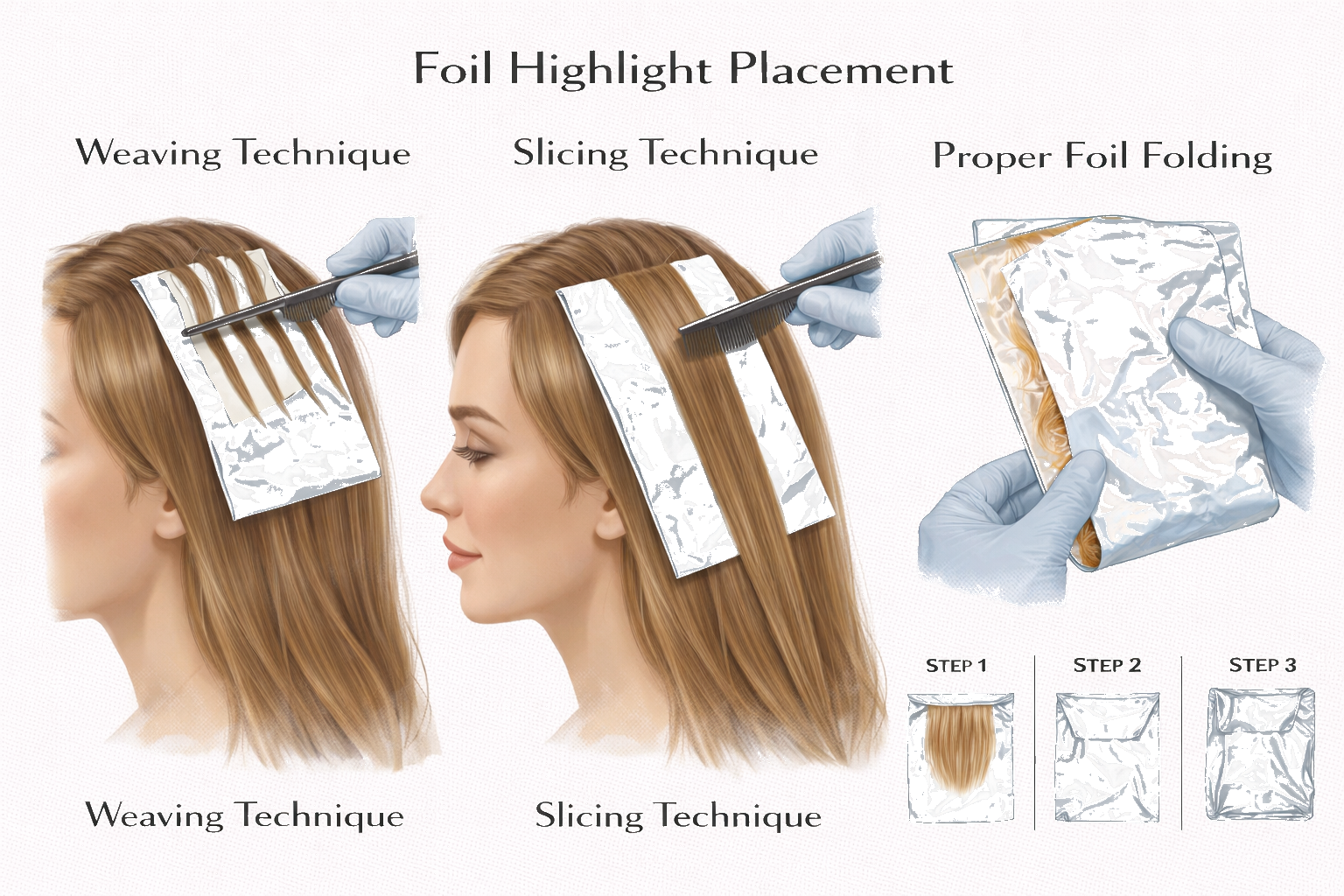
- Take 1/4" to 1/2" subsections; weave or slice per desired density.
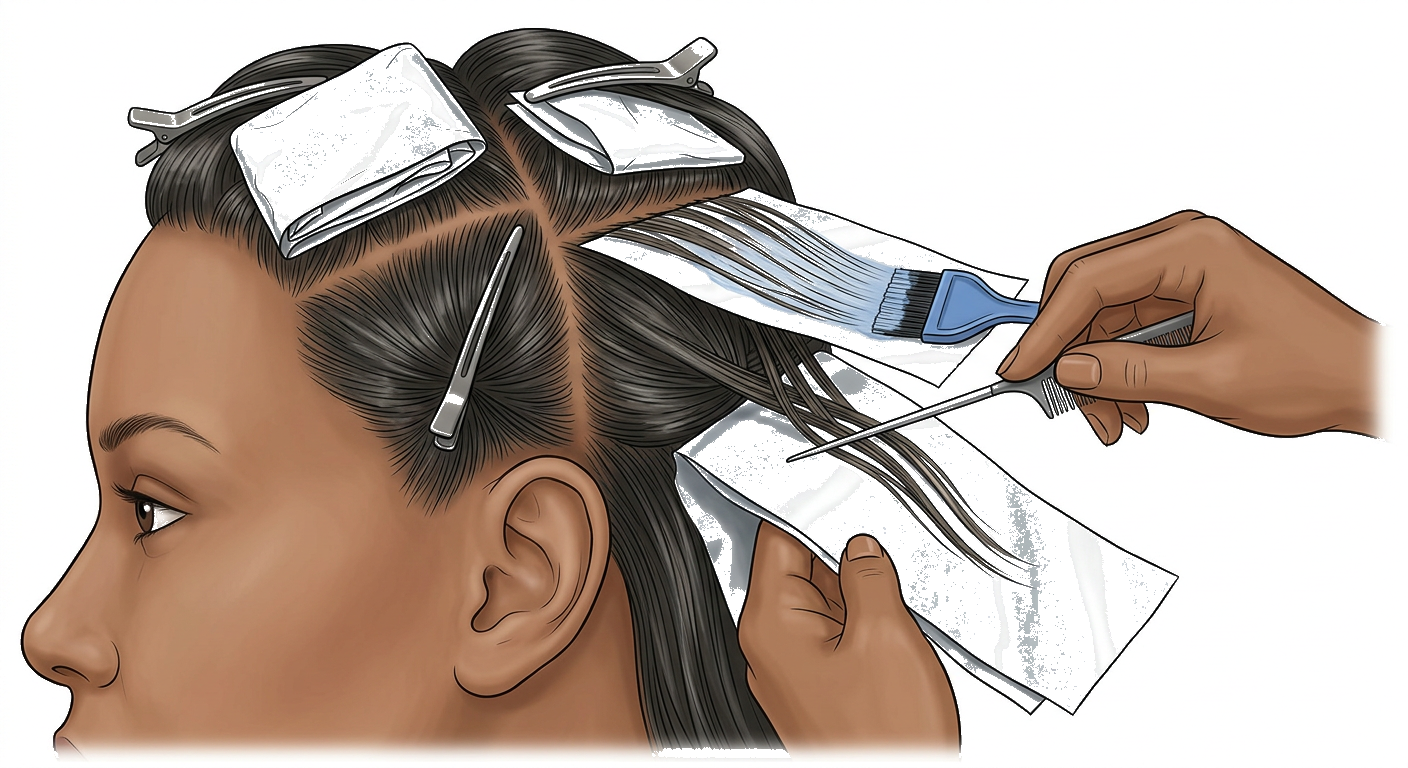
- Place foil under section; apply lightener root to end or mid-shaft to end for dimension.
- Fold foil: bottom up, then sides in — no overlapping foils against scalp.
- Work systematically section by section per diagram above.
- Set timer; check lift every 5–10 min. Target: pale yellow for platinum; gold for warm blonde.
- Rinse each foil under cool water to halt processing uniformly.
- Shampoo; apply toner to achieve desired final tone; rinse; condition.
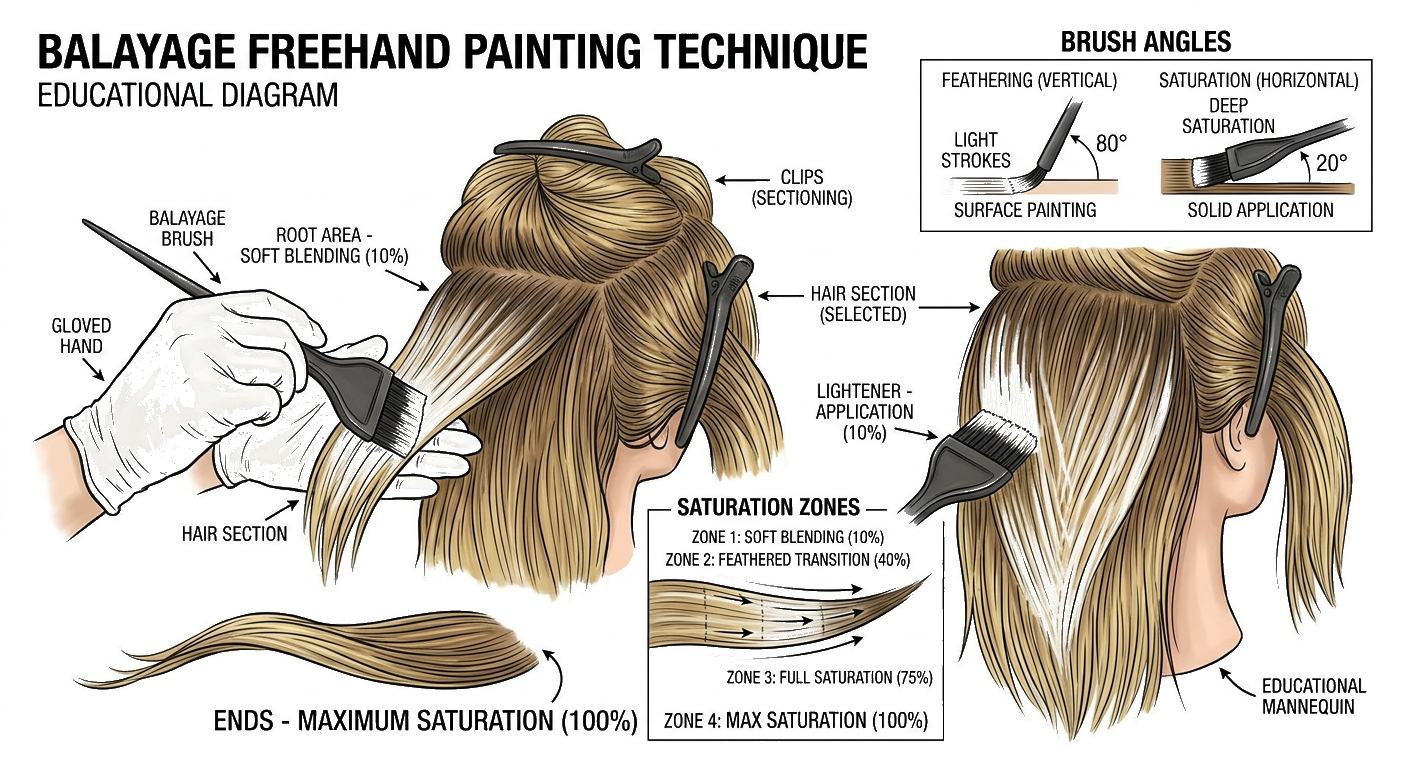
Balayage Steps
- Section into panels — looser than foil work.
- Paint lightener onto surface of hair only — do not saturate to scalp.
- Apply heavier concentration at mid-shaft and ends; lighter at root for soft blend.
- Leave hair open (no foil) or wrap loosely; process 20–45 min depending on target.
- Rinse; tone; condition.

⚠ Safety: Bond builder (Olaplex/similar) strongly recommended with all lightener services. Never apply bleach to previously chemically relaxed hair without professional guidance — extreme breakage risk. Strand test before full application on color-compromised hair.
© 2025 Shear Genius Society, LTD Co. — All Rights Reserved.

Cosmetology Program
Chemical Relaxer
Virgin & Retouch Relaxer — Lye, No-Lye & Guanidine
Side A — Supplies, Product Key & Safety Rules
Supplies
- Chemical-resistant gloves (heavy duty)
- Protective cape + plastic processing cap
- Base cream (petroleum/heavy petrolatum)
- Relaxer (lye / no-lye — see below)
- Mixing bowl & spatula
- Timer
- Neutralizing shampoo (pH-balancing; not regular shampoo)
- Moisturizing conditioner
- Reconstructor / protein treatment
- Strand of test strips (optional)
- Record card
Lye vs No-Lye
- Lye (sodium hydroxide): Faster, smoother results; more scalp risk; must base scalp; no mixing
- No-lye (calcium hydroxide + activator): Less scalp irritation; requires mixing; can cause dryness over time
- Never mix lye + no-lye on same client
- Guanidine: Gentle no-lye option; requires thorough rinsing
- Virgin vs Retouch: NEVER overlap on previously relaxed hair
⚠ Safety: Pre-service: no shampoo 24–72 hrs; no scalp manipulation. Always base scalp. Do not apply to irritated or compromised scalp. Timing is critical — over-process = severe breakage.
© 2025 Shear Genius Society, LTD Co. — All Rights Reserved.
↔ flip for back
Cosmetology Program
Chemical Relaxer
Virgin & Retouch Relaxer — Lye, No-Lye & Guanidine
Side B — Application Order, Steps & Neutralizing Protocol

Application order: Q1 (nape R) → Q2 (nape L) → Q3 (front L) → Q4 (front R); apply nape first — most resistant
Service Steps
- Examine scalp — no abrasions, lesions, or cuts; postpone if found.
- Do NOT shampoo 24–72 hrs before; no scalp scratching.
- Divide hair into 4 quadrants; clip away.
- Apply base cream to entire scalp — cover all; include hairline, ears, nape. Do NOT apply to hair shaft.
- Begin application at nape (most resistant / body temp lower); work per diagram order.
- Apply relaxer in 1/4" subsections; smooth with back of brush — do not over-work.
- Apply new growth only on retouch clients (1/4" from scalp, no overlap).
- Smooth hair gently during processing — do not over-manipulate.
- Check strand test every 2–3 min after initial application. Desired: 60–70% smooth, slight resistance remaining.
- Rinse immediately when desired smoothness reached — thorough cold water rinse, 5–7 min minimum.
- Apply neutralizing shampoo 3–5 times until pH strip reads neutral (green).
- Apply moisturizing conditioner; reconstructor if hair shows stress.
© 2025 Shear Genius Society, LTD Co. — All Rights Reserved.
Cosmetology Program
Keratin & Smoothing Treatment
Keratin Smoothing, Brazilian Blowout & Protein Sealing Protocols
Side A — Supplies & Product Rules
Supplies
- Well-ventilated room or salon ventilation system (mandatory)
- Chemical cape
- Flat iron (450°F capable)
- Clarifying shampoo (sulfate-containing — opens cuticle)
- Keratin treatment formula (brand-specific; follow manufacturer)
- Application brush
- Sectioning clips
- Fine-tooth comb
- Timer
- Gloves
- Sulfate-free shampoo (home care — do NOT use regular)
- Deep conditioner
Key Product Rules
- Pre-service shampoo: Sulfate-containing — removes all buildup; opens cuticle for penetration
- Application: Thin, even coat — too much = stiff/waxy result
- Processing time: Varies by brand — follow exactly (15–30 min typical)
- Flat iron sealing: 450°F; 8–10 passes per section; seals protein into cuticle
- Post-service: No washing 3–4 days; no ponytails or clips; no tucking behind ears
- Home care: Sulfate-free shampoo only — sulfates strip treatment
© 2025 Shear Genius Society, LTD Co. — All Rights Reserved.
↔ flip for back
Cosmetology Program
Keratin & Smoothing Treatment
Keratin Smoothing, Brazilian Blowout & Protein Sealing Protocols
Side B — Steps, Client Education & Safety
Service Steps
- Consult: confirm no sensitivity to formaldehyde (if applicable). Check ventilation.
- Shampoo 1–2x with clarifying/sulfate shampoo; towel-dry to damp.
- Section hair into 4 quadrants; clip away.
- Apply keratin treatment formula to each section — thin, even coat from roots to ends (avoid scalp on sensitive formulas per manufacturer).
- Comb through each section for even distribution.
- Allow to process per manufacturer time (do not rinse before flat-ironing unless directed).
- Blow dry completely — no dampness; hair must be 100% dry before flat iron.
- Flat iron 1/4" sections at 450°F — 8–10 slow passes. Do not rush. This seals the keratin into the cuticle.
- Do not wash or wet hair for 72–96 hrs post-service (72 hrs minimum; 96 preferred).
- Instruct client: no hair ties, clips, ponytails; do not tuck behind ears for 3–4 days.
Client Education
- Results last 3–6 months depending on hair type and home care
- Sulfate-free shampoo only — regular shampoo strips treatment within weeks
- Avoid saltwater and chlorine pools during treatment life
- Touch-ups / root applications available every 3–6 months

⚠ Safety: Room ventilation is mandatory — formaldehyde-releasing formulas require exhaust ventilation. Do not inhale fumes; wear mask. Do not apply to freshly chemically relaxed or highly porous/damaged hair without strand testing.
© 2025 Shear Genius Society, LTD Co. — All Rights Reserved.
Cosmetology Program
Permanent Wave
Alkaline, Acid & Thio-Free Perm Wrapping & Processing
Side A — Supplies, Perm Types & Rod Size Guide
Supplies
- Perm rods — various sizes
- End papers
- Perm solution (alkaline or acid; client-specific)
- Neutralizer
- Towels, cape, processing cap
- Tail comb, wide-tooth comb
- Timer
- Cotton strips (hairline barrier)
- Gloves
- Record card
Perm Type Guide
- Alkaline (cold wave): Strong, tight curl; resistant/natural hair; processes at room temp
- Acid (exothermic/heat): Softer curl; gentler on color-treated/fine hair; requires heat
- Thio-free: Gentle; good for sensitive scalps; slower processing
- Spiral perm: Vertical rod wrapping; elongated spiral curl
- Body wave: Large rods; soft wave pattern, not tight curl
- Do NOT perm over: Recent relaxer, bleached/highly lifted hair, damaged hair
Rod Size Guide
- Pink/gray (smallest): Very tight curl; short hair
- Blue/green: Tight to medium curl; most common
- Peach/white: Medium wave; medium-long hair
- Tan/large: Soft wave / body wave only; long hair
© 2025 Shear Genius Society, LTD Co. — All Rights Reserved.
↔ flip for back
Cosmetology Program
Permanent Wave
Alkaline, Acid & Thio-Free Perm Wrapping & Processing
Side B — 9-Section Diagram, Steps & Safety

9-section wrap: sections 7–9 first (nape), then 4–6 (crown), then 1–3 (front)
Service Steps
- Consult: check hair condition — strand test if color-treated or questioned.
- Shampoo with perm-prep shampoo (no conditioner — must not coat hair).
- Towel-dry to damp; divide into 9 sections per diagram.
- Wrap rods: take subsection equal to rod length; place end paper; roll evenly from ends to scalp; rods should lie flat.
- Place cotton strip around hairline to catch drips.
- Apply perm solution to all rods; saturate; cover with plastic cap.
- Process per manufacturer time (typically 10–25 min); check curl development at intervals by partially unwinding 1 rod.
- When desired development reached, rinse thoroughly with warm water 5 min — do not remove rods.
- Blot excess water; apply neutralizer to all rods; process 5–7 min.
- Remove rods; apply remaining neutralizer to hair; process remaining time; rinse.
- Apply conditioner; style gently.
⚠ Safety: Never perm hair that has been relaxed — extreme breakage/dissolution risk. Strand test mandatory on color-treated or questionable hair. Rods too tight = scalp damage and hair breakage at root. Do not brush or rough-style for 48 hrs post-perm.
© 2025 Shear Genius Society, LTD Co. — All Rights Reserved.
Cosmetology Program
Reformation Curl
Thio-Based Curl Reformation & Texture Conversion
Side A — Supplies, Client Assessment & Product Guide
Supplies
- Reformation curl solution (thio-based)
- Neutralizer (oxidizing)
- Perm rods — selected for desired curl diameter
- End papers
- Wide-tooth comb, tail comb, sectioning clips
- Cotton strips (hairline barrier)
- Processing cap, timer
- Towels, cape, gloves
- Spray bottle with water
- Protein conditioner (post-service)
- Strand test supplies
- Client record card
Client Assessment
- Ideal candidates: Clients with naturally straight or relaxed hair who want to add curl or wave texture
- Hair analysis: Check porosity, elasticity, density, and texture before proceeding
- Strand test: MANDATORY — process a small section first to confirm timing and result
- Contraindications: Highly bleached or damaged hair; metallic dye present; recent relaxer within 2 weeks; scalp irritation or open wounds
- Patch test: 24–48 hours before service if client has sensitive skin or allergies
Product Guide
- Thio-based (ammonium thioglycolate): Breaks disulfide bonds to allow reshaping — standard for reformation
- Acid-based (glyceryl monothioglycolate): Gentler; for fine/color-treated hair; requires heat activation
- Cysteamine-based: Low-odor alternative; moderate strength
- Neutralizer: Hydrogen peroxide-based; rebonds disulfide bonds in new curl formation
- Rod selection: Smaller rod = tighter curl; larger rod = looser wave; match to client’s desired outcome

© 2025 Shear Genius Society, LTD Co. — All Rights Reserved.
↔ flip for back
Cosmetology Program
Reformation Curl
Thio-Based Curl Reformation & Texture Conversion
Side B — Service Steps, Processing & Safety
Service Steps
- Consultation: Discuss desired curl pattern, review hair history, and check for contraindications.
- Shampoo: Clarifying shampoo only — no conditioner. Hair must be free of product buildup and residue.
- Towel dry: Remove excess water; hair should be damp, not dripping.
- Section: Divide hair into 9 sections (same as perm wrapping pattern — nape, crown, front).
- Wrap rods: Starting at nape (sections 7–9), take uniform subsections; place end paper; roll smoothly from ends to scalp. Tension must be even — not too tight.
- Apply solution: Saturate each rod with reformation curl solution using applicator bottle. Apply cotton strip around hairline first.
- Process: Cover with plastic cap. Process per manufacturer directions (typically 15–25 minutes). Check every 5 minutes.
- Test curl: Carefully unwind one rod partially — look for defined “S” pattern. If under-processed, rewrap and continue. Do NOT exceed max time.
- Rinse: Thorough warm water rinse for 5 full minutes — do NOT remove rods.
- Blot: Gently blot excess water from rods with towel.
- Neutralize: Apply neutralizer to all rods; process 5–7 minutes.
- Remove rods: Carefully unwind; apply remaining neutralizer to lengths; process 3–5 more minutes.
- Final rinse & condition: Rinse thoroughly; apply protein-rich conditioner; style gently with diffuser or air dry.
Post-Service Care Instructions
- Do not shampoo for 48–72 hours after service
- Avoid heat styling for 1 week minimum
- Use sulfate-free shampoo and curl-enhancing conditioner
- Sleep on a satin/silk pillowcase to prevent frizz
- Do not brush — use wide-tooth comb or fingers only
- Results typically last 3–6 months depending on hair growth
⚠ Safety: Never perform a reformation curl on hair with metallic dye or over a recent relaxer (minimum 2-week gap). Strand test is MANDATORY. Over-processing causes irreversible damage — breakage, dissolution, and scalp burns. Monitor processing time closely. If scalp burning occurs, rinse immediately. Always wear gloves during chemical application.
© 2025 Shear Genius Society, LTD Co. — All Rights Reserved.

Cosmetology Program
Natural Hair Services
TWA, Loc Retwist, Finger Coil & Natural Texture Styling
Side A — Supplies, LOC Method & Porosity Guide
Supplies
- Wide-tooth comb
- Denman brush / paddle brush
- Fine-tooth comb (sectioning)
- Sectioning clips
- Spray bottle (water + leave-in mix)
- Leave-in conditioner
- Moisturizing cream / butter (LOC method)
- Gel / edge control
- Oil (carrier: jojoba, castor, olive)
- Hooded dryer or diffuser
- Rat-tail comb (parting)
- Bobby pins, duckbill clips
LOC Method — Application Order
- L — Liquid: Water or leave-in conditioner (opens cuticle, hydrates)
- O — Oil: Seals moisture in (jojoba, olive, argan)
- C — Cream: Locks and defines (shea butter, styling cream)
- Apply in this order to maximize moisture retention.
- For low-porosity hair: LCO order works better (cream before oil)
Porosity Quick Test
- Float test: Drop strand in water — sinks fast = high porosity; floats = low
- High porosity: Absorbs fast, dries fast, needs more cream/butter
- Low porosity: Resists moisture, needs heat (hooded dryer) to open cuticle
© 2025 Shear Genius Society, LTD Co. — All Rights Reserved.
↔ flip for back
Cosmetology Program
Natural Hair Services
TWA, Loc Retwist, Finger Coil & Natural Texture Styling
Side B — TWA, Retwist, Coil Steps & Safety
TWA — Tapered Natural Cut
- Consult: confirm shape (tapered sides? uniform? defined?).
- Dry hair — always cut natural hair dry.
- Work section by section; define each curl; snip tips only unless major shaping needed.
- Shape with scissors or clippers per desired taper or uniform look.
- Apply moisturizer and gel to define curl pattern post-cut.
Loc Retwist
- Section hair into clean, even parts (grid or diagonal per client preference).
- Mist section lightly with water; apply loc gel or butter.
- Retwist each loc clockwise (or per client established direction) from root to tip — maintain consistent tension.
- Secure ends with pin or loc clip if needed.
- Place under hooded dryer 20–30 min; allow to cool fully before removing clips.
Coil / Finger Coil
- Shampoo and condition; do not fully dry — damp for best coil retention.
- Section into small, even sections.
- Apply curl-defining gel to each section.
- Use finger or rat-tail comb handle to twirl from root to tip in one direction.
- Do not disturb while drying; diffuse or air-dry.

⚠ Safety: Never detangle natural hair dry — always wet and conditioned. Work section by section to minimize breakage. Do not over-manipulate locs; pulling on roots causes traction alopecia. Respect curl pattern — never force a coil size the client does not have naturally.
© 2025 Shear Genius Society, LTD Co. — All Rights Reserved.

Barbering Program
Clipper Cut & Fade
Foundation Technique — Clipper Work
Side A — Tools & Guard Reference
Clippers & Trimmers
- Clippers (full size): Main cutting tool — bulk removal & fading
- T-outliner / trimmer: Line-up, detailing, tight areas
- Balding/zero-gap trimmer: Skin fade, bald fade, neck cleanup
- Foil shaver: Skin-close finish on fade lines, neck
Guard Size Reference
- #0 / no guard: Closest to skin (bald/skin fade)
- #0.5: Very close — shadow only
- #1 (1/8"): Very short — low fade starter
- #1.5: Short, clean commercial cut
- #2 (1/4"): Most common mid-fade guard
- #3 (3/8"): Short, textured top or mid-section
- #4 (1/2"): Moderate length — top or transition
- #6–#8: Longer top sections
⚠ Safety: Always sanitize clippers between every client. Oil blades before use. Remove guard carefully — never yank. Never clipper over open cuts, active scalp conditions, or lesions. Check blade temperature frequently.
© 2025 Shear Genius Society, LTD Co. — All Rights Reserved.
↔ flip for back
Barbering Program
Clipper Cut & Fade
Foundation Technique — Fade Procedure
Side B — Fade Zone Diagram & Steps

Fade Procedure
- Step 1 — Establish bulk: Clipper top with desired length guard; don't go below parietal ridge yet.
- Step 2 — Rough fade: Starting guard (e.g. #2), flick wrist outward at parietal ridge — create raw blend line.
- Step 3 — Drop guards: Work from starting guard down: #2 → #1.5 → #1 → #0.5 → #0. Each lower guard goes slightly lower on the head.
- Step 4 — Zero / bald line: Use balding trimmer or open-blade clipper flat against skin at desired height.
- Step 5 — Blend transitions: Use #1 or #1.5 rocking motion to smooth between guards — no harsh lines.
- Step 6 — Detail & line-up: T-outliner for perimeter — then inspect all angles in mirror.
© 2025 Shear Genius Society, LTD Co. — All Rights Reserved.
Barbering Program
Scissor Cut
Shear Technique — Precision & Detail
Side A — Tools & Techniques
Shears & Tools
- Straight shear (5.5"–7"): Main cutting tool
- Thinning/texturizing shear: Bulk removal, blending
- Razor (optional): Texture, softness, feathering
- Wide-tooth comb: Sectioning and tension
- Barber comb (fine tooth): Scissor-over-comb technique
- Tail comb: Parting precision
Core Techniques
- Point cutting: Angled snips into ends — removes weight, adds movement
- Blunt/club cutting: Straight across section — adds weight, clean line
- Scissor-over-comb: Comb lifts, shear skims — blends clipper to scissor work
- Slide cutting: Open shear glides down strand — feathered finish
- Texturizing: Thinning shear on mid-shaft or ends only
- Razor cutting: On damp hair only — slices and softens

⚠ Safety: Never cut with dull shears — causes split ends and dragging. Keep shear finger hole on still blade for control. Never cut over clips or elastics.
© 2025 Shear Genius Society, LTD Co. — All Rights Reserved.
↔ flip for back
Barbering Program
Scissor Cut
Shear Technique — Procedure
Side B — Cut Procedure

Scissor Procedure
- Drape client; consult on desired length, shape, and texture.
- Shampoo (if wet cut) or mist hair to even dampness. Comb tangle-free.
- Section into workable panels: nape, sides, crown, top.
- Establish guide at nape or lowest section — all sections match to guide.
- Work bottom to top using consistent tension and elevation per design.
- Scissor-over-comb in sideburn and back-of-ear transition areas.
- Point-cut or texturize ends to desired finish weight.
- Remove cape; final dry inspection under lighting; cross-check sections.
© 2025 Shear Genius Society, LTD Co. — All Rights Reserved.
Barbering Program
Line-Up & Edge-Up
Detailing — Hairlines & Perimeter
Side A — Tools & Anatomy

Tools Required
- T-outliner / trimmer (zero gap preferred)
- Wide-flat barber comb
- Styling ruler or straight-edge comb (optional)
- Neck brush
- Bump cream or edge tonic (post-service)
© 2025 Shear Genius Society, LTD Co. — All Rights Reserved.
↔ flip for back
Barbering Program
Line-Up & Edge-Up
Detailing — Line-Up Procedure
Side B — Step-by-Step Procedure
Line-Up Steps
- Seat client upright; tilt chin slightly down for front hairline.
- Identify natural hairline: locate front corners and center point — do NOT reshape without consultation.
- Position trimmer flat/flush against skin; edge front hairline left corner → center → right corner in smooth passes.
- Line sideburns: determine length (eyebrow level, mid-ear, or custom); edge down and across in one clean horizontal pass.
- Line back neckline: choose style (tapered/natural, rounded, square, or V-taper) and execute symmetrically.
- Brush away all cuttings; hold mirror to show back view; make any adjustments.
- Apply neck strip or cool towel; use edge-control or moisturizer on hairline.
Neckline Style Guide
- Tapered / natural: Hair fades to nothing — most low-maintenance
- Rounded: Soft curve following neck shape
- Squared: Hard horizontal line — bold, classic
- V-taper: Pointed center — elongates neck visually

⚠ Safety: Do NOT reshape natural hairline without explicit consultation — consent required. Avoid cutting into natural hairline corners — very difficult to correct. Replace trimmer foil regularly; dull trimmer causes razor bumps.
© 2025 Shear Genius Society, LTD Co. — All Rights Reserved.

Barbering Program
Beard Trim & Shape
Facial Hair Services
Side A — Tools & Beard Types

Tools
- Full-size clipper or beard clipper
- T-outliner/trimmer (for lines & detail)
- Straight razor or disposable razor (for clean edges)
- Beard comb & boar bristle brush
- Beard oil, balm, or conditioner
- Shea butter or aftershave balm
- Hot towel (optional pre-service softener)
© 2025 Shear Genius Society, LTD Co. — All Rights Reserved.
↔ flip for back
Barbering Program
Beard Trim & Shape
Facial Hair Services
Side B — Procedure & Shaping
Beard Trim Procedure
- Consult client: desired length, shape, and neckline placement.
- Comb beard down with grain; assess density, growth pattern, and any patches.
- Determine guard size; clipper entire beard with grain first for evenness.
- Drop a guard size; sculpt cheekline from sideburn to mustache corner in clean arc.
- Define neckline: 1–2 finger widths above Adam's apple; trim horizontally, blend up.
- Trimmer / T-liner for cheekline and neck perimeter detail.
- Straight razor or foil shaver to clean skin above cheekline and below neckline.
- Apply warm towel; use beard oil or balm; comb through for client inspection.
Beard Shape Reference
- Natural/Full: Follow growth, trim bulk only — no strong lines
- Corporate taper: Short, clean cheeklines, neat neckline
- Goatee: Chin and mustache only — razor shave cheeks clean
- Fade beard: Beard fades from skin at cheeks to full at chin
- Ducktail: Rounded sides, pointed center chin

⚠ Safety: Always discuss cheekline placement BEFORE trimming — individual variation is significant. Use a sharp, clean blade only — dull blades drag and cause ingrown hairs.
© 2025 Shear Genius Society, LTD Co. — All Rights Reserved.
Barbering Program
Straight Razor Shave
Traditional Wet Shave
Side A — Tools & Preparation
Straight Razor Types
- Full hollow-ground: Very flexible, close shave — most traditional barbering razor
- Half hollow/extra hollow: More rigid, good for learners
- Shavette (disposable blade): State board standard in most states for school clinics — single-use blade, no stropping required
- Carbon vs. stainless steel: Carbon holds edge longer but rusts; stainless is more durable
Shave Preparation
- Hot towel application: 2–3 min to soften beard hair and open follicles
- Pre-shave oil (optional): thin coat to reduce friction
- Lather: wet brush, load soap/cream; apply in circular motion then cross-grain strokes
- Lather should be slick, dense, and thoroughly worked in to lift beard

⚠ Safety: SHAVETTE REQUIRED in Georgia cosmetology school clinic — disposable blade. NEVER reuse blades. Straight razors require individual State Board approval for use on clients. Do NOT shave over active acne, razor bumps, open sores, psoriasis or suspect skin conditions.
© 2025 Shear Genius Society, LTD Co. — All Rights Reserved.
↔ flip for back
Barbering Program
Straight Razor Shave
Traditional Wet Shave
Side B — Shave Procedure
Shave Procedure
- Apply hot towel 2 min; remove; apply pre-shave oil if using.
- Load shave brush; lather face in circular motion; let sit 1 min.
- First pass: WITH the grain. Hold skin taut with non-dominant hand. Razor at 30° angle. Long strokes on flat areas; short strokes on curves.
- Re-lather for second pass: ACROSS the grain (optional for sensitive skin).
- Third pass: AGAINST the grain (BTC) — only if client requests and skin permits.
- Rinse; apply warm towel to remove residue; inspect for missed areas.
- Cold towel or cool water rinse to close pores; apply aftershave balm, witch hazel, or alum block.
- Present back view; discuss skincare recommendations.
Razor Angle & Tension
- 30° blade angle: Standard shave angle; non-negotiable for safety and closeness
- Skin taut = no cuts: Always stretch skin in opposite direction of razor travel
- Light pressure: Let the blade do the work — pressing harder causes razor burn
- Short strokes on curves: Chin, jaw angle, upper lip, and above Adam's apple
© 2025 Shear Genius Society, LTD Co. — All Rights Reserved.
Barbering Program
Hot Towel Service
Client Experience Enhancement
Side A — Tools & Setup
Equipment
- Hot towel cabinet (towel cabi) or steamer
- Clean towels (single-use or freshly laundered)
- Thermometer (optional — towel should be 100–110°F at skin contact)
- Peppermint or eucalyptus essential oil (optional: a few drops in cabi water)
- Pre-shave oil or facial cleanser
- Aftershave balm or lotion
Hot Towel Benefits
- Softens facial hair — makes shaving 60% easier
- Opens follicles — reduces ingrown hairs
- Increases circulation — healthy skin appearance
- Relaxes muscles — elevates client experience
- Removes surface oils and environmental debris
- Primes skin for closer, smoother shave

⚠ Safety: ALWAYS test towel temperature on inside of your wrist before applying to client. Temperature should feel pleasantly warm — never burning. Never apply over broken skin, sunburn, rosacea, or active acne. Ask about sensitivity before use.
© 2025 Shear Genius Society, LTD Co. — All Rights Reserved.
↔ flip for back
Barbering Program
Hot Towel Service
Client Experience Enhancement
Side B — Procedure
Hot Towel Application Steps
- Prepare towel: saturate with hot water or remove from cabi; wring thoroughly (no dripping).
- Check temperature on wrist — should feel warm, not hot.
- Ask client to tilt head back slightly.
- Unfold towel; start with chin, wrap up around cheeks and mustache area; fold edges under chin and at temples.
- Leave nose exposed at all times — client must breathe freely.
- Leave in place 2–3 minutes; replace if cools prematurely.
- Remove towel — use inward fold to capture debris; discard or launder.
- Proceed immediately with shave prep (pre-shave oil → lather) while skin is still warm.
Cold Towel (Post-Shave)
- Apply after final shave pass to close pores
- Use room-temperature to cold water — never ice
- Hold over face 30–60 seconds
- Removes lather residue; reduces post-shave redness
- Follow with aftershave balm or moisturizer
© 2025 Shear Genius Society, LTD Co. — All Rights Reserved.

Barbering Program
Hair Color & Gray Blending
Barbering Color Services
Side A — Products & Developer
Color Products
- Permanent color: Penetrates cortex; full gray coverage; requires developer
- Demi-permanent: Deposit only; no lift; fades gracefully; gentler gray blending
- Semi-permanent: No developer; no penetration; tone/gloss only — no gray coverage
- Color gel (barber-specific): Applied with brush to short hair; quick process
- Henna / natural: No developer; deposit only; cannot be removed with bleach
Developer Selection
- 10 volume: Deposit only, no lift — use for gray blending, tonal shifts
- 20 volume: 1–2 levels lift — standard for permanent color application
- 30 volume: 2–3 levels lift — resistant hair, higher lift; more scalp sensitivity
- 40 volume: Maximum lift — never for scalp application; foil/off-scalp only

⚠ Safety: PATCH TEST required 24–48 hours before every color service. Wear double gloves. Apply barrier cream to hairline. Do NOT apply over scalp abrasions, dermatitis, or post-chemical service within contraindicated timeframe.
© 2025 Shear Genius Society, LTD Co. — All Rights Reserved.
↔ flip for back
Barbering Program
Hair Color & Gray Blending
Barbering Color Services
Side B — Gray Blending Techniques
Gray Coverage Options
- Full coverage (100%): Match natural/desired shade exactly; use permanent color with 20 vol
- Gray blending (soft): Allow 30–40% gray to show; use demi + 10 vol; natural look, minimal maintenance
- Gray enhancement: Use silver, ash, or toner to make gray look intentional and polished
- Highlights to blend: Foil or balayage fine pieces to camouflage gray line at root
Barber Application Method (Short Hair)
- Mix formula by weight (1:1 or per manufacturer).
- Shampoo and dry hair completely.
- Apply with color brush in 1/4" sections using 4-quadrant method.
- Work nape → sides → top; apply gray areas last (most resistant — needs most contact time).
- Process 30–45 min; strand test at 25 min.
- Rinse thoroughly; shampoo; apply color-safe conditioner.
- Dry and inspect color result in natural light; document formula.

⚠ Safety: NEVER use color on clients with allergy history without patch test. Document result and formula every time. If scalp irritation begins during processing, rinse immediately.
© 2025 Shear Genius Society, LTD Co. — All Rights Reserved.
Barbering Program
Scalp Treatment
Therapeutic Scalp & Hair Services
Side A — Assessment & Products
Scalp Analysis (Barber)
- Oily: Excess sebum, flat roots, pore buildup — clarifying shampoo, sebum-regulating treatment
- Dry / flaky: Tightness, dandruff (pityriasis capitis) — moisturizing treatment, scalp oil
- Sensitive: Redness, reactive — fragrance-free, minimal ingredients
- Alopecia (thinning): Pattern loss or diffuse — minoxidil support products; refer to dermatologist if progressing
- Normal: Healthy sebum, no flaking, elastic — maintenance only
Barber Scalp Products
- Clarifying / anti-buildup shampoo
- Scalp oil (tea tree, peppermint, jojoba, argan)
- Exfoliating scalp scrub (monthly)
- Conditioning masque or deep treatment
- Anti-dandruff treatment (zinc pyrithione or selenium sulfide)
- Stimulating serum (biotin, caffeine, niacinamide)

⚠ Safety: Do NOT perform scalp massage if scalp has open wounds, lacerations, active infection, or suspected ringworm (tinea capitis). Refer clients with persistent thinning or non-responding conditions to a dermatologist.
© 2025 Shear Genius Society, LTD Co. — All Rights Reserved.
↔ flip for back
Barbering Program
Scalp Treatment
Therapeutic Scalp & Hair Services
Side B — Treatment Procedure
Scalp Treatment Steps
- Seat client at shampoo bowl or chair with cape.
- Perform visual scalp analysis; part in 4 sections with tail comb.
- Apply treatment product directly to scalp in each section.
- Perform effleurage (light gliding): palms flat, smooth circular passes over entire scalp.
- Perform friction (petrissage): fingertip pads (NEVER nails) — deep circular massage 3–5 min.
- Apply moist heat if indicated: steamer 5–10 min or warm towel wrap.
- Shampoo out (or leave-in per product instructions).
- Blow dry and style; recommend maintenance routine.
Massage Movements
- Effleurage: Light gliding — begins and ends every service; relaxes
- Petrissage: Kneading/circular with fingertips — stimulates circulation
- Friction: Deep circular or back-and-forth — targets buildup and tension
- Tapotement: Light tapping — stimulates nerves, energizing effect
- Vibration: Fine trembling movement — relieves tension
© 2025 Shear Genius Society, LTD Co. — All Rights Reserved.

Nail Technology Program — Sanitation Protocol
Nail Services — Sanitation & Disinfection
Single-Use Items & Multiuse Implement Protocol
Side A — Discard & Disinfection Protocol
Single-Use Items — Discard After Every Client
- ALL nail files and buffer blocks — no reuse ever, even between services on same client
- Cotton balls, rounds, lint-free wipes, gauze
- Orangewood sticks, wood pusher sticks, all wood implements
- Disposable towels, draping, plastic bag basin liners
- Gloves, finger cots, all disposable applicators
- Dip powder trays, tip adhesive applicators, nail forms (all used acrylic)
- Disposable toe separators and pedicure slippers
Multiuse Implements — Clean → Wash → Disinfect (Order Matters)
- Remove debris: Wipe all visible material from implement with a dry wipe.
- Wash: Scrub with liquid soap and warm water; use nail brush on all surfaces and joints.
- Rinse: Rinse thoroughly under running water; dry completely with clean towel.
- Disinfect: Fully submerge in EPA-registered disinfectant (Barbicide or equivalent) for full required contact time — typically 10 minutes. Implements MUST be fully submerged.
- Rinse & Dry: Remove with tongs; rinse; dry with clean towel.
- Store: Place in sealed, covered, clean container labeled "Disinfected."
Surface & Station Sanitation
- Wipe all surfaces (table, chair arms, cart) with EPA disinfectant wipe between every client
- Pedicure basin: drain → wash → disinfect cycle per state board protocol after EVERY client
- LED lamp interior: wipe with IPA if any product contact occurred
- Wax pot exterior: wipe clean; discard pot if double-dipping occurred
- Empty and re-line waste bin when full; between clients if blood exposure occurred
⚠ State Board: Cleaning removes debris. Disinfection kills pathogens. BOTH steps are required — in order — every single time. Store all disinfected implements covered and sealed. Maintain a disinfection log as required by your state board.
© 2025 Shear Genius Society, LTD Co. — All Rights Reserved. Unauthorized reproduction prohibited.
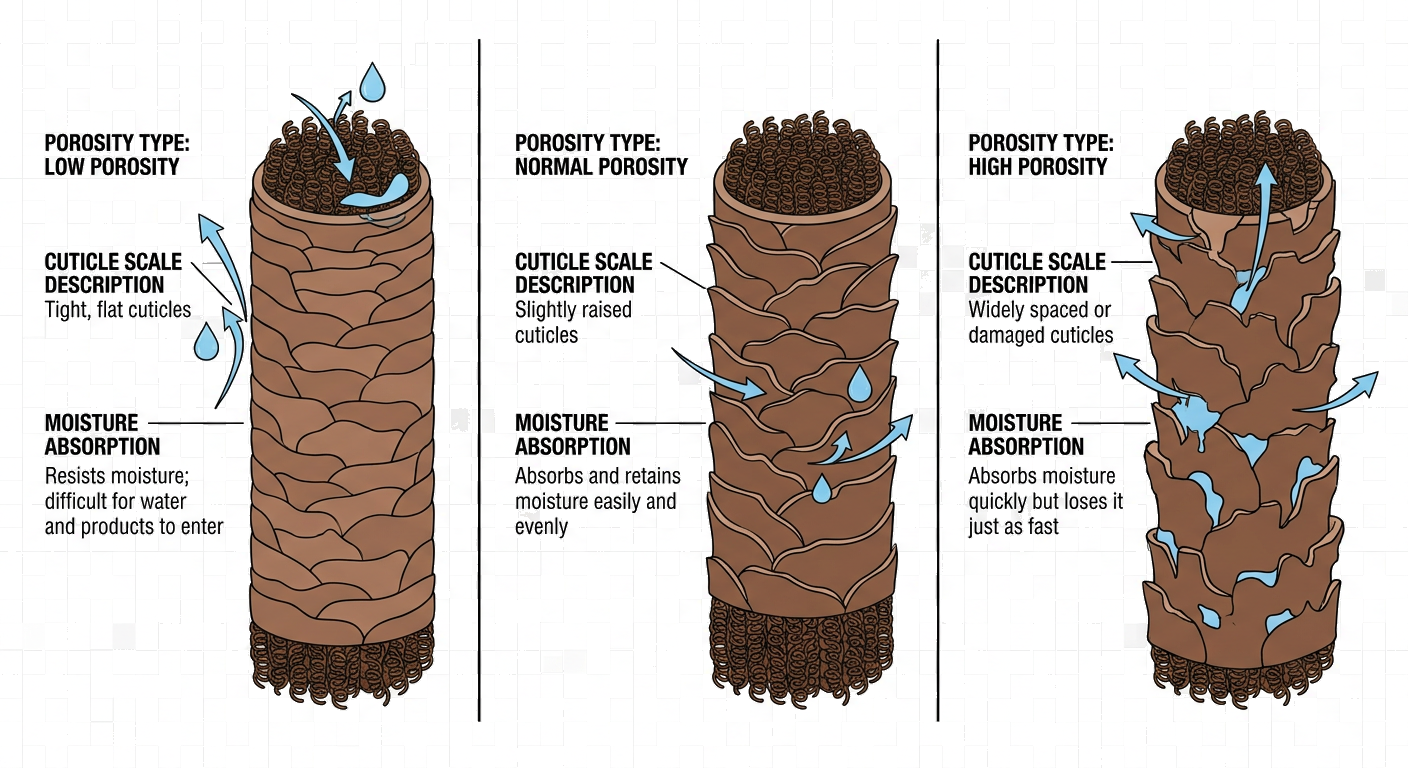
↔ flip for back
Nail Technology Program — Sanitation Protocol
Nail Services — Sanitation
Surface Sanitation · Solution Standards · Compliance
Side B — Station Sanitation & Compliance
Surface & Station — Between Every Client
- Wipe all surfaces (table, chair arms, cart) with EPA disinfectant wipe
- Pedicure basin: Drain, flush, disinfectant cycle after EVERY client — no exceptions
- LED lamp interior: wipe with IPA after any product contact
- E-file bits: disinfect fully; metal bits only — no porous bits
- Wax pot: wipe exterior; discard wax if double-dipping occurred
- Re-line waste bin after blood exposure; when full
Disinfection Solution Standards
- EPA-registered disinfectant only — Barbicide, Cavicide, or equivalent
- Mix at correct dilution — do not free-pour or estimate
- Change solution daily or when visibly soiled
- Full submersion required — partial does not count
- Contact time must be met exactly — do not remove early
- Store disinfected implements covered and labeled
Three-Level Decontamination
- Sanitize: Reduces germs — hand washing, surface wipe
- Disinfect: Kills most pathogens — full implement soak
- Sterilize: Kills all organisms — autoclave for skin-piercing tools only
Documentation & Compliance
- Maintain a disinfection log as required by your state board
- Record: date, time, solution, implements, initials
- Log must be available for inspection at all times
- State board inspections are unannounced — be ready every day
- Expired or improperly stored disinfectant = board violation
© 2025 Shear Genius Society, LTD Co. — All Rights Reserved. Unauthorized reproduction prohibited.
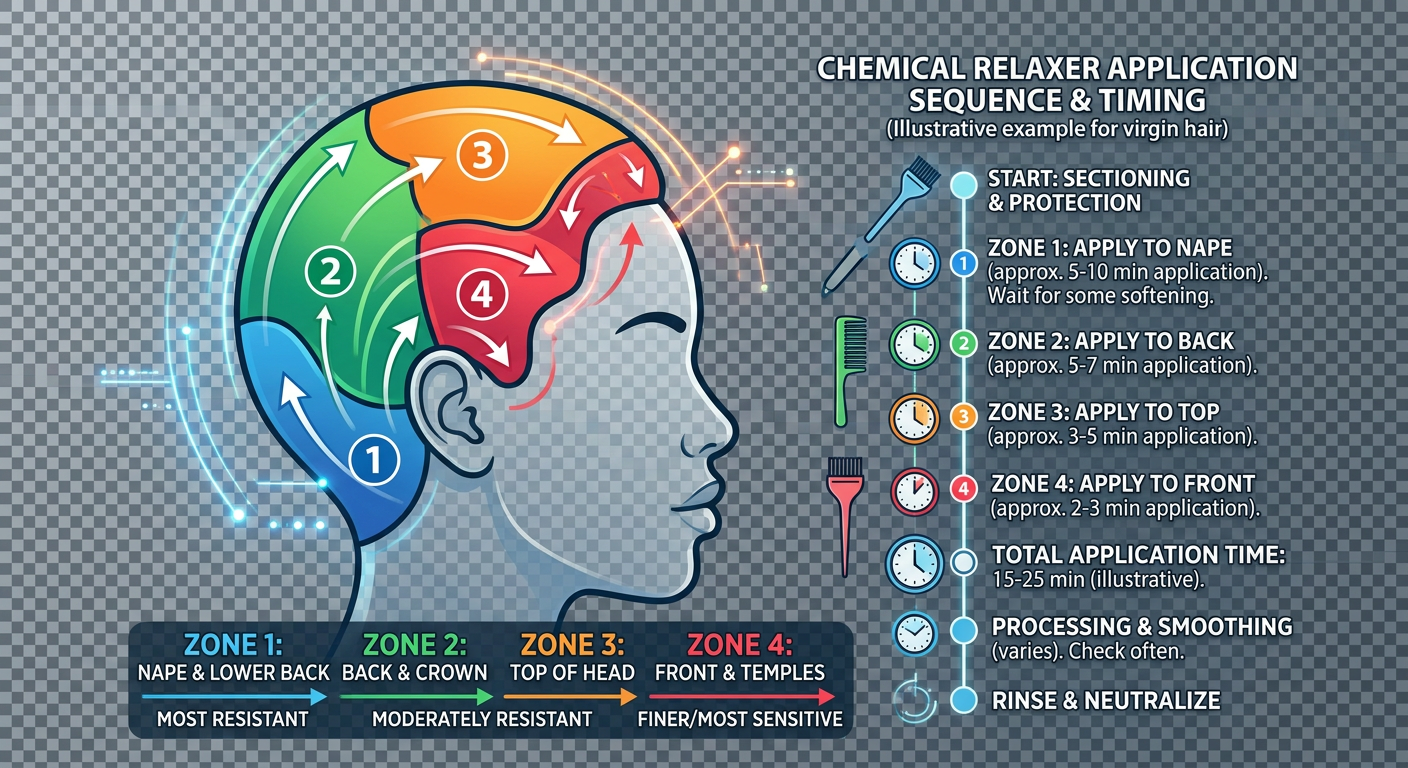
Esthetics Program — Sanitation Protocol
Esthetics Services — Sanitation & Disinfection
Single-Use Items & Equipment Sanitation
Side A — Discard & Disinfection Protocol
Single-Use Items — Discard After Every Client
- Headbands, hairnets, client caps
- Under-eye pads, eye shields, eye protection
- Cotton rounds, cotton balls, gauze, esthetic wipes
- Disposable spatulas, mask brushes, applicator sticks
- Waxing strips (muslin / pellon) — single use, no exceptions
- ALL wax spatulas — one use only, never re-dip
- Draping sheets, gowns — launder between clients
- Gloves, micro brushes, disposable mascara wands, lip applicators
- Lift shields, mixing cups, plastic film (body wrap)
- Machine filters and waste canister liners (microdermabrasion)
Multiuse Implements — Clean → Wash → Disinfect
- Remove debris: Wipe off all residual product with dry gauze or wipe.
- Wash: Scrub with soap and warm water for minimum 20 seconds.
- Rinse: Rinse under running water; dry with a clean towel.
- Disinfect: Soak in EPA-registered disinfectant (Barbicide, Cavicide) for full contact time. Full submersion required for all implements.
- Store: In a covered, sealed container labeled "Clean & Disinfected."
Equipment Sanitation — Between Every Client
- Treatment table/chair: Disinfectant spray; fresh draping
- Steamer: Empty after each session; wipe nozzle; refill with distilled water only
- Magnifying lamp: Wipe lens and arm with IPA wipe
- Microderm handpieces: Disinfect per machine manual; replace filters
- Wax warmers: Wipe exterior; discard wax if contaminated
- Tweezers: Full disinfection soak — highest-risk esthetic implement
- Makeup brushes: Spray with 70% IPA between clients; deep clean weekly
- Lash tile / jade stone: Wipe with IPA; re-tape or replace tape liner
⚠ State Board: Wax spatulas are single-use — absolutely no exceptions under any circumstances. Disinfectant solutions must be EPA-registered at correct dilution. Change Barbicide and quaternary ammonium solutions daily or when visibly soiled.
© 2025 Shear Genius Society, LTD Co. — All Rights Reserved. Unauthorized reproduction prohibited.
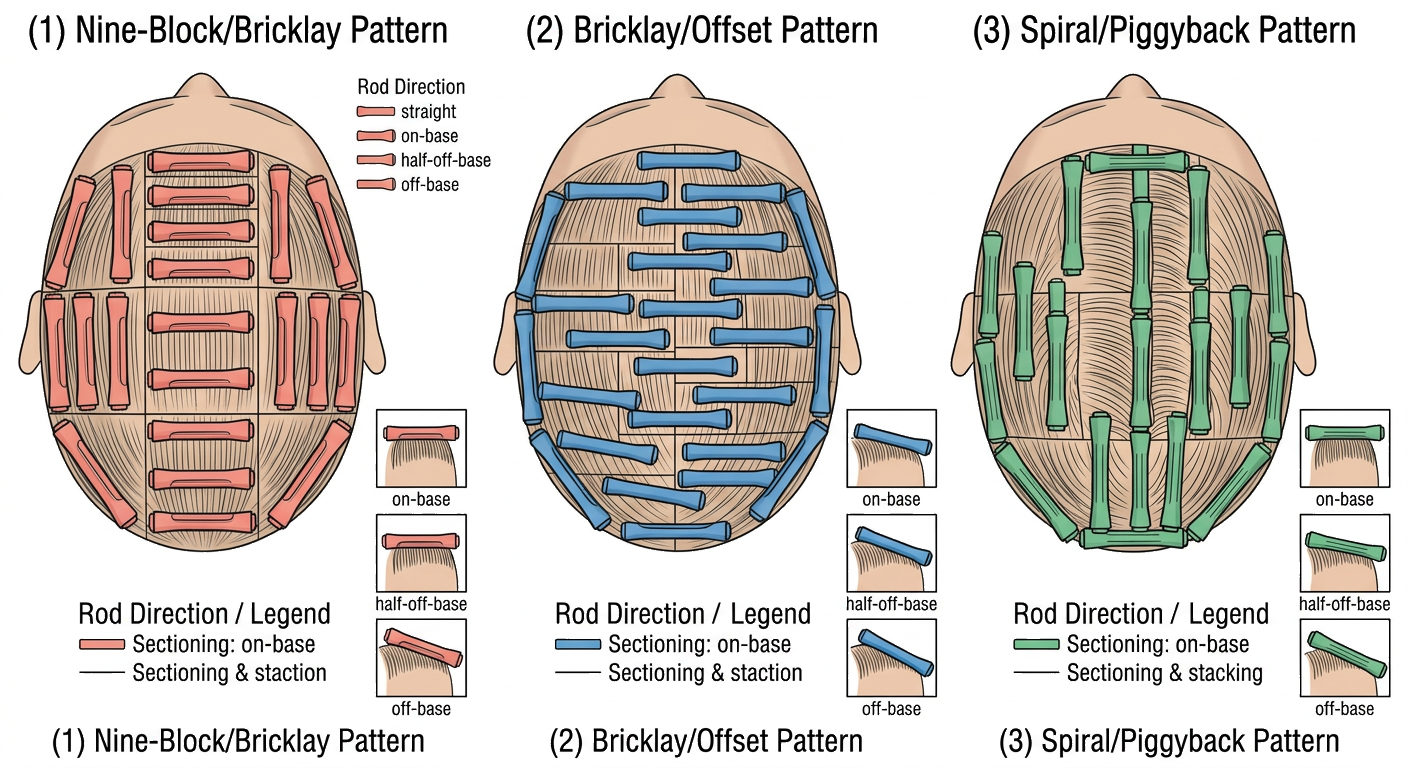
↔ flip for back
Esthetics Program — Sanitation Protocol
Esthetics Services — Sanitation
Equipment Sanitation · Solution Standards · Compliance
Side B — Equipment Sanitation & Compliance
Equipment — Between Every Client
- Treatment table/chair: Disinfectant spray; replace fresh draping
- Steamer: Empty after each session; wipe nozzle; refill with distilled water only
- Magnifying lamp: Wipe lens and arm with IPA wipe
- Wax warmer: Wipe exterior; discard wax if any contamination occurred
- Tweezers: Full disinfection soak — highest-risk esthetic implement
- Makeup brushes: 70% IPA spray between clients; deep clean weekly
- Lash tile/jade stone: IPA wipe; re-tape or replace liner
- Microderm handpiece: Disinfect per machine manual; replace filters
Solution Standards & Compliance
- EPA-registered disinfectant only — correct dilution, mixed fresh daily
- Full submersion required for all implements; full contact time must be met
- Wax spatulas are single-use — no exceptions, no re-dipping
- Store disinfected implements in covered, labeled containers
- Maintain disinfection log: date, time, solution, implements, initials
- State board inspections are unannounced — standard must be met every day
Three-Level Decontamination
- Sanitize: Reduces germs — hand washing, surface wipe
- Disinfect: Kills most pathogens — full implement soak in EPA solution
- Sterilize: Kills all organisms — autoclave for skin-piercing tools only
High-Risk Implements — Extra Attention
- Tweezers — full soak every use, inspect tips for damage
- Comedone extractor — full soak, inspect loop for residue
- Galvanic/HF probes — wipe with IPA, store covered
- Microderm handpiece — full protocol per manufacturer manual
- Any implement that contacts broken skin must be treated as contaminated
© 2025 Shear Genius Society, LTD Co. — All Rights Reserved. Unauthorized reproduction prohibited.
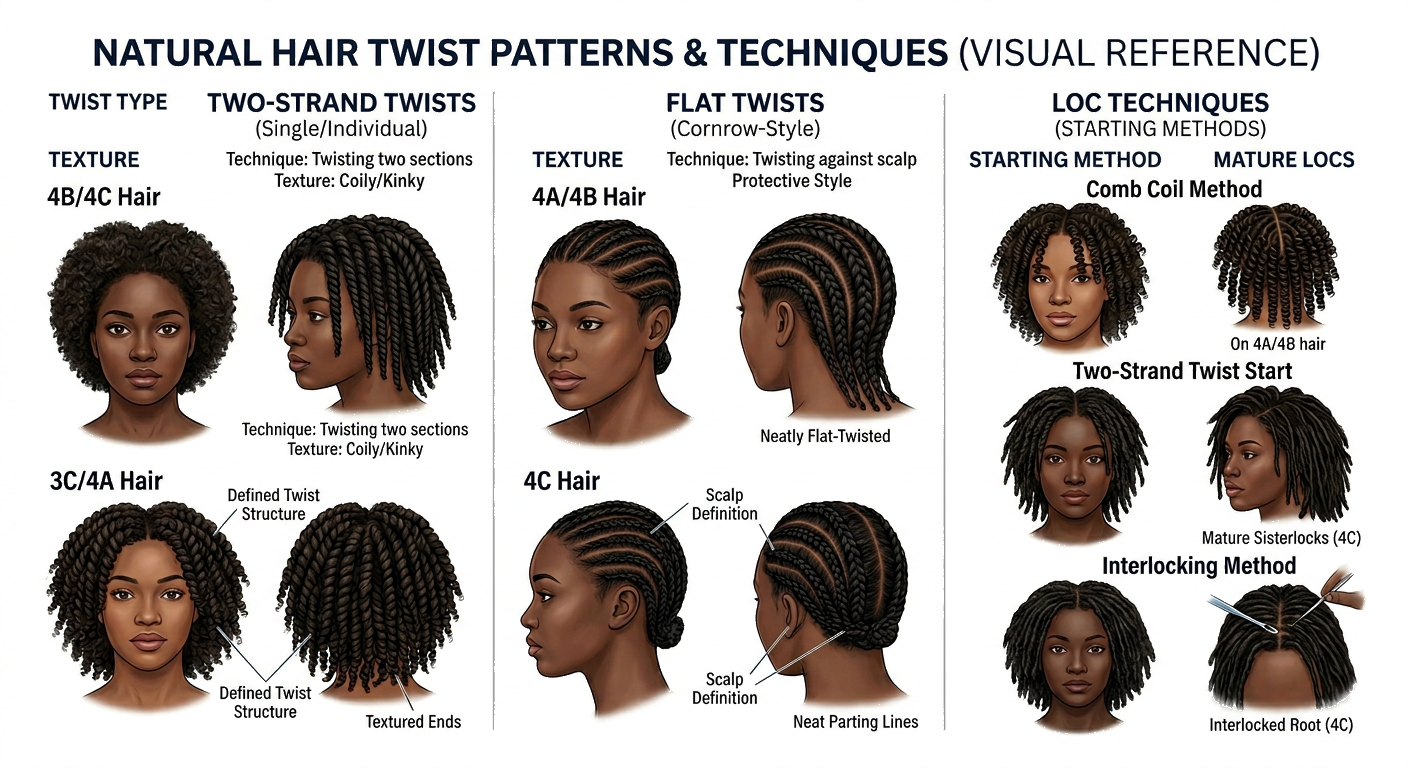
Shear Genius Society — All Programs
Universal Safety & Infection Control Standards
Blood Exposure · PPE · Hand Hygiene · Contraindications
Side A — Universal Safety Standards
Hand Hygiene — Required Moments
- Before and after every client service — no exceptions under any circumstances
- After removing gloves; after touching your own hair, face, or phone
- After handling waste or any contaminated materials
- After using the restroom; before eating or drinking anything
- Method: 20+ seconds with soap and warm water — OR — 60%+ alcohol hand sanitizer when hands are not visibly soiled
Personal Protective Equipment (PPE)
- Gloves: Required when blood, body fluid, or chemical exposure is possible. Change between every client. Latex-free required.
- Mask: Required when using acrylic monomer, microdermabrasion, chrome powder, peels, or any aerosol chemical service
- Eye protection: Required during microdermabrasion, chemical services, and wherever splashing may occur
Blood / Body Fluid Exposure Protocol
- Stop service immediately; apply pressure to wound if client is injured.
- Glove up; clean wound; cover with sterile bandage.
- Discard ALL implements that contacted blood in a biohazard bag.
- Disinfect entire work surface with EPA-registered disinfectant.
- Document the incident in writing; report to supervisor immediately.
- Do NOT continue service on that area; reschedule as needed.
Universal Contraindications — All Services
- Open wounds, sores, or active infection in service area — do not service
- Contagious skin conditions (ringworm, impetigo, active herpes) — do not service
- Undiagnosed lesions, moles, or unusual growths — refer to physician
- Accutane within 6 months — no waxing, chemical peels, or microdermabrasion
- Anticoagulants / blood thinners — caution with all extraction or invasive services
When in doubt — do not perform the service. Refer. Document. Protect the client and yourself always.
© 2025 Shear Genius Society, LTD Co. — All Rights Reserved. Unauthorized reproduction prohibited.
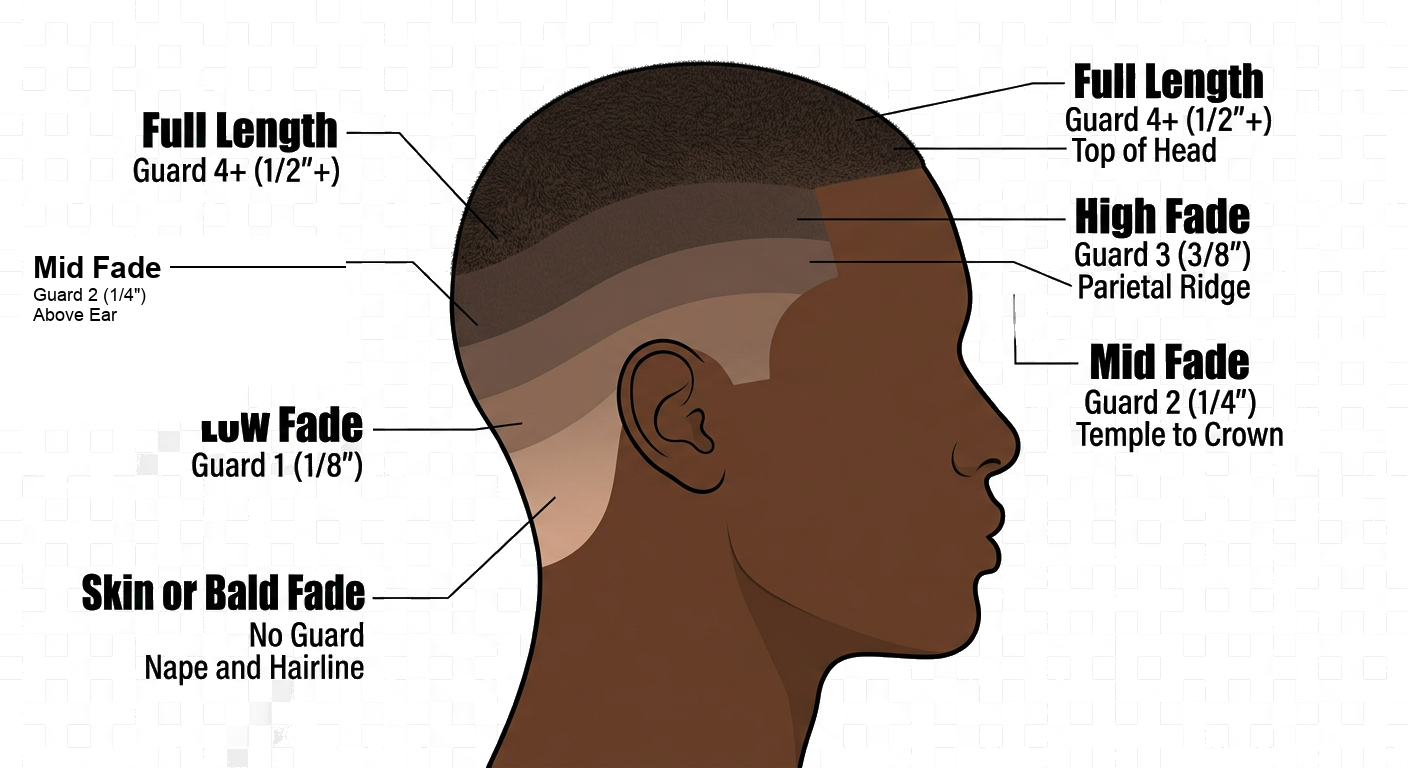
↔ flip for back
Shear Genius Society — All Programs
Universal Safety Standards
Client Intake · Record Keeping · Professional Standards
Side B — Professional Standards & Client Care
Client Intake — Every Visit
- Complete a new or updated consultation card for every client, every visit
- Ask about new medications, health changes, or skin/nail conditions since last visit
- Document all contraindications found and service adjustments made
- Client signature required for chemical services and advanced treatments
- Informed consent must be obtained before beginning any service
Professional Conduct Standards
- Maintain a clean, organized, odor-free station at all times
- Full uniform or professional attire required during all client services
- No eating, drinking, or phone use at the service station during a client service
- Speak professionally — client conversations are confidential
- Never perform a service you are not qualified or licensed to perform
- When in doubt, refer to your instructor or supervising licensee
Skin & Nail Condition Referrals
- Refer any undiagnosed skin lesion, growth, or suspicious mole to a physician
- Refer any suspected fungal, bacterial, or viral infection — do not service
- Refer any client with open wounds that cannot be safely avoided
- Document referral in client record — date, reason, recommendation given
Emergency Preparedness
- Know the location of your first aid kit, fire extinguisher, and eye wash station
- Know emergency exit routes from your service area
- In case of chemical eye exposure: flush with water for 15 min; call 911
- In case of allergic reaction: stop service; call 911 if severe; document
- All incidents must be documented and reported to your supervisor
© 2025 Shear Genius Society, LTD Co. — All Rights Reserved. Unauthorized reproduction prohibited.
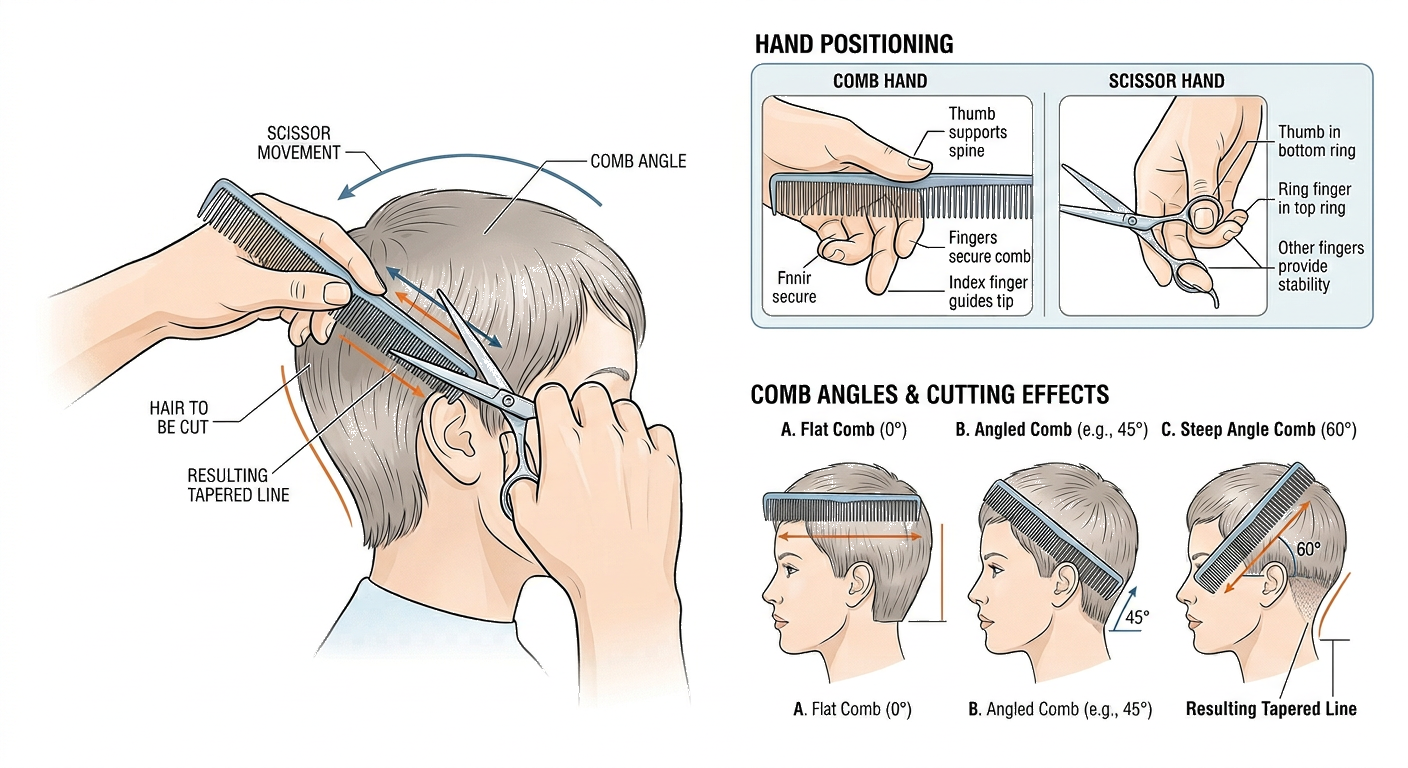
Cosmetology Program — Sanitation
Cosmetology Sanitation
Disinfection & Infection Control
Side A — Tool Disinfection by Category
Shears, Combs & Clips
- Shears: Wipe with isopropyl (70%+) after every client; fully submerge in EPA-registered disinfectant 10 min between clients
- Combs: Remove all hair; wash with soap; submerge in disinfectant jar 10+ min; rinse; dry on clean towel
- Clips / pins: Same as combs — remove debris first, then full disinfectant soak
- All tools: Clean (physical debris removal) BEFORE disinfection — dirt blocks chemical penetration
Brushes & Rollers
- Vent/round brushes: Remove all hair; wash with shampoo; soak bristles in disinfectant; rinse; air dry upside down
- Paddle brushes: Same as above
- Rollers: Remove all product; wash; soak 10 min in EPA disinfectant; air dry completely before storage
- Boar bristle: Gentle soap wash; alcohol spray; air dry — full soak will damage bristles

⚠ Safety: Never store wet tools in closed drawer. Store disinfected tools on clean towel or in closed, labeled disinfectant container. Disinfectant solution must be changed daily or per manufacturer directions. Log disinfection time on station log.
© 2025 Shear Genius Society, LTD Co. — All Rights Reserved.
↔ flip for back
Cosmetology Program — Sanitation
Cosmetology Sanitation
Disinfection & Infection Control
Side B — Station & Chemical Tool Cleanup
Styling Tools (Heat Tools)
- Flat irons, curling irons: Cool completely; wipe plates with damp microfiber; EPA-registered wipe on surfaces (not heating element)
- Blow dryer: Remove/clean lint filter after every client; wipe handle and cord with disinfectant wipe
- Diffuser: Remove; wash with warm soapy water; rinse; air dry
Station Surface Protocol
- Wipe entire station surface with EPA-registered disinfectant between every client
- Replace neck strip / towel before seating new client
- Sanitize chair headrest and armrests with disinfectant wipe
- Sweep floor around station; empty trash if full
- Remove all product tubes/jars used for previous client from station top
Chemical Service Cleanup
- Mixing bowls: rinse immediately after service; wash with soap; disinfect
- Applicator brushes: rinse chemical immediately; wash; soak in disinfectant 10 min; rinse; air dry
- Foils: single-use only; fold over chemical residue; discard in sealed bag
- Chemical capes: launder between clients if contaminated; wipe with disinfectant if no direct chemical contact

⚠ Safety: Document chemical spills, tool breakage, or client adverse reactions in the incident log. All chemical waste must be disposed per Georgia Environmental Protection requirements.
© 2025 Shear Genius Society, LTD Co. — All Rights Reserved.
Barbering Program — Sanitation
Barbering Sanitation
Disinfection & Infection Control
Side A — Clipper & Blade Disinfection
Clipper Disinfection Protocol
- Between EVERY client: Remove guards; brush blade clean of all hair; spray blade with Barbicide™ or EPA-registered spray disinfectant; allow 10 min wet contact time.
- Blade oil: After disinfection, apply 2 drops of clipper oil to blades; run 10 sec to distribute — prevents rust and drag.
- Guards: Brush all hair off; soak guards in disinfectant solution 10+ min; rinse; dry completely before storage.
- Clippers with fixed blades: Must use spray disinfectant — immersion damages motor.
Razor & Trimmer Protocol
- Shavette: REMOVE and discard blade after EVERY client. No exceptions. Double-wrap used blade in tissue; place in sharps container.
- Foil shaver: Knock out whiskers; spray foil and cutter with 70%+ isopropyl; allow to air dry.
- T-outliner / trimmer: Same as clippers — brush, spray, 10 min contact, oil, store.
- Straight razor (if state-approved): Strop, disinfect with EPA spray, store in labeled container.

⚠ Safety: NEVER reuse a shavette blade. NEVER wipe blade clean and call it disinfected — physical cleaning is NOT disinfection. Keep all blades in labeled sharps containers. Replace containers when 3/4 full.
© 2025 Shear Genius Society, LTD Co. — All Rights Reserved.
↔ flip for back
Barbering Program — Sanitation
Barbering Sanitation
Disinfection & Infection Control
Side B — Station & Linen Protocol
Station Protocol
- Wipe entire station — mirror, ledge, product shelf, chair armrests, and headrest — with EPA disinfectant between every client.
- Replace neck strip and clean cape before seating new client.
- Sweep floor at station after every haircut; use dust pan and brush (not hands).
- Disinfect barber comb after every client: brush clean first; place in Barbicide jar 10+ min; rinse; dry.
- Remove all product tubes & used single-service items from station.
Linen & Capes
- Capes: If no visible hair or product, disinfectant wipe between clients; launder at end of day.
- Cape with chemical or blood contact: Remove immediately; place in separate laundry bag; replace before next client.
- Neck strips: Single-use. Always apply before cape; never seat client cape-to-skin.
- Towels: Single-use per client. Roll and remove after service; place in soiled linen bin. Never leave towels on back of chair.
Post-Service Checklist
- □ Blades disinfected & oiled
- □ Comb in Barbicide jar — 10 min minimum
- □ Guards cleaned and stored
- □ Used blade in sharps container
- □ Station wiped down
- □ Fresh neck strip and cape ready
- □ Floor swept
© 2025 Shear Genius Society, LTD Co. — All Rights Reserved.

Shear Genius Society — All Programs
Scalp Analysis
Pre-Service Protocol
Side A — Analysis Procedure
Tools for Scalp Analysis
- Tail comb (for parting)
- Good lighting (natural or bright salon light)
- Gloves
- Magnifying lamp (if available)
- Client intake/record card
Analysis Steps
- Greet client; review intake card for health history and contraindications.
- Glove up; use tail comb to make several partings from front to nape.
- Visually inspect scalp for color (red, inflamed, white/gray patches).
- Gently touch scalp to assess: dry, oily, tight, or tender areas.
- Check for lesions, sores, active eczema, psoriasis, or suspect fungal patches.
- Check hair texture: fine, medium, coarse; check porosity and elasticity.
- Check for thinning patterns, breakage, or active shedding.
- Document findings on client card BEFORE service.

⚠ Safety: DO NOT perform any service if you observe open wounds, weeping sores, active fungal infection (ringworm / tinea capitis), or active head lice. Politely defer and provide referral information.
© 2025 Shear Genius Society, LTD Co. — All Rights Reserved.
↔ flip for back
Shear Genius Society — All Programs
Scalp Analysis
Scalp Condition Reference
Side B — Conditions & Contraindications
Common Scalp Conditions
- Pityriasis capitis (dandruff): White dry flakes; not contagious; medicated shampoo
- Pityriasis steatoides: Oily waxy flakes; scalp buildup; clarifying treatment
- Seborrheic dermatitis: Red, inflamed, oily scaling; may need dermatology referral
- Psoriasis: Thick silvery scales; autoimmune; can service with caution, no irritants
- Tinea capitis (ringworm): Round patches, scaly, hair loss; CONTAGIOUS — do NOT service
- Alopecia areata: Smooth, round bald patches; non-contagious; note and refer
Elasticity & Porosity Test
- Elasticity: Stretch wet strand — should stretch 50% and return. Low = over-processed. No stretch = bond damage.
- Porosity: Float strand in water — sinks fast = high porosity. Float long = low porosity. Match products to porosity.
- Texture: Fine (small circumference), medium, coarse (large circumference) — determines product weight and processing time.
© 2025 Shear Genius Society, LTD Co. — All Rights Reserved.
Shear Genius Society — All Programs
Chemical Consultation
Pre-Service Protocol — Chemical Services
Side A — Consultation Checklist
Questions to Ask EVERY Chemical Client
- Has your hair been chemically treated before? (Relaxer, perm, keratin, color?)
- When was the last chemical service — and what was it?
- Do you have any known scalp sensitivities, allergies, or history of reactions?
- Are you currently on any medications that affect hair or scalp?
- Have you been exposed to excessive sun, chlorine, or salt water recently?
- How is your hair currently feeling — strong, brittle, dry, or shedding?
- What is your at-home routine — what products are you currently using?
- What result are you hoping to achieve today?
Physical Assessment
- Check scalp: any scratches, scabs, lesions, or inflammation?
- Strand test: assess current strength, porosity, and processing potential.
- Previous chemical lines: where does old chemical begin? Note demarcation.
- Breakage assessment: gently tug on stressed areas near demarcation.
- Hair texture throughout: has it changed since last service?

⚠ Safety: NEVER perform a chemical service without completing a full consultation AND strand test. Document everything. If client is borderline, be conservative — you cannot un-process hair.
© 2025 Shear Genius Society, LTD Co. — All Rights Reserved.
↔ flip for back
Shear Genius Society — All Programs
Chemical Consultation
Pre-Service Protocol — Chemical Services
Side B — Contraindications & Documentation
STOP — Do Not Service If:
- Active scalp irritation, sores, abrasions, or inflammation
- Less than 2 weeks since last chemical service (especially relaxer or bleach)
- Less than 3 weeks since scalp injury or burn
- Hair has lost all elasticity (snaps immediately on stretch test)
- Client has allergy to PPD (para-phenylenediamine) — present in most permanent colors
- Client is pregnant — discuss and defer chemical services unless cleared by physician
- Overlapping a relaxer onto previously relaxed hair — new growth only
Documentation Requirements
- Client name & date
- Service requested & formula used (product, shade, developer, ratio)
- Hair condition before service (texture, porosity, damage assessment)
- Strand/patch test results and timing
- Processing time — actual vs. recommended
- Result and client satisfaction
- Any reactions or adverse events — must document even if minor
- Stylist signature & license number
© 2025 Shear Genius Society, LTD Co. — All Rights Reserved.
Shear Genius Society — All Programs
Patch Test Protocol
Allergy Testing — Pre-Chemical & Pre-Color
Side A — When & How
When Patch Test is Required
- Before EVERY permanent hair color service
- Before every semi-permanent color on a new client
- Before every keratin treatment (formaldehyde-based)
- Before any service using a product the client has not previously used
- When client reports change in health, medications, or allergy history
- When more than 12 months have passed since last color service
- NOTE: A previous negative test does NOT guarantee future negative result
Patch Test Procedure
- Mix a small amount of color formula (same as planned service) — dime-sized amount.
- Clean behind one ear or inside elbow with alcohol wipe; allow to dry.
- Apply mixed color with cotton swab — quarter-sized area.
- Allow to dry completely; do NOT cover.
- Instruct client: leave for 24–48 hours; do NOT wash area.
- Client must inspect at 24 hr and again at 48 hr.
- Client calls immediately if any redness, swelling, itching, or blistering occurs.
- If any reaction: DO NOT perform color service — refer to physician.

⚠ Safety: NEVER skip patch test to save time. Anaphylactic reactions to PPD can be life-threatening. Document test result on client card with date, time, and specific product used.
© 2025 Shear Genius Society, LTD Co. — All Rights Reserved.
↔ flip for back
Shear Genius Society — All Programs
Patch Test Protocol
Allergy Testing — Reading Results
Side B — Reading Results & Reactions
Reading Results
- Negative (safe to proceed): No redness, no swelling, no itching, no blistering at 48 hrs
- Positive (do not proceed): Any of the following: redness, raised skin, hive, blister, oozing, swelling, or burning sensation
- Mild reaction: Some redness only — still do NOT proceed; sensitivity confirmed
- Severe reaction: Blistering, spreading redness, fever, difficulty breathing — call 911; document; contact salon management immediately
Documenting Results
- Record: Date and time test applied
- Record: Exact product and formula used (brand, shade, developer volume)
- Record: 24 hr observation finding
- Record: 48 hr final result (positive / negative)
- Record: Decision made (proceed / defer)
- Signed: Stylist AND client initials
Client Instructions Card
- Provide client with a verbal AND written reminder: “Do not cover or wash the test area. Observe at 24 and 48 hours. Call us immediately if you experience itching, redness, swelling, or burning.”
© 2025 Shear Genius Society, LTD Co. — All Rights Reserved.

Nail Technology Program
Nail Cart — Daily Stock Checklist
Verify Before Every Shift — No Exceptions
Side A — Consumables & Products
Consumables — Restock Daily
- □ Files 180 grit
- □ Files 240 grit
- □ Buffer blocks 220
- □ Lint-free wipes
- □ Cotton balls/rounds
- □ Gloves S / M / L
- □ Disposable towels
- □ Orangewood sticks
- □ Toe separators
- □ Plastic bag liners
- □ Aluminum foil strips
- □ Nail forms
- □ Tip adhesive/stickers
- □ Dip powder trays
- □ Gel-X tip sets (sized)
- □ Nail tips assorted
Products — Check Levels
- □ Acetone remover
- □ Non-acetone remover
- □ Cuticle softener
- □ Cuticle oil
- □ Nail dehydrator
- □ Nail primer
- □ Base coat
- □ Top coat
- □ Acrylic liquid
- □ Acrylic powder clear/pink
- □ Dip base / activator / top
- □ Extend gel
- □ Gel cleanser / IPA 99%
- □ Hand lotion
- □ Hand soak / soap
- □ Foot soak / salts
© 2025 Shear Genius Society, LTD Co. — All Rights Reserved. Unauthorized reproduction prohibited.
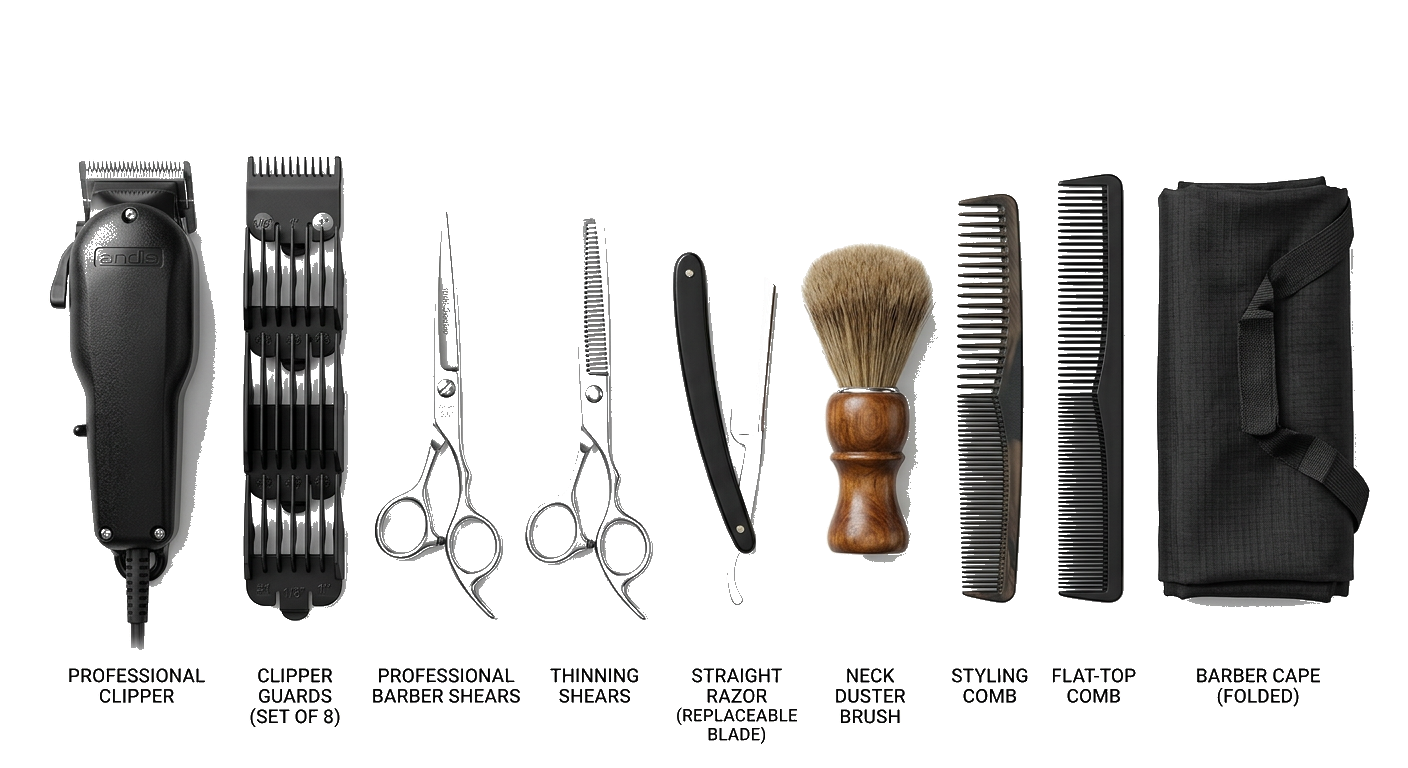
↔ flip for back
Nail Technology Program
Nail Cart — Daily Stock Checklist
Implements & Equipment — Disinfected & Ready
Side B — Implements & Equipment
Multiuse Implements — Confirm Disinfected & Stored Covered
- □ Cuticle pusher (metal)
- □ Cuticle nipper
- □ Finger bowl
- □ Nail brush
- □ Toenail clippers
- □ Callus paddle / rasp
- □ Acrylic brush
- □ Gel brush set
- □ Dappen dish
- □ Pinching tool
- □ Fan brush
- □ Orangewood stick holder
- □ E-file body (cleaned)
- □ E-file bits (cleaned)
- □ Tip cutter / clipper
- □ Detail art brushes
- □ Dotting tools
- □ Striping brush
Equipment — Cleaned & Operational
- □ LED lamp — interior clean
- □ Lamp cord — undamaged
- □ Table lamp — working
- □ Waste bin — lined
- □ Station surface — sanitized
- □ Pedicure basin — disinfected
Nail Art Supplies — Check Stock
- □ Gel paints (color range)
- □ Chrome / mirror powder
- □ Nail foils / transfers
- □ Rhinestones / gems
- □ Stamping plates
- □ Stamping polish
- □ Palette / mixing tile
- □ Makeup sponges (ombre)
Station not stocked = service not ready. Do not begin any client service until every item on both sides is confirmed checked and available.
© 2025 Shear Genius Society, LTD Co. — All Rights Reserved. Unauthorized reproduction prohibited.
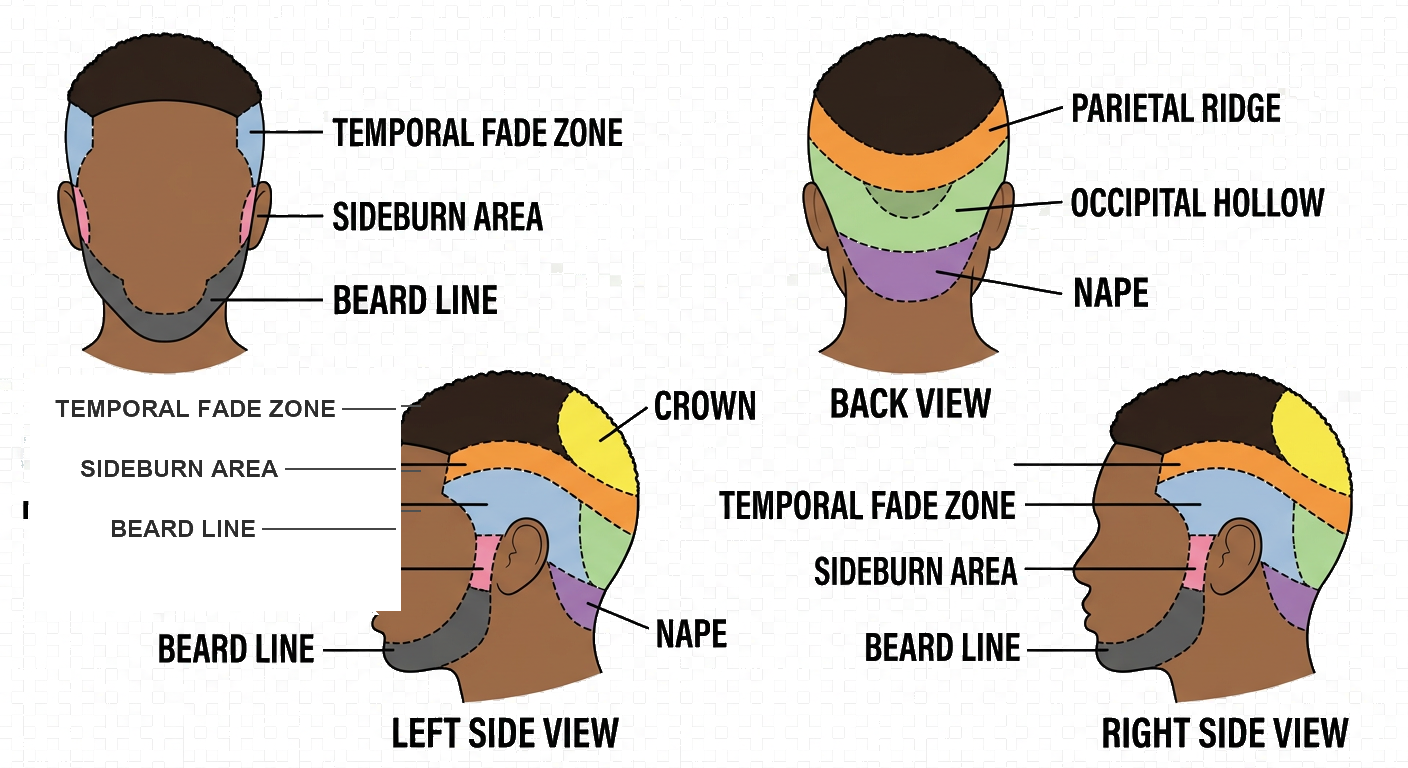
Esthetics Program
Esthetics Cart — Daily Stock Checklist
Verify Before Every Shift — No Exceptions
Side A — Consumables & Products
Consumables — Restock Daily
- □ Cotton rounds
- □ Gauze pads
- □ Esthetic wipes
- □ Headbands / caps
- □ Under-eye pads
- □ Gloves S / M / L
- □ Draping sheets
- □ Disposable spatulas
- □ Wax strips small
- □ Wax strips large
- □ Wax sticks assorted
- □ Micro brushes
- □ Lash spoolies
- □ Disp. mascara wands
- □ Mixing cups / palette
- □ Under-eye tape
- □ Lift shields S / M / L
- □ Disp. lip applicators
Products — Check Levels
- □ Cleanser — oily
- □ Cleanser — dry/sensitive
- □ Toner
- □ Exfoliant / enzyme
- □ Massage cream
- □ Clay mask
- □ Hydrating mask
- □ Treatment serum
- □ Moisturizer
- □ SPF 30+
- □ Pre-wax cleanser
- □ Hard wax beads
- □ Soft wax
- □ After-wax oil/lotion
- □ Lash adhesive
- □ Lash tint + developer
- □ Lift solution Step 1 & 2
- □ Petroleum jelly
© 2025 Shear Genius Society, LTD Co. — All Rights Reserved. Unauthorized reproduction prohibited.
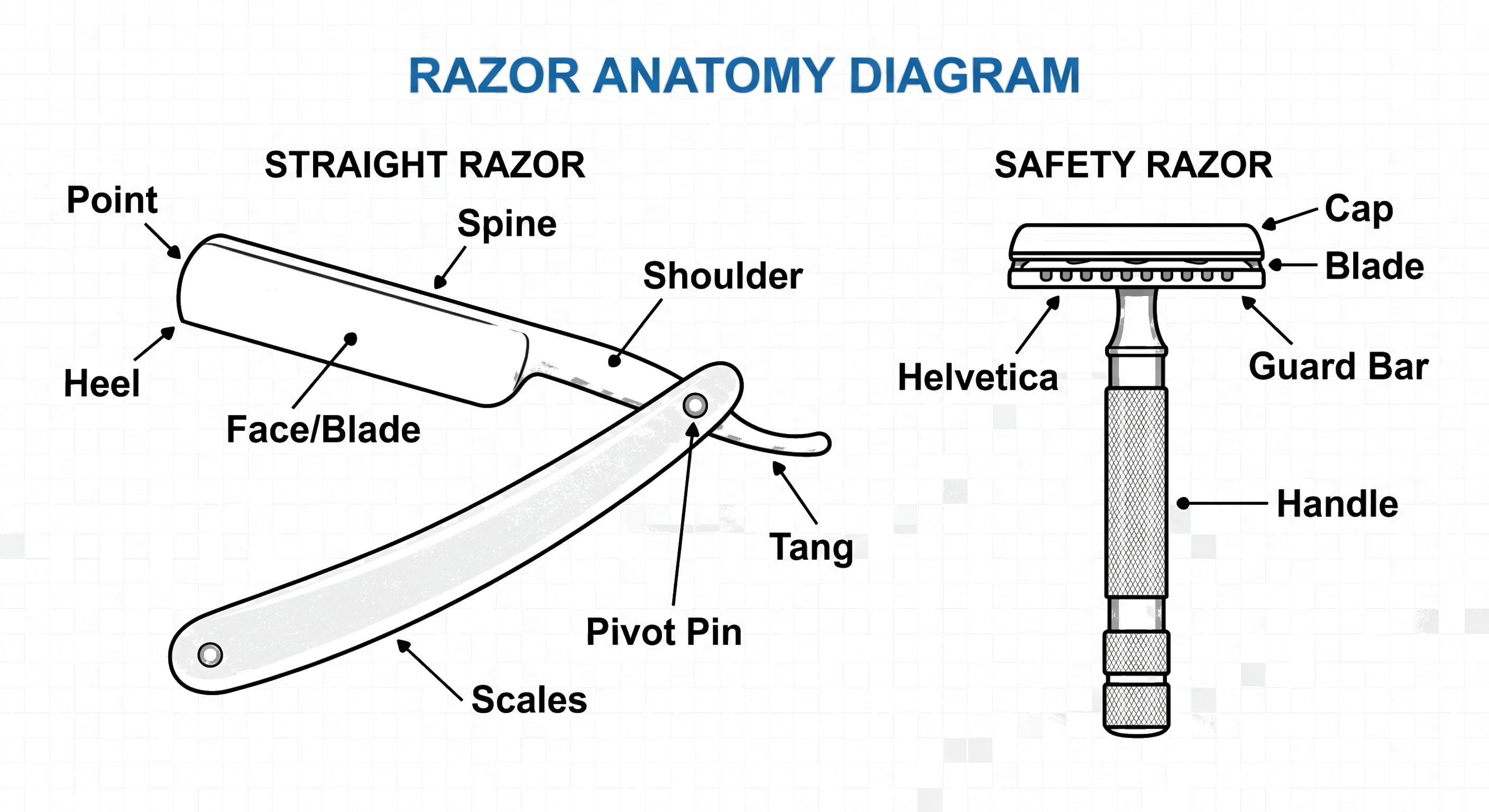
↔ flip for back
Esthetics Program
Esthetics Cart — Daily Stock Checklist
Equipment — Cleaned, Ready & Operational
Side B — Equipment & Implements
Multiuse Implements — Confirm Disinfected & Stored Covered
- □ Tweezers — straight
- □ Tweezers — curved
- □ Comedone extractor
- □ Metal spatulas x2
- □ Brow brush / comb
- □ Brow mapping tool
- □ Lash tile / jade stone
- □ Makeup brush set
Equipment — Cleaned & Operational
- □ Steamer — water filled (distilled)
- □ Steamer nozzle — clean
- □ Magnifying lamp — lens clean
- □ Wax warmer — pre-heating
- □ Wax temp checked ≤ 130°F
- □ Treatment table — sanitized
- □ Microderm machine — filters replaced
- □ Microderm handpiece — disinfected
- □ Ring light / makeup light
- □ Waste bin — lined
- □ Galvanic / HF machine
- □ Body wrap table — sanitized
Specialty — Lash Service Supplies
- □ Individual lash trays J/B/C/D curl
- □ Cluster lash sets
- □ Strip lash styles
- □ Lash adhesive (not expired)
- □ Nourishing lash serum
- □ Lash extension primer
Station not stocked = service not ready. Do not begin any client service until every item on both sides is confirmed checked and available.
© 2025 Shear Genius Society, LTD Co. — All Rights Reserved. Unauthorized reproduction prohibited.
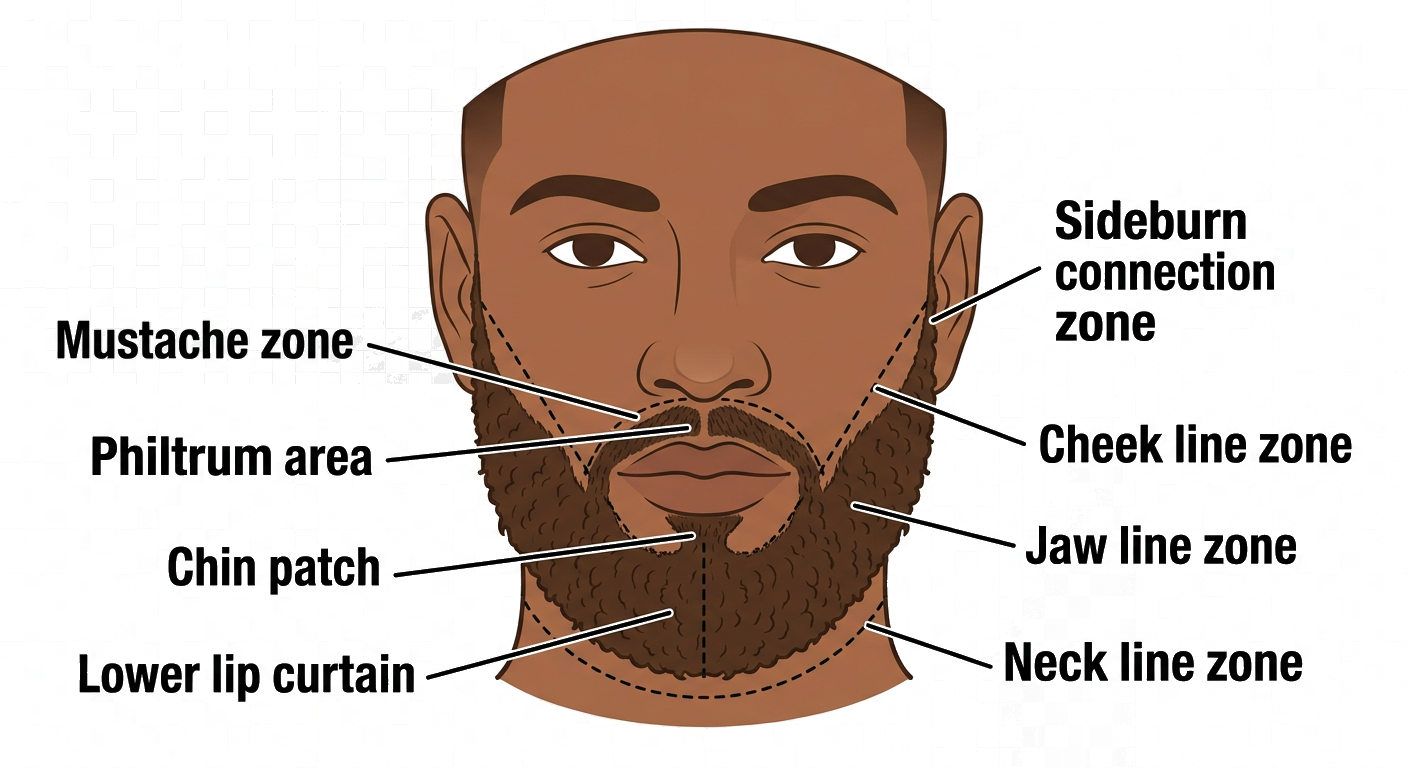
Cosmetology Program
Cosmetology Cart Stock
Daily Setup Checklist
Side A — Cart & Station Essentials
Implements (Must Be Disinfected)
- □ Shears (cutting & thinning)
- □ Rat-tail / tail comb
- □ Wide-tooth comb
- □ Fine-tooth barber comb
- □ Sectioning clips (8–12)
- □ Bobby pins / duckbill clips
- □ Round brush (barrel for service)
- □ Paddle brush
Chemical Service Adds
- □ Mixing bowls (2—color & processing)
- □ Applicator brush
- □ Color cape (chemical resistant)
- □ Gloves (multiple pairs)
- □ Cotton coil
- □ Barrier cream
- □ Timer
- □ Foil sheets (for highlight/balayage)
© 2025 Shear Genius Society, LTD Co. — All Rights Reserved.
↔ flip for back
Cosmetology Program
Cosmetology Cart Stock
Daily Setup Checklist
Side B — Supplies & Station Setup
Single-Service & Consumables
- □ Neck strips (full box)
- □ Capes (shampoo & styling)
- □ Plastic processing caps
- □ Paper towels
- □ Gloves (disposable)
- □ Trash bag (station)
- □ Disinfectant wipes
- □ Spray bottle (water)
Products (Minimum Stock)
- □ Shampoo (clarifying & moisturizing)
- □ Conditioner (rinse-out)
- □ Leave-in conditioner or detangler
- □ Heat protectant spray
- □ Lightweight styling cream or mousse
- □ Edge control / gel
- □ Finishing spray (flexible hold)
Equipment Check
- □ Blow dryer (lint filter clean)
- □ Curling iron (appropriate barrel)
- □ Heat-resistant mat in place
- □ Chair adjusted; headrest clean
- □ Mirror clean; good lighting
- □ Client record cards / intake forms
© 2025 Shear Genius Society, LTD Co. — All Rights Reserved.
Barbering Program
Barbering Cart Stock
Daily Setup Checklist
Side A — Implements & Tools
Clippers & Trimmers (Disinfected & Oiled)
- □ Full-size clipper (with guards #0.5–#8)
- □ T-outliner / trimmer (zero gap)
- □ Balding trimmer or open-cutter clipper
- □ Foil shaver (clean foil)
- □ Clipper oil
- □ Barbicide jar (solution fresh)
Cutting Tools
- □ Barber shears (straight)
- □ Thinning shears
- □ Straight razor / shavette holder
- □ Shavette blades (sealed, new)
- □ Sharps container (not overfull)
- □ Barber comb (fine & wide)
- □ Neck brush
© 2025 Shear Genius Society, LTD Co. — All Rights Reserved.
↔ flip for back
Barbering Program
Barbering Cart Stock
Daily Setup Checklist
Side B — Single-Service & Products
Single-Service Consumables
- □ Neck strips (full box)
- □ Barber capes (hair & chemical)
- □ Disposable gloves
- □ Towels (clean stack)
- □ Hot towels (if offering shave)
- □ Paper towels / shop towels
- □ Trash bag
- □ Spray bottle (water & disinfectant spray)
Shave & Finish Products
- □ Shave cream or soap & brush
- □ Pre-shave oil
- □ Aftershave / witch hazel / alum block
- □ Beard oil or beard balm
- □ Edge control / wave pomade
- □ Bump cream / ingrown treatment
- □ Styling product (pomade, clay, paste)
Station Ready Check
- □ All blades disinfected & documented
- □ Barbicide jar filled & dated
- □ Chair adjusted; headrest clean
- □ Mirror clean; good lighting
- □ Client record cards / intake forms ready
- □ Sharps container accessible & labeled
© 2025 Shear Genius Society, LTD Co. — All Rights Reserved.

Cosmetology & Barbering — Color Theory
The Color Wheel
Primary · Secondary · Tertiary · Complementary
Side A — Color Wheel & Relationships
Primary Colors
- Red — warm base; adds depth and richness
- Yellow — lightest primary; underlying pigment in most hair
- Blue — cool base; deepens and neutralizes warmth
Secondary Colors
- Orange = Red + Yellow
- Green = Yellow + Blue
- Violet = Red + Blue
Tertiary Colors
- Red-Orange
- Yellow-Orange
- Yellow-Green
- Blue-Green
- Blue-Violet
- Red-Violet
Complementary Pairs (Neutralizers)
- Red neutralizes Green
- Yellow neutralizes Violet
- Blue neutralizes Orange
- Red-Violet neutralizes Yellow-Green
- Blue-Violet neutralizes Yellow-Orange
- Blue-Green neutralizes Red-Orange
★ Rule: Mix a color with its complement (opposite on the wheel) to neutralize, dull, or cancel an unwanted tone. Equal parts = brown/gray. Less complement = subtle shift. More complement = stronger cancel.
© 2025 Shear Genius Society, LTD Co. — All Rights Reserved. Unauthorized reproduction prohibited.
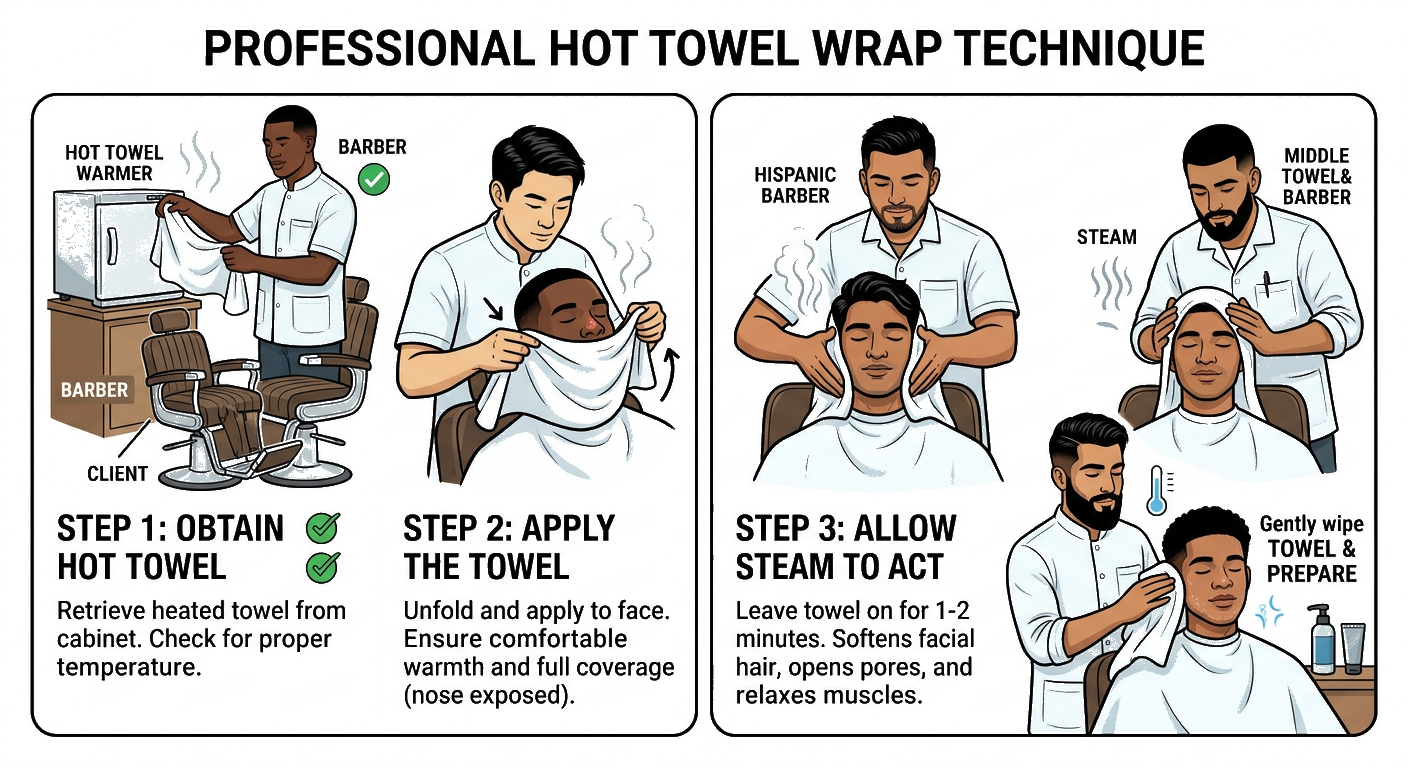
↔ flip for back
Cosmetology & Barbering — Color Theory
Color Levels & Tone
Level System · Warm/Cool · Underlying Pigment
Side B — Levels, Tone & Underlying Pigment
The Level System (1–10)
- 1 — Black
- 2 — Darkest Brown
- 3 — Dark Brown
- 4 — Medium Brown
- 5 — Light Brown
- 6 — Dark Blonde
- 7 — Medium Blonde
- 8 — Light Blonde
- 9 — Very Light Blonde
- 10 — Lightest Blonde / Platinum
Underlying Pigment (ULP) by Level
- Levels 1–2: Red (very deep)
- Levels 3–4: Red-Orange
- Level 5: Orange-Red
- Level 6: Orange
- Level 7: Yellow-Orange
- Level 8: Yellow
- Level 9: Pale Yellow
- Level 10: Pale Yellow/White
Tone Classification
- Warm tones: Red, Orange, Yellow, Gold, Copper, Bronze
- Cool tones: Ash, Blue, Violet, Beige, Pearl
- Neutral tones: Natural, Neutral — balance of warm & cool
- Ash (A/1): Blue-based — cancels orange/brassiness
- Violet (V/2): Cancels yellow; brightens platinum/silver
- Gold (G/3): Enhances warmth; great for rich blondes
- Copper (C/4): Strong warm; adds vibrancy and dimension
- Mahogany (M/5): Red-violet; deepens and enriches brunettes
- Red (R/6): Bright red-orange; fashion and vivid color
Warm vs. Cool Quick Guide
- Warm + Warm = More intense warmth
- Cool + Cool = More intense cool/ash
- Warm + Cool = Neutralized / natural result
- Always check ULP before choosing tone
© 2025 Shear Genius Society, LTD Co. — All Rights Reserved. Unauthorized reproduction prohibited.
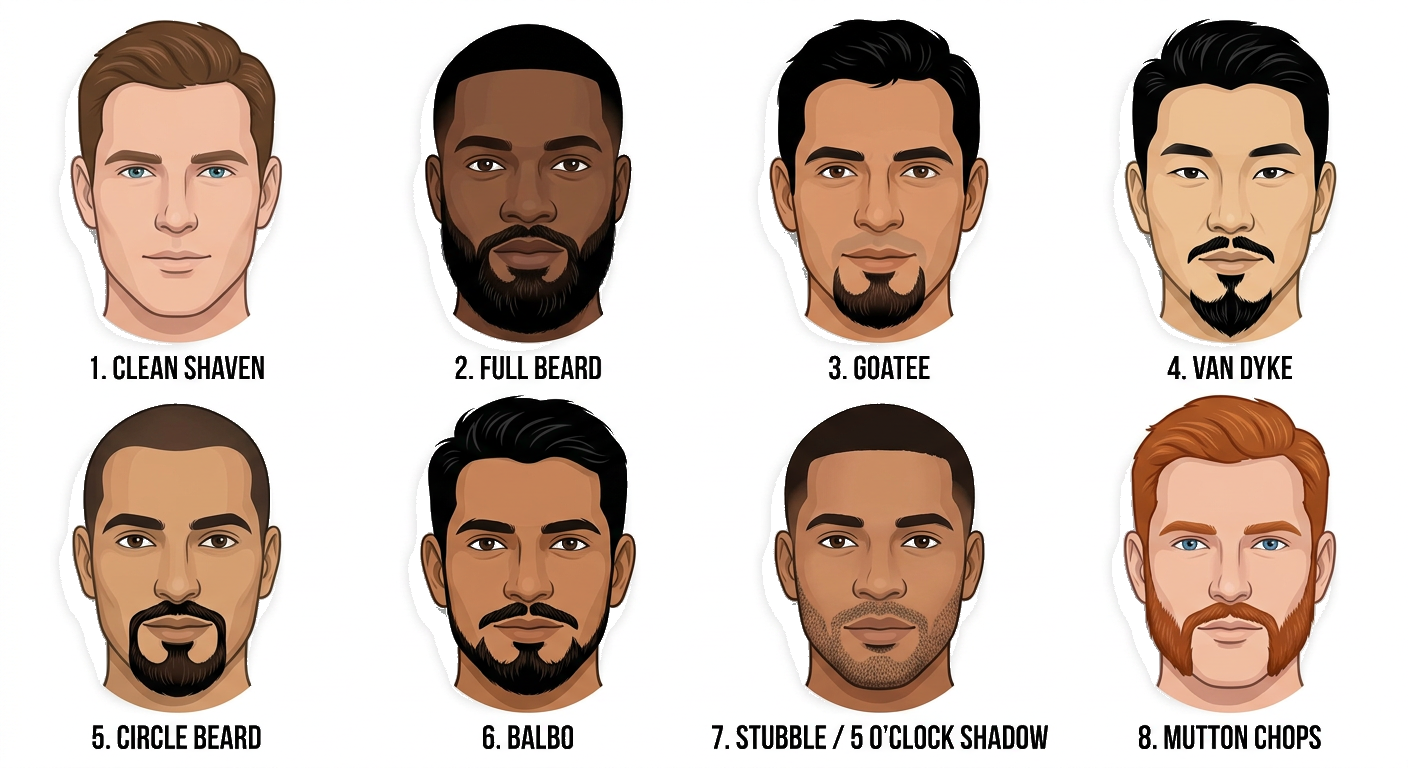
Cosmetology & Barbering — Color Theory
Color Correction
Problem Solving · Brassiness · Fading · Damage
Side A — Color Correction Principles
Step 1 — Identify the Problem
- Too brassy/orange? Color was lifted to Level 6–7 ULP (orange) — needs blue/ash to cancel
- Too yellow? Lifted to Level 8–9 — needs violet toner to cancel yellow
- Too dark? Color built up — may need color remover before re-application
- Too light? Over-lifted or over-processed — fill with missing pigment first
- Green tint (pool/well water)? Red or pink gloss/toner to cancel green
- Muddy/dull? Neutral tones on top; clarify first if buildup
- Patchy/uneven? Pre-soften resistant areas; equalize porosity
Step 2 — Neutralize with Complement
- Orange brassiness → Blue-based ash (ash blonde, blue toner)
- Yellow brassiness → Violet toner (purple shampoo, violet gloss)
- Red/warm excess → Green-based or neutral ash
- Green cast → Red or warm pink toner/gloss
- Over-cool / too gray → Warm gold or copper gloss
- Faded red → Re-deposit red/copper on same or darker level
Step 3 — Fill If Going Darker
- NEVER go darker without filling missing pigment first
- Hair lightened to Level 8+ lacks warm pigment — result will be muddy/green
- Fill formula: Apply a warm filler (copper, red-orange) at target level's ULP before final color
- Fill with equal developer (10 vol) — no lift, just deposit
- Example: Going from Level 9 to Level 5 — fill with copper at Level 6 first, then apply Level 5
Color Remover vs. Bleach
- Color remover (reducer): Removes artificial pigment only; does NOT lighten natural hair; safer for integrity
- Bleach/lightener: Removes both artificial AND natural pigment; higher damage risk; use when remover is insufficient
- Always do a strand test before full-service correction
- Multiple sessions may be required — never rush color correction

⚠ Safety: Strand test before EVERY correction service. Document starting level, history, and products used. Over-processed or highly porous hair may not hold correction — prioritize integrity over result speed.
© 2025 Shear Genius Society, LTD Co. — All Rights Reserved. Unauthorized reproduction prohibited.
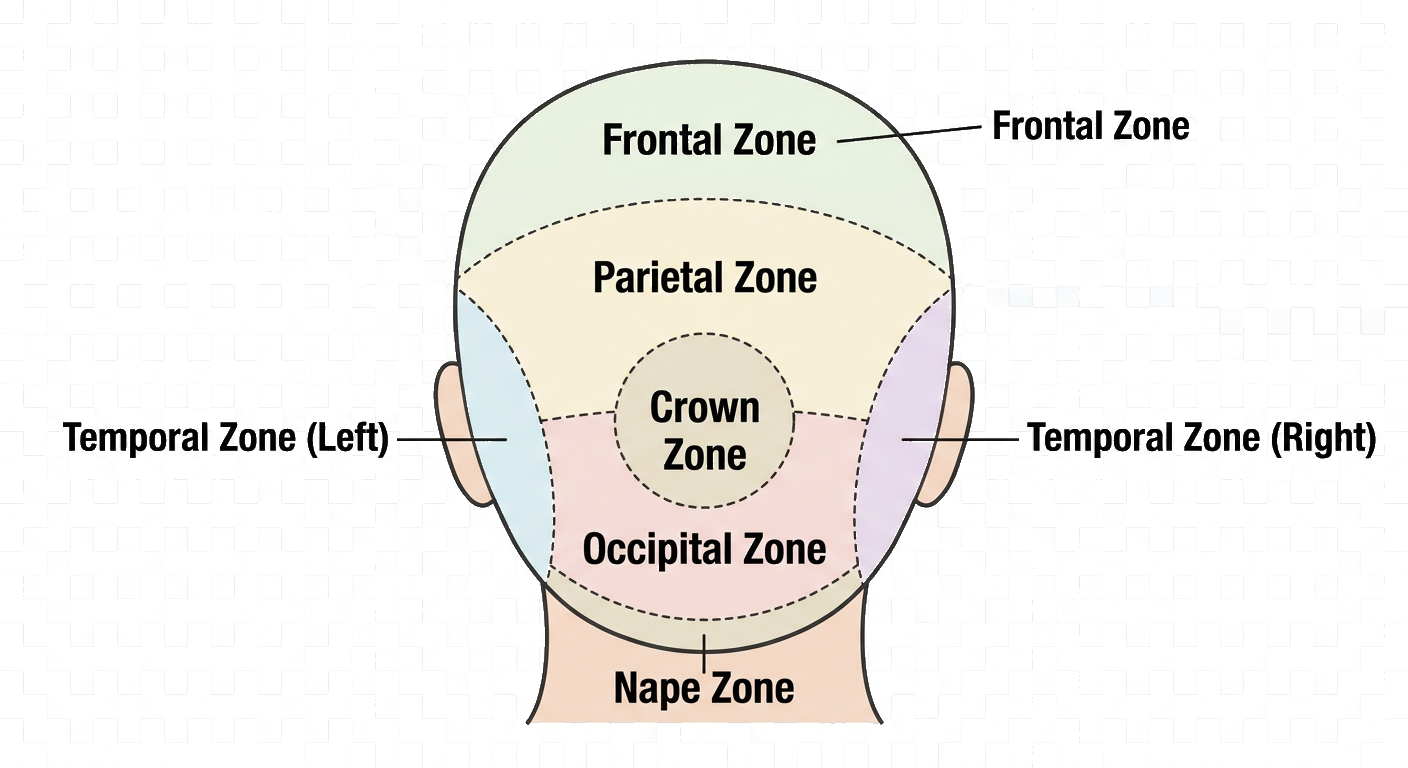
↔ flip for back
Cosmetology & Barbering — Color Theory
Gray Coverage & Special Cases
Gray Coverage · High Porosity · Vivid Color · Barbering
Side B — Gray Coverage & Special Applications
Gray Coverage Principles
- Gray hair = no pigment (melanin absent) — must be filled by artificial color
- Gray is often resistant and coarser — may need longer processing or pre-softening
- 25% gray: No extra steps needed — standard application
- 50% gray: Use a natural/neutral series mixed with fashion tone for coverage + dimension
- 75–100% gray: Use a color with higher natural/neutral base for full coverage; tone after if needed
- Avoid ash tones on 100% gray — can go flat or too cool without warmth in formula
- Add 10–15% gold or copper to ash formulas on high-gray clients for life and warmth
- Developer strength for gray: 20 vol standard; 30 vol for resistant gray at root
Gray Blending vs. Full Coverage
- Full coverage: 100% gray covered — requires neutral/natural base + developer at 20–30 vol
- Blending: Soften gray without eliminating — use demi-permanent or toners to blend
- Highlights + lowlights: Best natural-looking blend for salt-and-pepper or transitioning clients
- Gray embrace: Tone to enhance silver/white; use violet or blue toners to brighten
Vivid & Fashion Color
- Hair must be pre-lightened to Level 9–10 for true vivid results
- Use direct dye (no developer) for most fashion/vivid colors
- Porous hair absorbs more pigment — apply less time; check frequently
- Fading is rapid — educate client on color-safe products and cold water rinse
- Vivid on gray: gray grabs pigment well — may fade unevenly; tone test recommended
Barbering Color Applications
- Beard color: Facial hair is coarser — use dedicated beard dye or permanent color at same or darker level
- Gray beard blending: Demi-permanent blends without full coverage for natural look
- Fades + color: Apply color before fade; allow to fully process and rinse before clipper work
- Scalp care: Short hair = closer scalp contact — check for sensitivity before application
- Hairline precision: Use barrier cream around hairline and ears before all color services
- Processing time: Shorter hair with close contact to scalp processes faster — reduce by 5 min
© 2025 Shear Genius Society, LTD Co. — All Rights Reserved. Unauthorized reproduction prohibited.
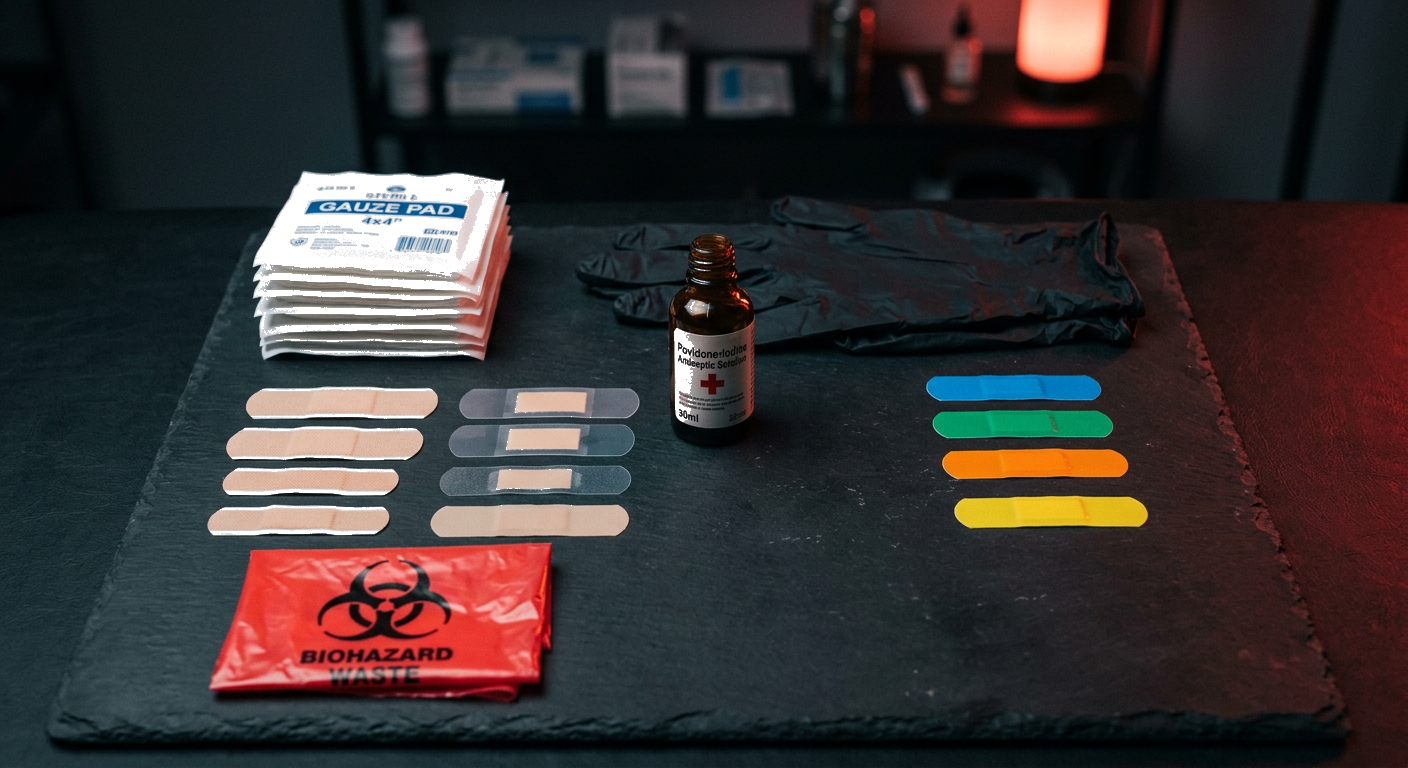
Cosmetology & Barbering — Color Theory
Developer & Mixing
Volume Guide · Ratios · Porosity · Processing
Side A — Developer Volumes & Mixing Ratios
Developer Volume Guide
- 10 Vol (3%): Deposit only — no lift; toners, glosses, gray blending, refreshing faded ends
- 20 Vol (6%): 1–2 levels of lift; standard permanent color; full gray coverage; most common
- 30 Vol (9%): 2–3 levels of lift; resistant gray at root; darker to medium blonde
- 40 Vol (12%): 3–4 levels of lift; maximum lift with color; NOT for gray coverage; use with caution
- Bleach: Used with 20–40 vol depending on desired level and hair condition; 20 vol on scalp for sensitive
Standard Mixing Ratios
- Permanent color: 1:1 (1 oz color : 1 oz developer)
- Demi-permanent: 1:2 (1 oz color : 2 oz developer) — varies by brand
- Toner: 1:2 or per brand spec — always use low developer (10 vol)
- Bleach powder: 1:1.5 to 1:2 — check consistency (thick yogurt); adjust for method (foil vs. freehand)
- Always check manufacturer instructions — ratios vary by brand line
- Measure by weight (grams) for precision; volume measurements acceptable for standard work
Porosity & Its Effect on Color
- Low porosity: Resistant; cuticle tight; color takes longer; may need heat or pre-soften
- Normal porosity: Processes as expected; predictable results
- High porosity: Absorbs fast; fades fast; may grab too dark at ends; reduce processing time by 5–10 min; use lower developer
- Equalize: Apply color to mid-lengths and ends LAST on high-porosity hair to avoid over-deposit
- Protein treatment before color service helps equalize porosity and extend color longevity
Processing Time Rules
- Standard permanent: 30–45 min depending on brand and desired result
- Check hair every 5–10 min during first service on new clients
- Heat accelerates processing — reduce time by 5–10 min if using heat
- Do NOT exceed maximum processing time — diminishing returns + damage
- Rinse when strand test shows desired result achieved — do not wait for timer if done
© 2025 Shear Genius Society, LTD Co. — All Rights Reserved. Unauthorized reproduction prohibited.
↔ flip for back
Cosmetology & Barbering — Color Theory
Color Application Methods
Virgin · Retouch · Highlights · Balayage · Glossing
Side B — Application Techniques
Virgin Color Application
- Apply color to mid-lengths and ends FIRST — process 20 min
- Apply to roots LAST — body heat accelerates root processing
- Process roots for remaining time (usually 15–25 min)
- Total process: 30–45 min depending on formula and starting level
Retouch Application
- Apply only to new growth — do NOT overlap onto previously colored hair
- Overlapping causes buildup, breakage, and banding
- If ends need refreshing: gloss or demi-permanent at last 5–10 min only
- Retouch average: every 4–6 weeks
Highlighting Techniques
- Foils: Precise; controlled placement; full saturation; best for maximum lift
- Balayage: Freehand; painted on; less saturation; softer grow-out; more natural
- Babylights: Very fine foils throughout; mimics natural sun-kissed highlights
- Chunky highlights: Wider sections; bolder contrast; retro or statement looks
- Lowlights: Add depth using darker color in foils; blended with highlights for dimension
- Partial vs. full: Partial = top and front panels only; full = all sections throughout
Glossing & Toning
- Gloss: Demi-permanent; adds shine, tone, and refresh; no lift; 10 vol developer
- Toner: Applied after lightening to achieve desired tone; neutralize or enhance
- Clear gloss: Shine only, no color shift; great for between-service maintenance
- In-salon gloss: Every 4–6 weeks to maintain vibrancy and depth between color services
- At-home maintenance: Color-safe shampoo, purple/blue shampoo for blondes, bond builder

★ Pro Tip: Always perform a strand test and elasticity test before any lightening service. Document every formula used for every client — consistency and accuracy are the foundation of professional color work.
© 2025 Shear Genius Society, LTD Co. — All Rights Reserved. Unauthorized reproduction prohibited.