
Skin Structure,
Growth & Nutrition
The Science Beneath the Surface
Foundations | State Board Exam Aligned
Shear Genius Society Curriculum
© 2026 Shear Genius SocietyThe skin is the
Largest Organ in the Body
and every beauty service involves it.
Facials • Waxing • Chemical Peels • Makeup • Nail Services • Massage
© 2026 Shear Genius SocietyWhat You'll Learn
- Describe the structure and composition of the skin
- Identify the layers of the epidermis and dermis
- Explain the six primary functions of the skin
- Understand how melanin is produced and distributed
© 2026 Shear Genius SocietyWhat You'll Learn
continued
- Identify vitamins essential for healthy skin
- Explain the role of collagen and elastin in skin health
- Differentiate between sudoriferous and sebaceous glands
- Describe the process of skin cell renewal and keratinization
© 2026 Shear Genius SocietySkin Quick Facts
THE BASICS YOU NEED TO KNOW
22 SQ FT
Average total surface area of adult skin
6-9 LBS
Weight of the skin on an adult body
THINNEST
Eyelids — as thin as 0.5 mm
THICKEST
Palms and soles — up to 6 mm
The study of the skin is called DERMATOLOGY — the medical branch. HISTOLOGY is the study of tissue.
© 2026 Shear Genius SocietySix Functions of the Skin
PART 1 — THE BIG THREE
PROTECTION
Think: ShieldFirst line of defense against bacteria, UV radiation, and physical injury. Acts as a waterproof barrier.
SENSATION
Think: Alarm SystemContains nerve endings that detect heat, cold, touch, pressure, and pain. Keeps you safe from harm.
HEAT REGULATION
Think: ThermostatMaintains body temperature at ~98.6°F through sweating (cooling) and shivering (warming).
© 2026 Shear Genius SocietySix Functions of the Skin
PART 2 — THE OTHER THREE
EXCRETION
Think: DetoxEliminates waste products through sweat — salt, uric acid, and other toxins are released through the pores.
SECRETION
Think: MoisturizerSebaceous glands secrete sebum (oil) that lubricates the skin and hair, keeping them soft and pliable.
ABSORPTION
Think: SpongeThe skin can absorb certain substances — topical medications, essential oils, and skincare ingredients.
© 2026 Shear Genius SocietySigns of Healthy Skin
- Slightly moist — not too oily, not too dry
- Soft and flexible — moves easily over muscles and bones
- Smooth texture — free of visible blemishes or rough patches
- Slightly acidic — skin has a pH between 4.5 and 5.5 (acid mantle)
- Free of disease — no inflammation, infection, or abnormalities
© 2026 Shear Genius SocietyThree Main Layers
FROM SURFACE TO DEEPEST
EPIDERMIS
Outermost layer — the one you can see and touch
No blood vessels • 5 sub-layers • Constantly shedding
DERMIS
Middle layer — the "true skin" beneath the epidermis
Blood vessels • Nerves • Collagen • Elastin • Glands
SUBCUTANEOUS TISSUE
Deepest layer — also called the hypodermis
Fat cells • Insulation • Cushioning • Energy storage
© 2026 Shear Genius SocietyThe Epidermis
FIVE LAYERS — OUTERMOST TO DEEPEST
© 2026 Shear Genius SocietyEpidermis Key Details
BOARD EXAM ESSENTIALS
The epidermis has NO blood vessels.
- Stratum corneum is made of keratin — the same protein in hair and nails
- The basal layer (germinativum) is where cell division (mitosis) occurs
- Cells take about 28 days to travel from the basal layer to the surface
- Melanocytes are found in the basal layer — they produce melanin
- The epidermis is thinnest on the eyelids and thickest on the palms
© 2026 Shear Genius SocietyMelanocytes & Melanin
SKIN COLOR AND PROTECTION
© 2026 Shear Genius SocietyThe Dermis
THE "TRUE SKIN" — CONTAINS BLOOD SUPPLY
PAPILLARY LAYER
Upper portion of the dermis, directly beneath the epidermis
Contains: Dermal papillae (fingerprint ridges), nerve endings, capillaries
RETICULAR LAYER
Deeper, thicker portion of the dermis — provides strength
Contains: Collagen, elastin, oil glands, sweat glands, hair follicles, fat cells
BOARD TIP: The dermis is where collagen and elastin give skin its strength and elasticity!
© 2026 Shear Genius SocietySubcutaneous Tissue
THE DEEPEST LAYER — ALSO CALLED HYPODERMIS
- Made primarily of adipose tissue (fat cells)
- Acts as a shock absorber — cushions muscles and bones
- Provides insulation — helps regulate body temperature
- Connects the skin to underlying muscles and bones
- Varies in thickness based on body location, age, and genetics
© 2026 Shear Genius SocietyVitamins for Skin Health
NUTRITION FROM THE INSIDE OUT
VITAMIN A
Promotes cell turnover and repair — fights signs of aging. Found in sweet potatoes, carrots, and leafy greens.
VITAMIN C
Essential for collagen production — brightens and protects. Found in citrus fruits, berries, and bell peppers.
VITAMIN D
Supports skin cell growth and repair — "the sunshine vitamin." Produced when skin is exposed to sunlight.
VITAMIN E
Powerful antioxidant — protects against free radical damage. Found in nuts, seeds, and avocados.
© 2026 Shear Genius SocietyHydration & Skin Health
- Skin is approximately 64% water — hydration is critical
- Dehydrated skin appears dull, tight, and shows more fine lines
- Water helps flush toxins and delivers nutrients to skin cells
- Humectants in skincare (hyaluronic acid) attract moisture to skin
- Drinking adequate water supports the skin's moisture barrier
© 2026 Shear Genius SocietyCollagen & Elastin
THE STRUCTURAL PROTEINS OF THE DERMIS
COLLAGEN
Most abundant protein in the skin — provides firmness and structure
Makes up about 70-80% of the dry weight of the dermis
ELASTIN
Gives skin its ability to stretch and snap back into place
Decreases with age — leading to sagging and wrinkles
© 2026 Shear Genius SocietySkin Aging
INTRINSIC vs. EXTRINSIC
INTRINSIC AGING
Internal / Genetic — Cannot be prevented
- Genetically programmed — part of natural aging
- Collagen production slows over time
- Skin becomes thinner and loses elasticity
- Cell turnover rate decreases with age
EXTRINSIC AGING
External / Environmental — Can be reduced
- Sun exposure (photoaging) — #1 cause
- Smoking constricts blood vessels
- Pollution and environmental toxins
- Poor nutrition and dehydration
© 2026 Shear Genius SocietySun Damage & UV Radiation
THE #1 CAUSE OF PREMATURE AGING
UVA RAYS
"Aging rays" — penetrate deep into the dermis. Break down collagen and elastin. Cause wrinkles and age spots. Present year-round — even on cloudy days and through glass.
UVB RAYS
"Burning rays" — affect the epidermis surface. Cause sunburn, redness, and direct DNA damage. Strongest between 10 AM and 4 PM in peak sun hours.
UVC RAYS
Most dangerous — but absorbed by the ozone layer. Do not typically reach the earth's surface. Used in germicidal lamps for sterilization.
© 2026 Shear Genius SocietyFree Radicals & Antioxidants
FREE RADICALS
- Unstable molecules that damage skin cells
- Caused by UV exposure, pollution, and smoking
- Break down collagen and accelerate aging
- Contribute to hyperpigmentation and dullness
ANTIOXIDANTS
- Neutralize free radicals — stop the damage
- Found in vitamins A, C, and E
- Green tea, berries, and dark chocolate are sources
- Applied topically in serums and moisturizers
© 2026 Shear Genius SocietySudoriferous Glands
SWEAT GLANDS — TWO TYPES
ECCRINE GLANDS
Found ALL over the body — most abundant on palms, soles, and forehead
Produce clear, odorless sweat • Regulate body temperature • Open directly onto skin surface
APOCRINE GLANDS
Found in the armpits and groin area — connected to hair follicles
Produce thicker secretion • Body odor occurs when bacteria break down this sweat • Activated by stress/emotion
© 2026 Shear Genius SocietySebaceous Glands
OIL GLANDS — SEBUM PRODUCTION
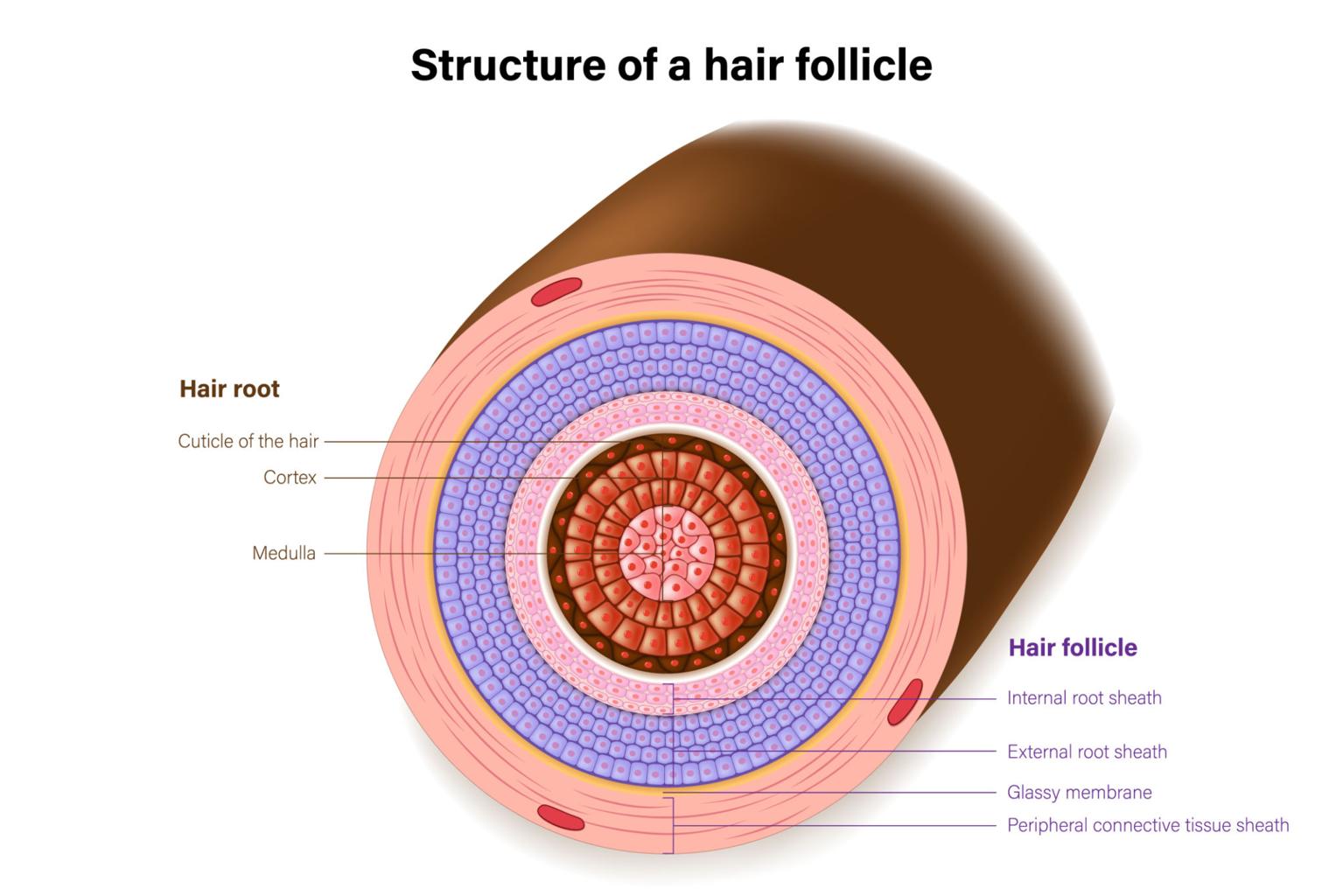
- Attached to hair follicles — found everywhere except palms and soles
- Produce sebum — an oily substance that lubricates skin and hair
- Sebum helps maintain the skin's acid mantle (protective pH layer)
- Overactive sebaceous glands lead to oily skin and acne
- Underactive sebaceous glands lead to dry, flaky skin
© 2026 Shear Genius SocietyHow Glands Affect Services
WHY THIS MATTERS IN THE SALON
OILY SKIN
Overactive sebaceous glands — use oil-free products, astringent toners, and lighter moisturizers
DRY SKIN
Underactive sebaceous glands — use rich moisturizers, cream cleansers, and hydrating masks
EXCESSIVE SWEATING
Overactive eccrine glands — may affect product adhesion during makeup or nail services
BODY ODOR
Apocrine gland secretion + bacteria — maintain a comfortable, professional environment
© 2026 Shear Genius SocietyCell Turnover Rate
HOW THE SKIN RENEWS ITSELF
~28 DAYS
Average cell turnover cycle in healthy young adults
~45-60 DAYS
Cell turnover rate in older adults (slows with age)
BASAL LAYER
New cells are born here through cell division (mitosis)
- Exfoliation speeds up the removal of dead surface cells
- Chemical peels and microdermabrasion accelerate cell turnover
- Retinoids (vitamin A) stimulate faster cell renewal
© 2026 Shear Genius SocietyKeratinization
THE PROCESS OF CELL HARDENING
© 2026 Shear Genius SocietyWound Healing Basics
HOW THE SKIN REPAIRS ITSELF
INFLAMMATION
Immediate response — blood flow increases, redness and swelling. White blood cells rush to fight bacteria and clean the wound.
PROLIFERATION
New tissue begins to form — collagen is produced. New blood vessels grow. Granulation tissue fills the wound.
REMODELING
Scar tissue matures and strengthens over weeks to months. Collagen reorganizes. Skin regains strength (but not 100%).
NEVER perform services on broken, inflamed, or infected skin — refer to a physician!
© 2026 Shear Genius SocietyHow Skin Renews Itself
THE CONTINUOUS CYCLE
- New cells are born in the stratum germinativum (basal layer) through mitosis
- Cells migrate upward through each layer, changing shape and composition
- As cells reach the surface, they become flat, dry, and keratinized
- Dead cells naturally shed in a process called desquamation
- The entire epidermis is replaced approximately every 28 days
© 2026 Shear Genius SocietyKey Terms Review
PART 1
© 2026 Shear Genius SocietyKey Terms Review
PART 2
© 2026 Shear Genius SocietyBoard Exam Tips
SKIN STRUCTURE EDITION
- Memorize the 5 layers of the epidermis in order — corneum to germinativum
- Know the 6 functions of the skin — protection, sensation, heat regulation, excretion, secretion, absorption
- Understand the difference between eccrine and apocrine glands
- Remember: all skin tones have the same number of melanocytes
- Know that collagen = firmness and elastin = flexibility
© 2026 Shear Genius SocietyWhat is the outermost layer of the skin called?
- A) Dermis
- B) Hypodermis
- C) Epidermis
- D) Subcutaneous tissue
Click to reveal answer
Answer: C
The epidermis is the outermost layer — it contains no blood vessels
© 2026 Shear Genius SocietyWhich layer of the epidermis is where new cells are produced?
- A) Stratum corneum
- B) Stratum lucidum
- C) Stratum granulosum
- D) Stratum germinativum
Click to reveal answer
Answer: D
The stratum germinativum (basal layer) is where mitosis occurs — new cells are born here
© 2026 Shear Genius SocietyWhat protein gives the skin its firmness and structure?
- A) Melanin
- B) Elastin
- C) Collagen
- D) Keratin
Click to reveal answer
Answer: C
Collagen provides firmness and structure — it makes up 70-80% of the dermis dry weight
© 2026 Shear Genius SocietyWhich type of sweat gland is found all over the body?
- A) Apocrine
- B) Sebaceous
- C) Eccrine
- D) Sudoriferous
Click to reveal answer
Answer: C
Eccrine glands are found all over the body — they regulate temperature with clear, odorless sweat
© 2026 Shear Genius SocietyWhat is the primary function of melanin in the skin?
- A) Moisturize the skin
- B) Absorb UV radiation
- C) Produce sweat
- D) Create new skin cells
Click to reveal answer
Answer: B
Melanin absorbs UV radiation — it is the skin's natural protection against sun damage
© 2026 Shear Genius SocietyHow long does the average cell turnover cycle take in a healthy young adult?
- A) 7 days
- B) 14 days
- C) 28 days
- D) 60 days
Click to reveal answer
Answer: C
The average cell turnover cycle is approximately 28 days from basal layer to shedding
© 2026 Shear Genius SocietySebaceous glands produce what substance?
- A) Sweat
- B) Melanin
- C) Keratin
- D) Sebum
Click to reveal answer
Answer: D
Sebaceous glands produce sebum — the oily substance that lubricates skin and hair
© 2026 Shear Genius SocietyWhich vitamin is called the "sunshine vitamin" and supports skin cell growth?
- A) Vitamin A
- B) Vitamin C
- C) Vitamin D
- D) Vitamin E
Click to reveal answer
Answer: C
Vitamin D is produced when skin is exposed to sunlight — it supports cell growth and repair
© 2026 Shear Genius Society