SHEAR GENIUS SOCIETY
Infection Control
Principles and Practices
Foundations Chapter 5 | State Board Exam Aligned
Nail Technology • Cosmetology • Barbering • Esthetics
Infection Control is the #1
Most Tested Topic
on the State Board Exam
~30% of your written exam • Standalone practical exam task • Know this cold.
What You'll Learn
- Identify the 4 types of pathogens
- Explain the chain of infection & how to break it
- Master the 3 levels of decontamination
- Demonstrate proper hand hygiene & PPE
What You'll Learn
continued
- Understand the OSHA Bloodborne Pathogens Standard
- Know EPA-registered disinfectants for salons
- Perform the blood exposure procedure
- Apply infection control to daily practice
SECTION 01
Understanding Pathogens
Bacteria • Viruses • Fungi • Parasites
What Is a Pathogen?
Any organism that can cause disease.
As a salon professional, you will encounter 4 main types:
Bacteria
Single-celled organisms
Viruses
Need a host to replicate
Fungi
Molds, yeasts, ringworm
Parasites
Live on/in a host
Bacteria: Three Shapes
COCCI
Round / Sphere
Staph & Strep infections
BACILLI
Rod-Shaped
Tetanus, Tuberculosis
SPIRILLA
Spiral / Corkscrew
Syphilis, Lyme Disease
Know These Bacteria
HIGH-FREQUENCY EXAM TERMS
Staphylococci
Pus-forming bacteria on skin — cause boils & abscesses
Streptococci
Cause strep throat and blood poisoning
MRSA
Methicillin-resistant staph — EXTREMELY dangerous in salon settings
Viruses: Key Facts
- NOT living organisms — need a host cell
- Cannot be killed by antibiotics
- Only prevented through proper disinfection
- Can survive on surfaces for days to weeks
Viruses in the Salon
KNOW THESE FOR YOUR BOARD EXAM
BOARD TIP: Hepatitis B is the #1 bloodborne virus in salons — vaccination is recommended!
Chain of Infection
BREAK ANY LINK = PREVENT INFECTION
1
Infectious Agent
The pathogen
2
Reservoir
Where it lives
3
Portal of Exit
How it leaves
4
Transmission
How it travels
5
Portal of Entry
How it enters
6
Susceptible Host
Weak immune system
YOUR JOB: Break the chain at every opportunity! Clean tools, wash hands, use PPE, disinfect surfaces.
SECTION 02
Decontamination
Cleaning • Disinfection • Sterilization
Three Levels of Decontamination
LEVEL 1: CLEANING
Removes visible dirt & debris with soap and water
ALWAYS the first step — before anything else!
LEVEL 2: DISINFECTION
Destroys most pathogens on non-porous surfaces
EPA-registered disinfectants — 10 min contact time
LEVEL 3: STERILIZATION
Destroys ALL microbial life including spores
Autoclave (steam + pressure) — for skin-piercing tools
Salon Disinfectants
EPA-REGISTERED = PROVEN EFFECTIVE
Disinfection Procedure
8 STEPS — PART 1
Disinfection Procedure
8 STEPS — PART 2
NEVER put dirty tools directly in disinfectant — debris blocks the chemicals!
SECTION 03
Hand Hygiene & PPE
Your Personal Infection Control Practices
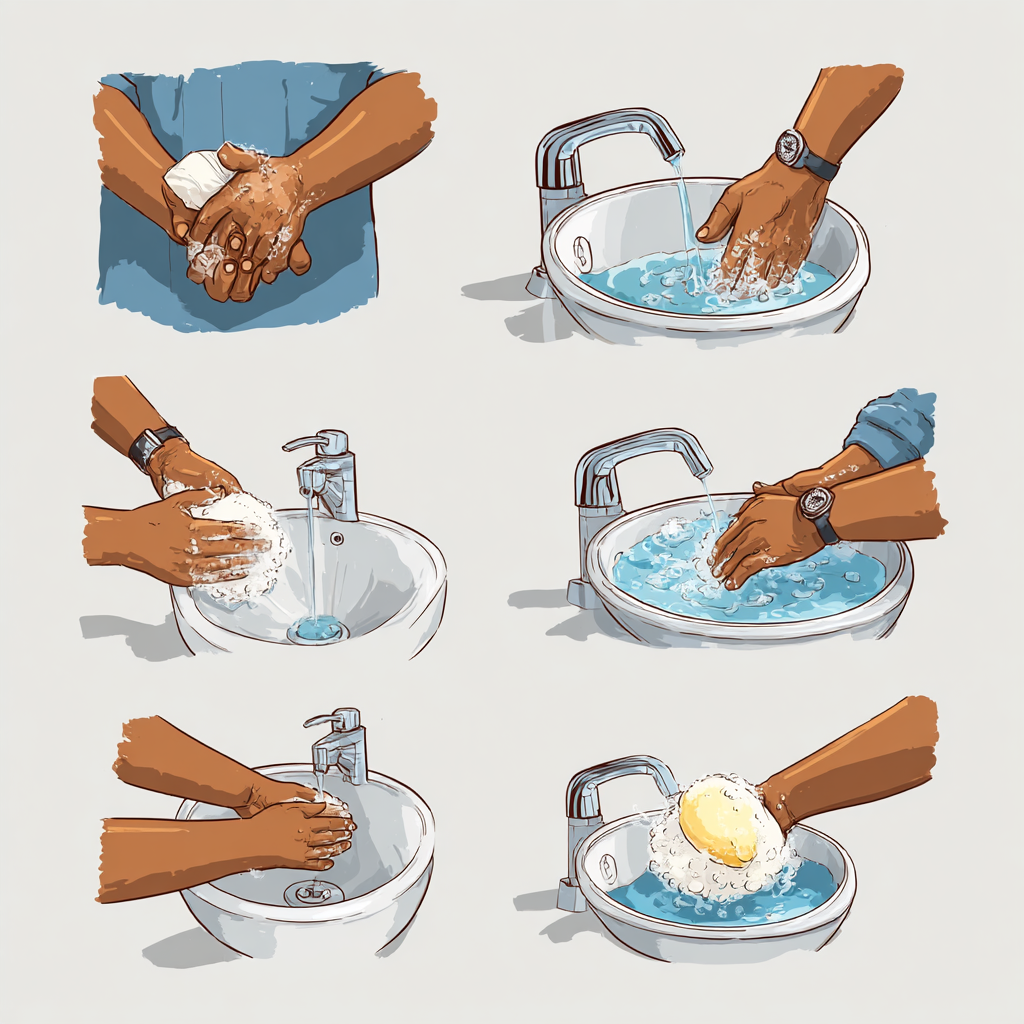
Hand Washing = Your #1 Defense
Your state requires hand sanitation before EVERY client.
- Wet hands with warm running water
- Apply liquid soap (NEVER bar soap)
- Rub vigorously for 20+ seconds
- Clean under nails & between fingers
- Rinse, dry with paper towel, use towel to turn off faucet
Personal Protective Equipment
Gloves
Required for blood/fluid contact. Single-use. Nitrile preferred.
Safety Glasses
Required during chemical services (perms, color, relaxers).
Protective Clothing
Required by your state board. Aprons, smocks, lab coats.
Masks
Required for acrylic products & chemical vapors. N95 for airborne.
SECTION 04
OSHA & Regulations
Federal + State Board Requirements
OSHA Bloodborne Pathogens Standard
- Written Exposure Control Plan required
- Universal Precautions: treat ALL fluids as infectious
- PPE provided FREE by employer
- Hepatitis B vaccine offered within 10 days of hire
- Annual bloodborne pathogen training required
Safety Data Sheets (SDS)
Every chemical product MUST have an SDS on file.
Formerly called MSDS (Material Safety Data Sheets)
- Hazard identification
- First aid measures
- Storage & disposal instructions
- Exposure controls & PPE requirements
STATE BOARD PRACTICAL EXAM — This is a STANDALONE timed task. Memorize this!
Blood Exposure
Incident Procedure
9 Steps — Learn Them In Order
Blood Exposure: Steps 1–5
Blood Exposure: Steps 6–9
Practice this procedure until you can do it without thinking!
SECTION 05
State Board Rules
Beyond the Textbook — Know These for Your Exam
Prohibited & Single-Use
THESE WILL BE ON YOUR EXAM
CREDO BLADES — BANNED in most states. No razor-type callus shavers.
PUMICE STONES — SINGLE-USE ONLY. Discard after each client.
LEG SHAVING — Clients must NOT shave legs same day as pedicure.
BROKEN SKIN — All services ONLY on intact, healthy skin & nails.
Facility Rules
- No pets in salons — only service animals
- Creams & lotions: closed containers only
- Covered waste containers at every station
- Hand sanitation before EVERY client
- Inspectors can enter WITHOUT appointment
SECTION 06
Salon Application
Putting It All Together
Single-Use / Disposable
THROW AWAY AFTER EVERY CLIENT
Nail files (unless metal) • Orangewood sticks
Cotton balls & gauze • Pumice stones (state law!)
Gloves • Paper towels • Toe separators • Neck strips
NEVER disinfect and reuse these items!
Multi-Use / Disinfectable
CLEAN → DISINFECT → STORE
Metal nippers • Metal pushers & curettes • Scissors
Tweezers • Metal files • Non-porous combs
Glass / metal bowls • Reusable nail forms
Always store in a clean, COVERED container!
Pedicure Spa Disinfection
HIGH-RISK AREA — STRICT PROTOCOL
Between Every Client:
- Drain water, remove debris
- Clean with soap & water
- Disinfect with EPA product
- Full contact time
End of Day:
- Fill with disinfectant, circulate 10 min
- Drain, rinse, air dry, document it
Key Terms Review
PART 1
Key Terms Review
PART 2
Board Exam Tips
INFECTION CONTROL EDITION
- Cleaning vs. Disinfection vs. Sterilization — know the difference
- Blood exposure = 9 steps in ORDER — memorize cold
- Universal Precautions = treat ALL fluids as infectious
- Contact time matters — too early = NOT disinfected
- Credo blades BANNED, pumice stones SINGLE-USE
What is the FIRST step in the decontamination process?
- A) Sterilization
- B) Disinfection
- C) Cleaning
- D) Rinsing
Answer: C — Always clean first
Remove debris before disinfecting
Which pathogen requires a living host to replicate?
- A) Bacteria
- B) Virus
- C) Fungus
- D) Parasite
Answer: B — Viruses need host cells
Viruses are not living organisms
After stopping a blood exposure, what do you do FIRST?
- A) Wash hands
- B) Call 911
- C) Put on gloves
- D) Apply pressure
Answer: C — Gloves FIRST
Then apply pressure to the wound
Which implement is PROHIBITED by most state boards?
- A) Metal pusher
- B) Credo blade
- C) Nail nipper
- D) Cuticle scissors
Answer: B — Credo blades are banned in most states
Razor-type callus shavers are prohibited
End-of-day pedicure spa circulation time?
- A) 5 minutes
- B) 10 minutes
- C) 15 minutes
- D) 20 minutes
Answer: B — 10 minutes minimum
Circulate disinfectant for 10 min, then drain
SHEAR GENIUS SOCIETY
Infection Control
Chapter Complete
sheargeniussociety.com
© 2026 Shear Genius Society — All Rights Reserved